Start with a Proper Pot or Mug Setup
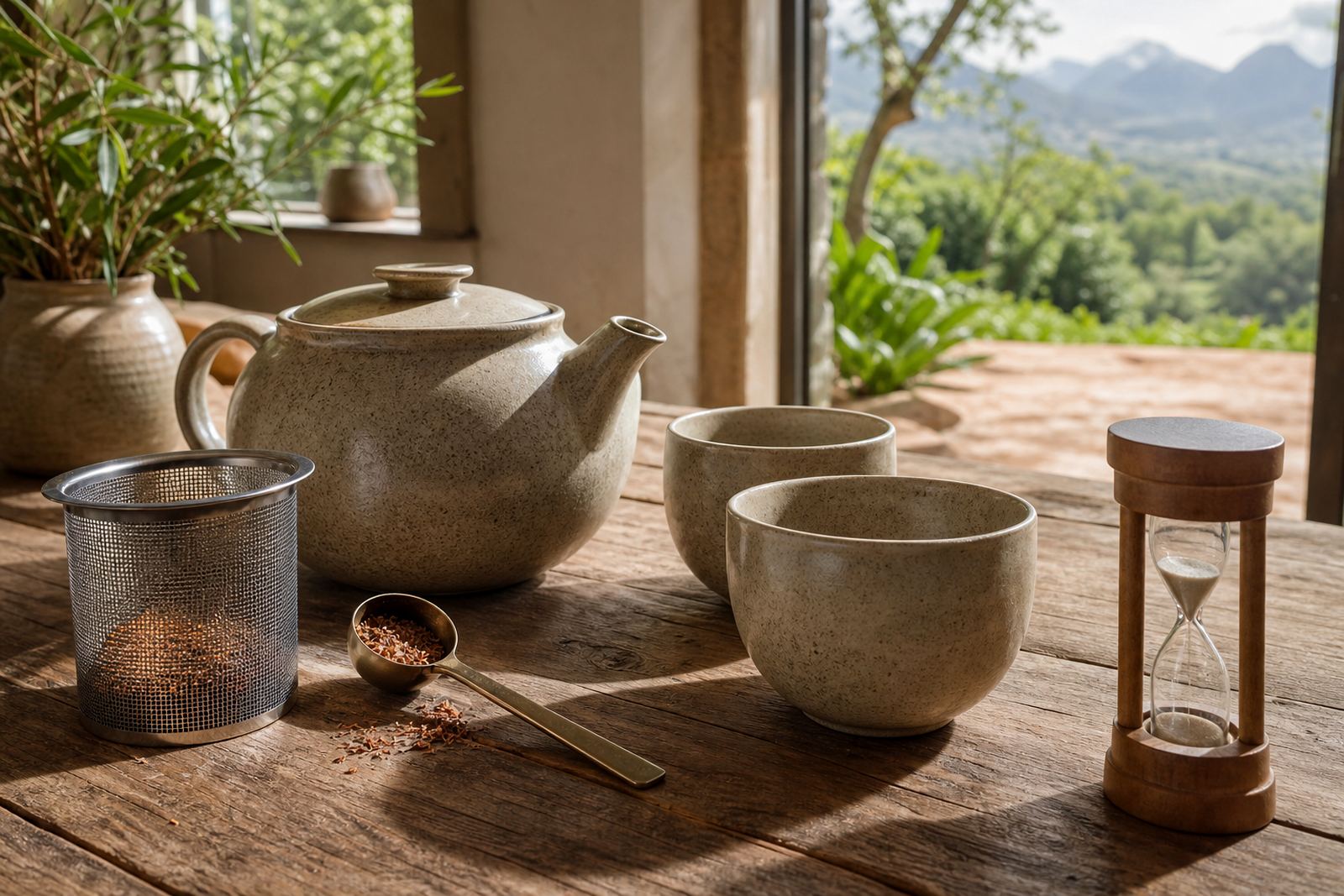
The first thing you really need is a vessel that gives the leaves room to move. A small pot with a lid, or a large mug with a roomy infuser, is enough for most everyday tea. If the leaves are packed too tightly, the water cannot circulate properly and the cup tastes flat.
For loose-leaf tea, look for teaware that holds heat well. Ceramic and glass are both practical choices for home use. Ceramic keeps the brew warmer for longer, while glass helps you see the liquor colour changing as it steeps. In cooler Stellenbosch mornings, that extra heat retention matters more than people think.
If you are brewing rooibos, which is naturally free of caffeine and can handle a longer steep, a pot with a secure lid is handy. It keeps the aroma in and reduces heat loss. At the coast, where humidity can affect stored tea, a lid also helps protect the leaves while they brew.
The Strainer That Saves You Time
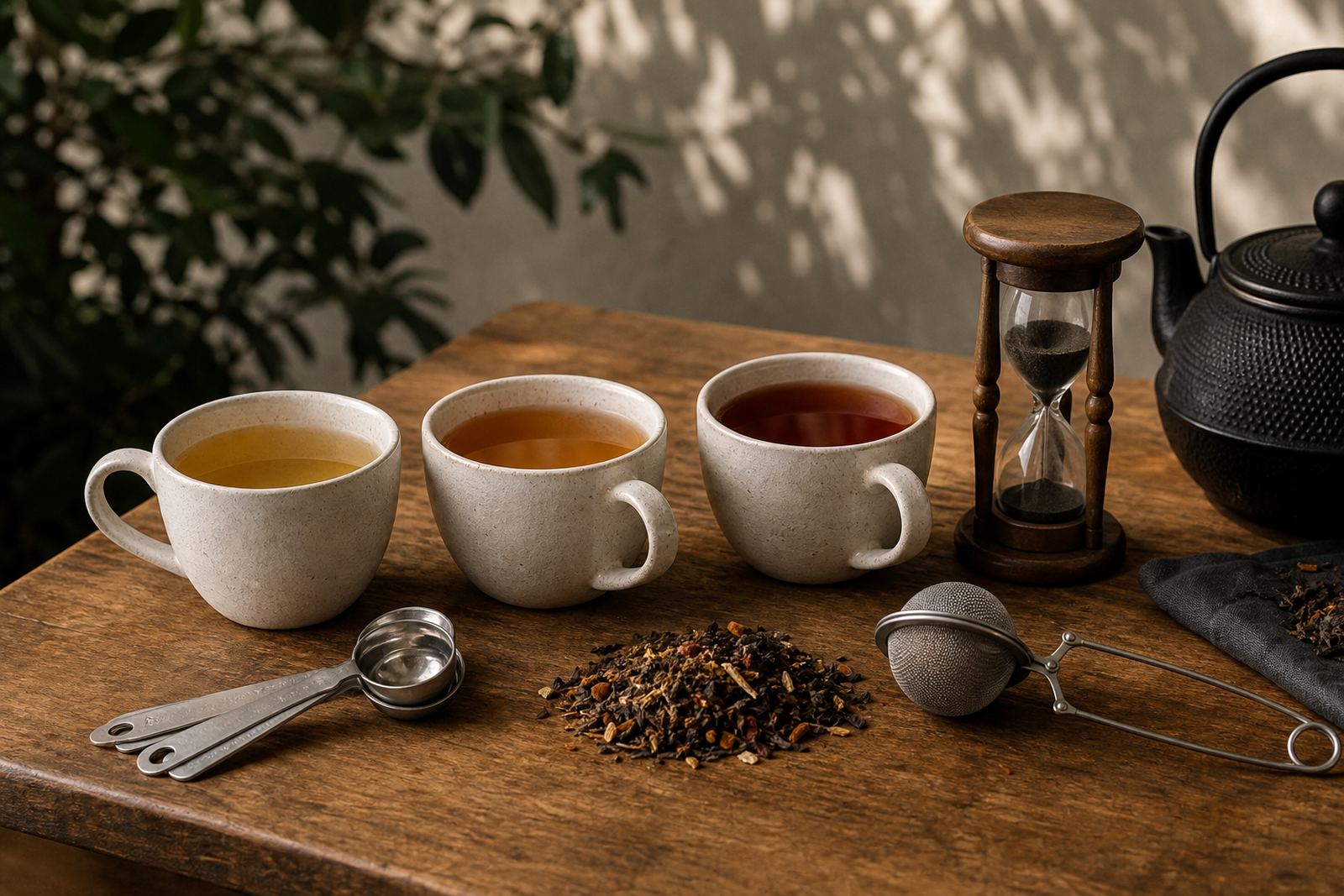
A good strainer is one of the most useful pieces of teaware you can own. It lets you pour brewed tea straight into a cup without fishing out leaves with a spoon. For most homes, a fine mesh strainer and a tea scoop are enough to get the job done neatly.
- Fine mesh basket strainers suit most loose-leaf black, green and herbal teas.
- Ball strainers work in a pinch but can be too small for leaf expansion.
- Paper filters are useful for travel, catering and office tea supply.
- Double strainers are handy for finer blends with small particles.
If you are serving guests, a strainer keeps the table tidy and makes refills quicker. That matters whether you are pouring at a wedding in Somerset West or setting out tea for a boardroom in Johannesburg. It also helps you control strength, because you can remove the leaves at the right time, instead of leaving them in too long.
Kettles and Water: The Bit People Overlook
The kettle is not just for boiling water, it shapes the cup. Loose-leaf tea tastes best when the water is heated to the right temperature for the blend. Green teas need cooler water, while rooibos and herbal infusions can take a full boil. If you pour boiling water onto every tea, some flavours turn harsh or lose their freshness.
An electric kettle with temperature settings is useful if you drink different teas through the week. If you only brew one style, a simple stovetop kettle does the job. What matters most is clean water. If your municipal water is heavy or tastes strongly of chlorine, filter it first. That small step improves flavour immediately, and it is worth doing in many parts of the Western Cape.
Water quality also affects scaling in kettles, especially in hard-water areas. Descale regularly so the kettle does not pick up a chalky layer inside. It takes a few minutes and helps your tea taste cleaner. Small habit, better cup.
Teapots, Infusers and Daily Brewing Pieces
Once you have the basics, add one or two tools that suit your routine. A teapot is useful if you brew for more than one person, while an in-cup infuser is ideal for a single serving. For offices, guest houses and hospitality spaces, a practical mix of both is often the easiest way to keep service smooth.
- Teapots are best for multiple cups and longer tea service.
- In-cup infusers are good for quick weekday brewing.
- Measuring spoons help keep each cup consistent.
- Lids or cosy covers help hold heat in during steeping.
We often find that the simplest equipment gets used most. A well sized teapot and a reliable infuser will cover 90 percent of home tea drinking. If you are serving visitors in Paarl or running a small hospitality setup in Durban, consistency matters more than fancy kit. A teaspoon too much or too little tea can change the whole experience.
Storage Tins Keep Flavour Where It Belongs
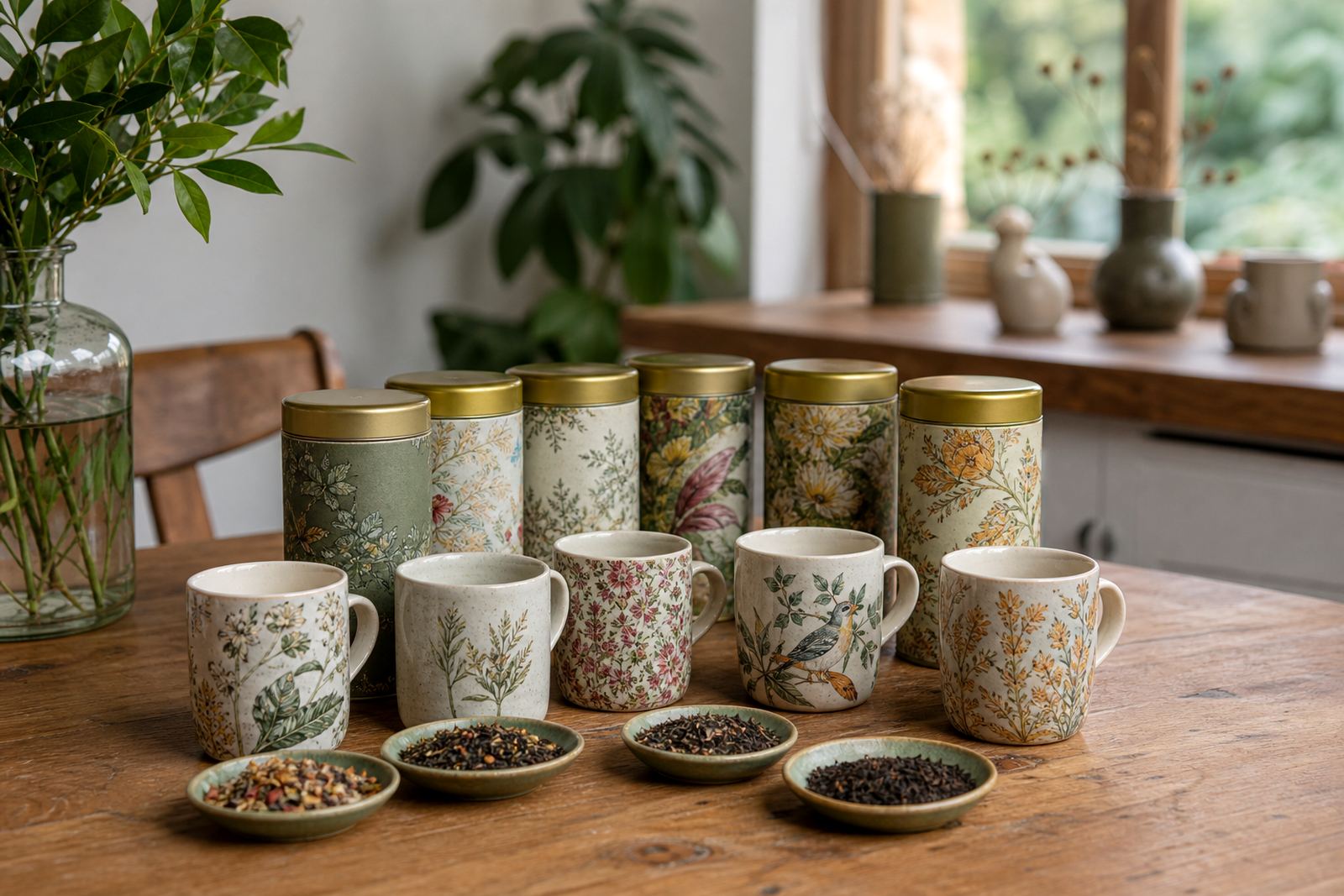
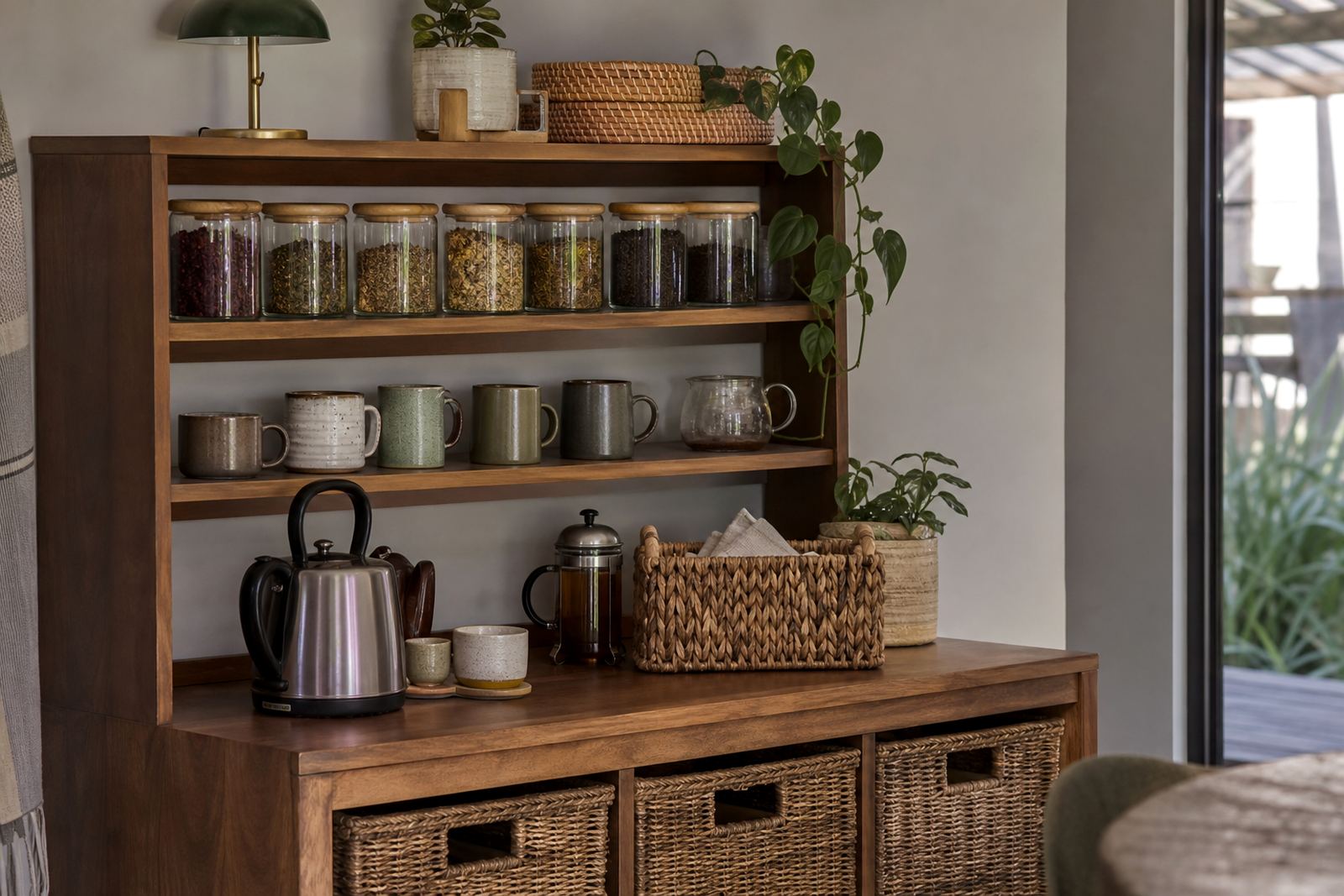
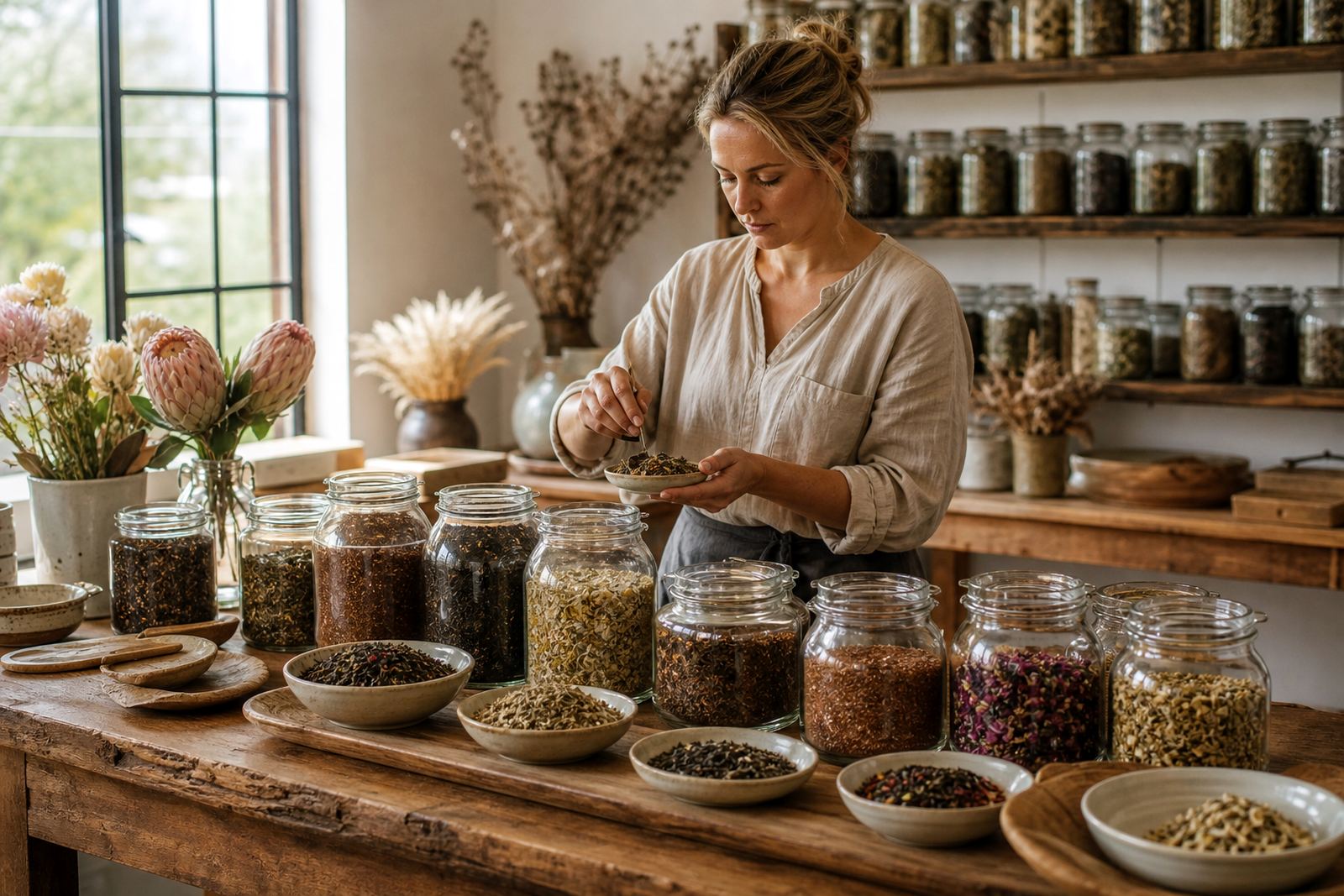
Teaware is not only about brewing. Good storage is part of the same habit. Loose-leaf tea and herbal infusions keep best in airtight tins, away from direct sunlight, strong smells and moisture. Plastic tubs are not ideal if they let in odour or light. Metal tins with tight lids are usually the most practical choice.
Keep your teas separate. Rooibos should not sit next to mint, spice blends or strongly scented herbal infusions unless you enjoy mixed aromas. In hot kitchens, cupboards near the stove can warm up too much, so choose a cool shelf instead. A tidy storage area also makes it easier to see when stock is running low, which helps in homes and small offices alike.
If you buy tea in bulk, portion it into smaller tins for daily use. That way the main supply stays sealed for longer. It is a simple habit but it preserves flavour and cuts waste.
A Simple Tea Tray for Serving and Clean-Up
A tray may sound ordinary, but it is one of the most useful pieces of teaware you can own. It gives you a single place for kettle, pot, cups and strainer, so tea service feels organised instead of rushed. For meetings, tastings, weddings and family visits, a tray also protects tables from drips and heat marks.
Choose a tray that wipes down easily. Wood is attractive, though it needs a bit more care. Melamine, metal and coated surfaces are easier for daily use. In busy homes or office kitchens, that matters. Nobody wants to scrub tea stains from a surface after every round of brewing.
A good tray is especially helpful when load-shedding interrupts your routine. If you keep your teaware together, you can move it quickly when the power goes off and still finish the brew with minimal fuss. It makes the process calmer, and yes a little more civilised too.
What You Do Not Need Right Away
It is easy to overbuy when you start exploring loose-leaf tea. The truth is, you do not need a cupboard full of special pieces. You can brew excellent tea with a kettle, a pot or mug, a strainer and proper storage. Add the rest only when your habits call for it.
- Skip oversized devices if you only make one or two cups at a time.
- Do not buy delicate items that are hard to wash every day.
- Leave novelty tools for later unless they suit your routine.
- Focus first on heat, space for the leaves and clean water.
At Cup Of Tea Co in Stellenbosch, we see that the best tea routines are usually the simplest ones. A few good tools, the right leaf quantity and five quiet minutes are often enough. That is the point of teaware you really need: less fuss, better flavour, and tea you will actually make again tomorrow.