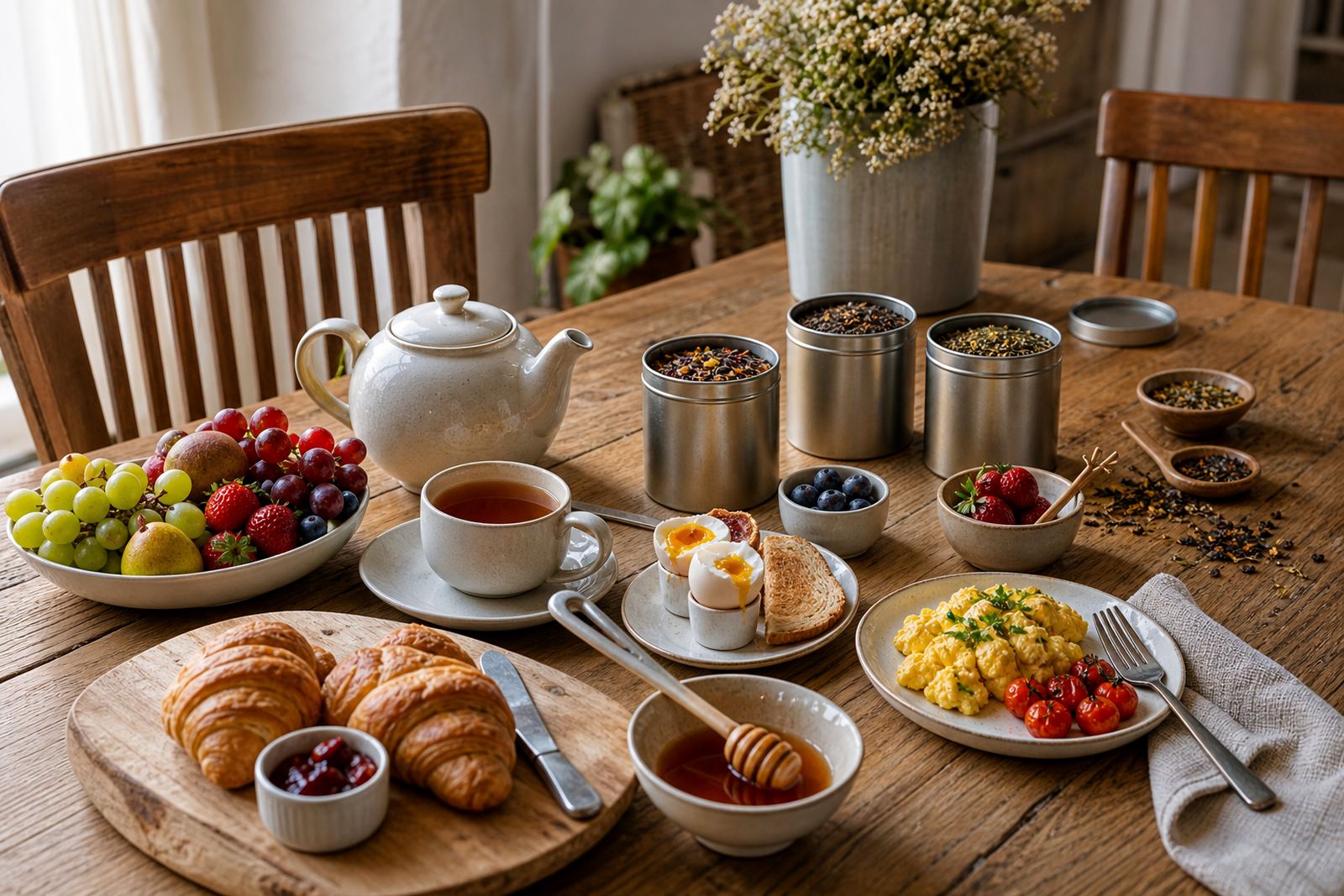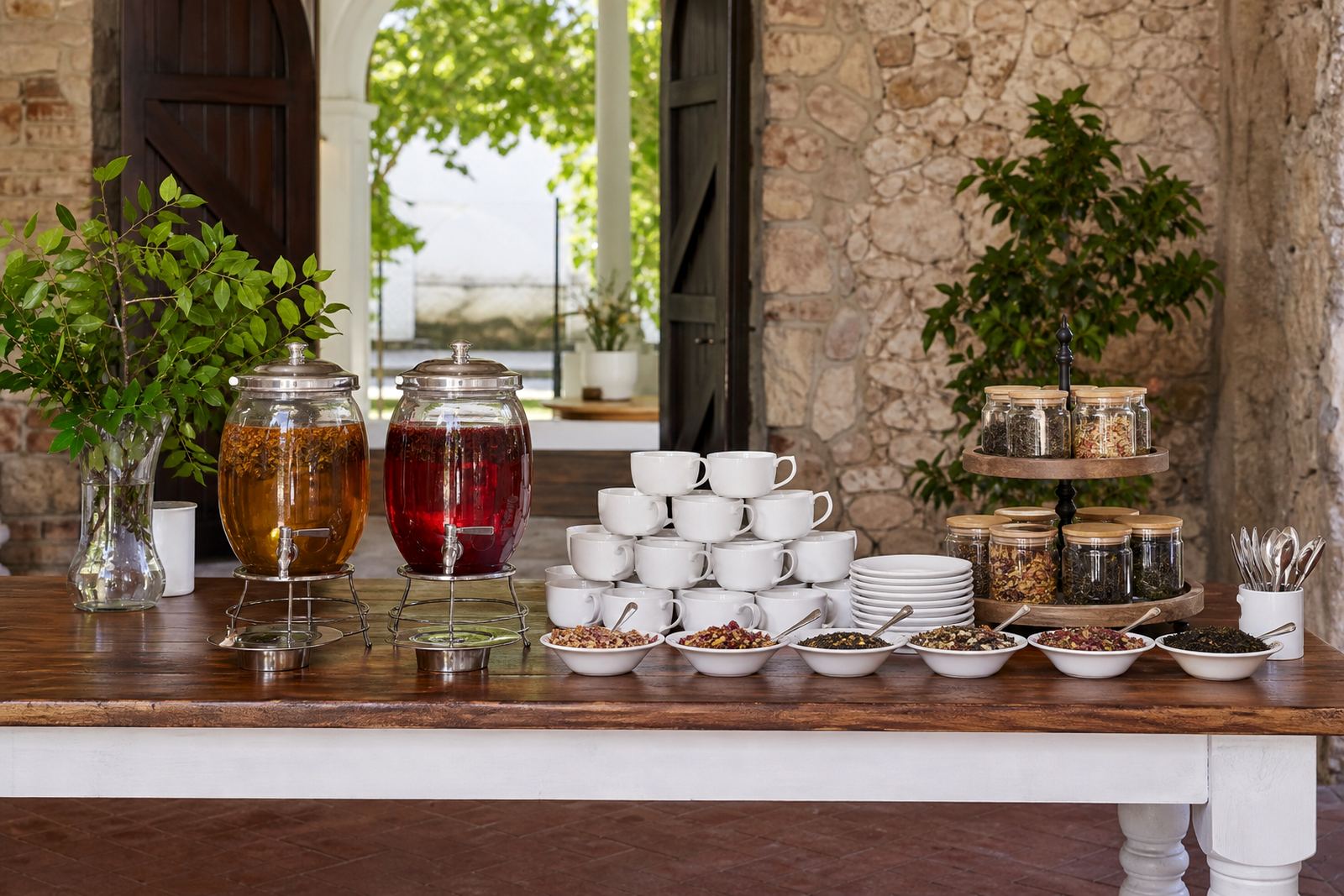

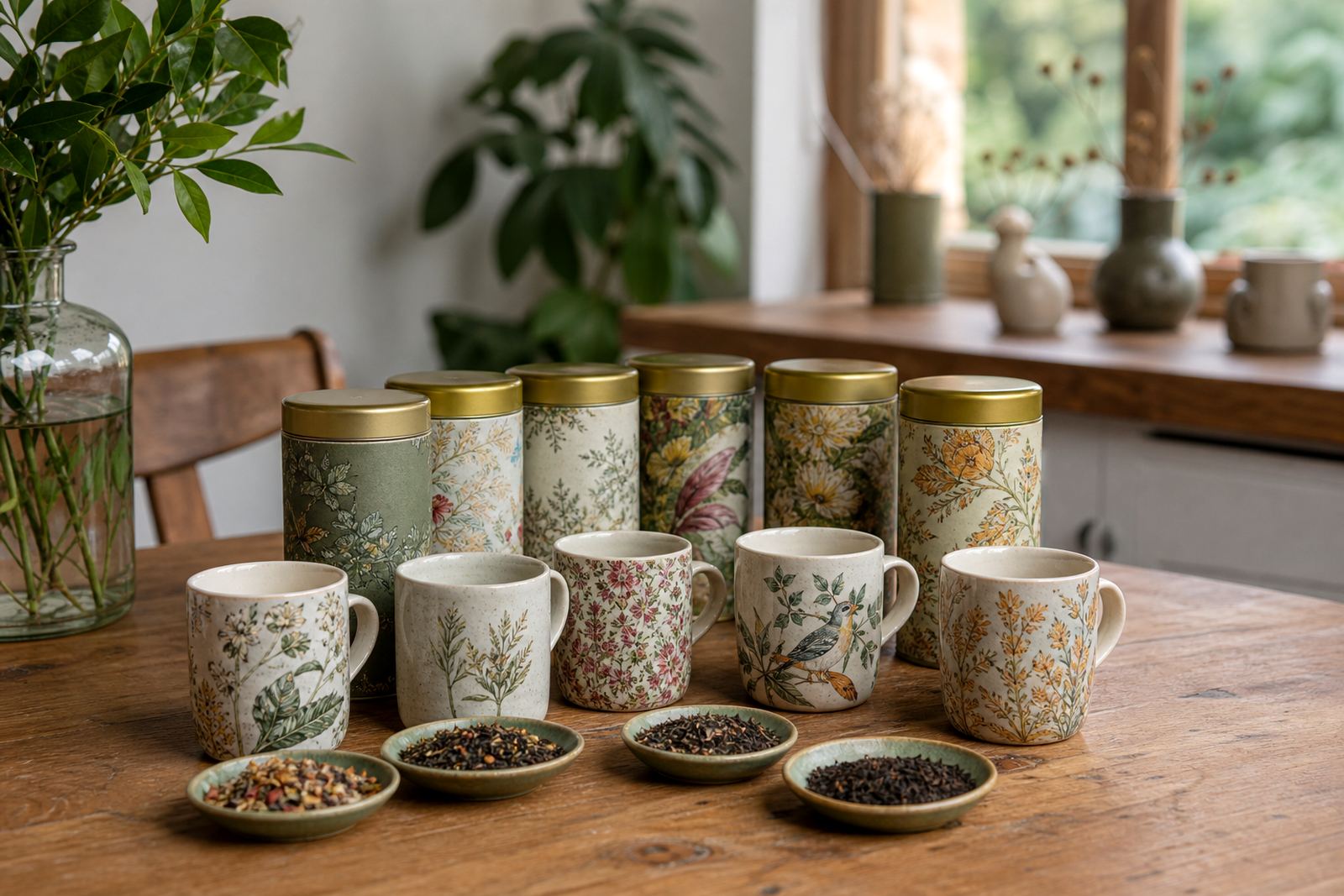
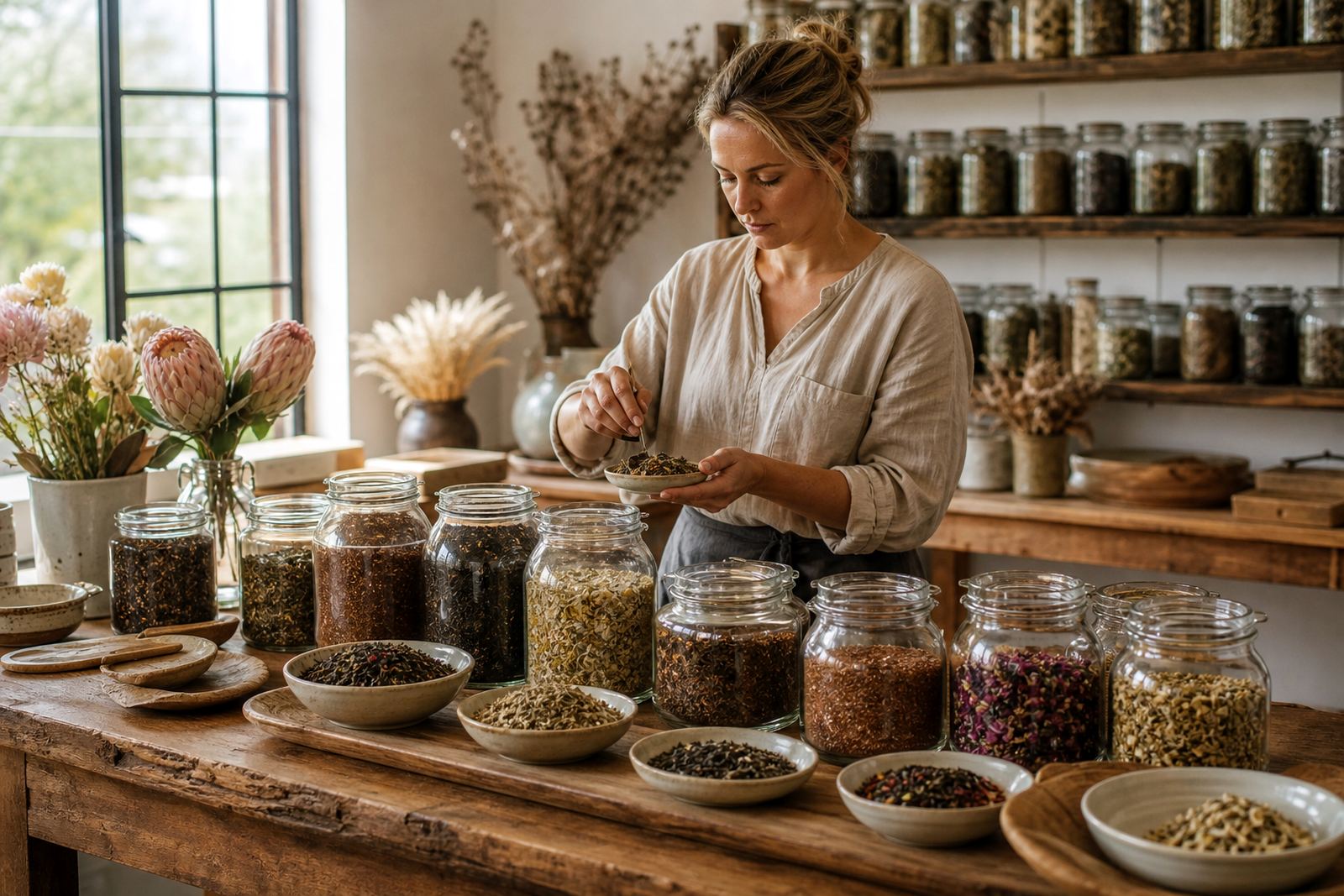
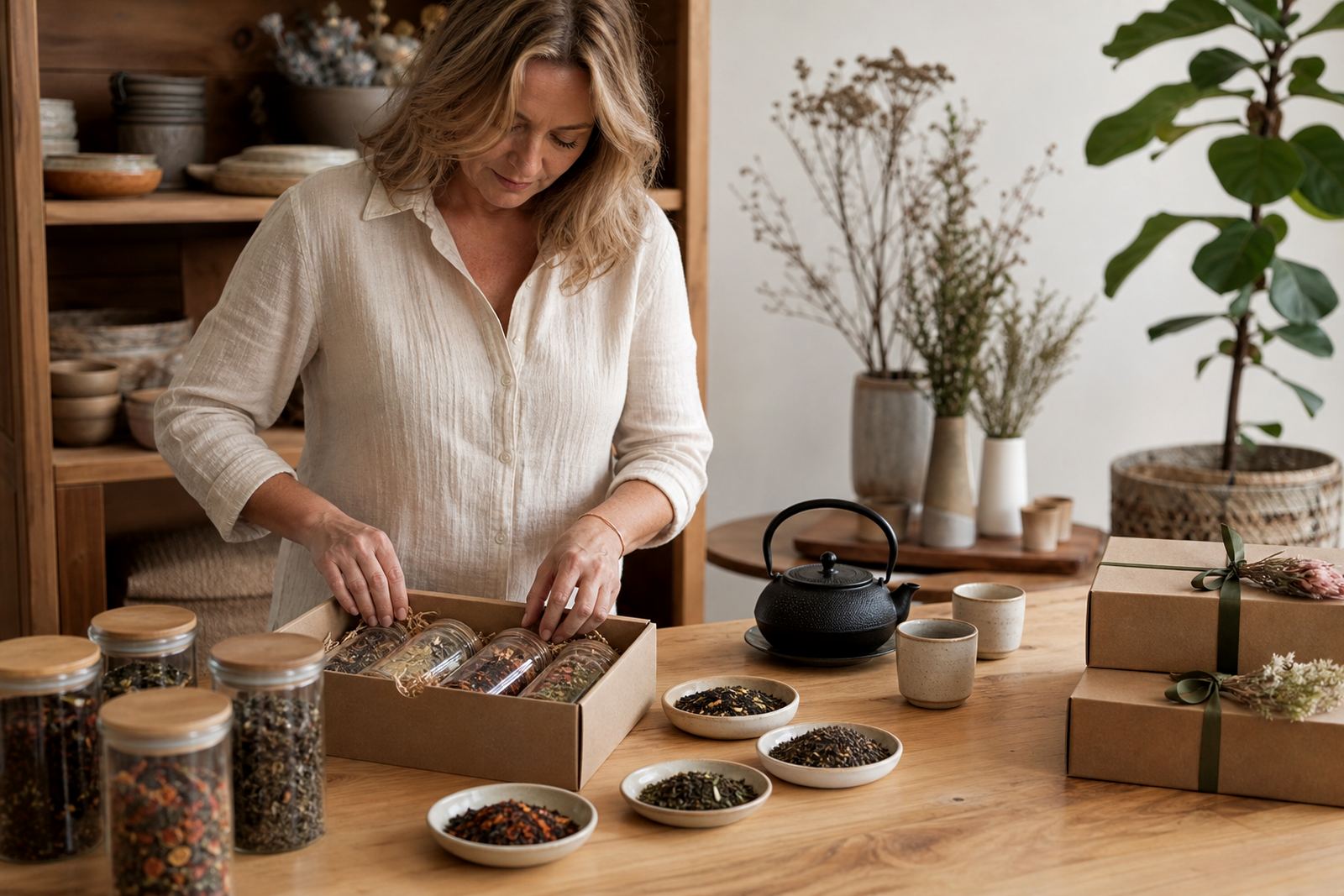
Start with the cup you want to drink at 7am or 7pm
The easiest way to choose your first blend is to match it to the time of day and the kind of cup you already enjoy. If you want something steady and full flavoured for the morning, black tea is a simple place to start. If you want a smoother cup with natural sweetness and no caffeine, rooibos is often the first favourite. Herbal infusions sit in the middle for many people, because they can be light, floral, minty or spicy depending on the mix.
In Stellenbosch, we often see people beginning with the tea they think they should like, then moving to the one they actually reach for after work. That matters. A first blend should not be complicated. It should fit your routine, your kettle, and the way you take your tea, with or without milk, sugar, honey or lemon.
- Choose black tea if you want a stronger morning cup
- Choose rooibos if you want something softer and caffeine-free
- Choose herbal infusion if you want variety without bitterness
- Choose a blend with fruit or spice if you like layered flavour
Rooibos is the safest first step for many beginners
Rooibos is a good first blend because it is familiar to many South African homes and it is forgiving. A pot left standing a little too long will usually still taste pleasant, which helps if you are still learning steeping times. It also works well plain or with added flavour, so beginners can taste the base character before moving on to more complex blends.
Look for a rooibos that smells naturally sweet and clean. If you are buying for the first time, start with a small pack rather than a large bulk order. Brew it for 5 to 7 minutes in freshly boiled water, then taste it on its own before adding anything. That gives you a proper sense of the leaf and how it behaves in your cup.
- Plain rooibos for a clean baseline
- Vanilla-style rooibos if you want gentle sweetness
- Citrus rooibos if you prefer a brighter finish
- Spiced rooibos if you want something warmer in winter
How to read black tea without overthinking it
Black tea can feel more serious than it really is. For a first blend, think in terms of strength, not tradition. Some black teas are brisk and lively, while others are rounder and more malty. If you enjoy a stronger cup with milk, a black tea blend may suit you better than a delicate herbal mix. If you drink your tea black, you may prefer a smoother leaf with less bite.
When tasting black tea for the first time, use a measured approach. One teaspoon per cup is a good starting point, then steep for 3 to 4 minutes. If it tastes thin, leave it a little longer next time. If it turns bitter, shorten the time. That is the practical way to learn, and it is better than guessing from the label alone.
- Pick a fuller tea if you drink with milk
- Pick a lighter tea if you drink it plain
- Avoid very strong brews until you know your taste
- Keep water hot, not lukewarm, for a proper cup
Herbal infusions are best when you know what you are avoiding
Many first-time buyers choose herbal infusions because they want a caffeine-free option, but the flavour range is wider than people expect. Some herbal blends taste fresh and grassy, others are floral, earthy or gently spicy. Before you buy, decide whether you are avoiding caffeine, looking for a calming evening drink, or simply trying something different from tea leaves.
A good beginner herbal mix should be easy to identify by smell and taste. Peppermint is clear and cooling. Chamomile is soft and apple-like. Ginger blends can be warming and slightly sharp. If you live on the coast or in humid areas around Durban or Somerset West, keep herbal blends sealed well so they stay fresh, because moisture can flatten the aroma quicker than you might expect.
- Peppermint for a crisp after-dinner cup
- Chamomile for a mild evening drink
- Ginger blends for cooler mornings
- Floral blends for a lighter, more fragrant cup
Use a tasting order instead of buying everything at once
If you are starting from scratch, do not try six new blends in one week. That usually makes it harder to remember what you liked. A better approach is to taste one family at a time. Begin with rooibos, then black tea, then herbal infusions. Keep short notes on aroma, strength, aftertaste and whether you would drink it again without sweetener.
This kind of tasting also helps if you are buying for home, a small office, or a guest room basket. In Pretoria and Johannesburg, we often find that offices want one dependable tea for everyone, while homes want a few different options for morning and evening. Either way, the same rule applies: start small, then build on what your regular drinkers actually finish.
- Buy 3 small samples instead of one large tin
- Try each blend plain first, then with milk or honey
- Write down whether it feels strong, soft, bitter or sweet
- Keep your notes for the next order
A local example from Stellenbosch to your kettle at home
A first blend often works best when it fits local habits. In Stellenbosch, a customer might want something for early mornings before school runs, then a calmer cup for late afternoon when the heat is still sitting in the kitchen. Rooibos is a natural fit for that pattern because it is easy to brew, gentle on the palate and comfortable for the whole household. If the same family wants a second option, a milder black tea gives structure in the morning, while a mint or chamomile infusion suits the evening.
For customers ordering across South Africa, courier delivery makes it practical to keep a few favourites on hand without overbuying. If you are in Cape Town, Bloemfontein or further afield, the best first order is usually simple: one rooibos, one black tea and one herbal infusion. That gives you a clear comparison, and by the time the tins are empty you will know what deserves a permanent place in the cupboard.
The goal is not to become a tea expert overnight. It is to find one blend you enjoy enough to make again tomorrow, and maybe again next week.