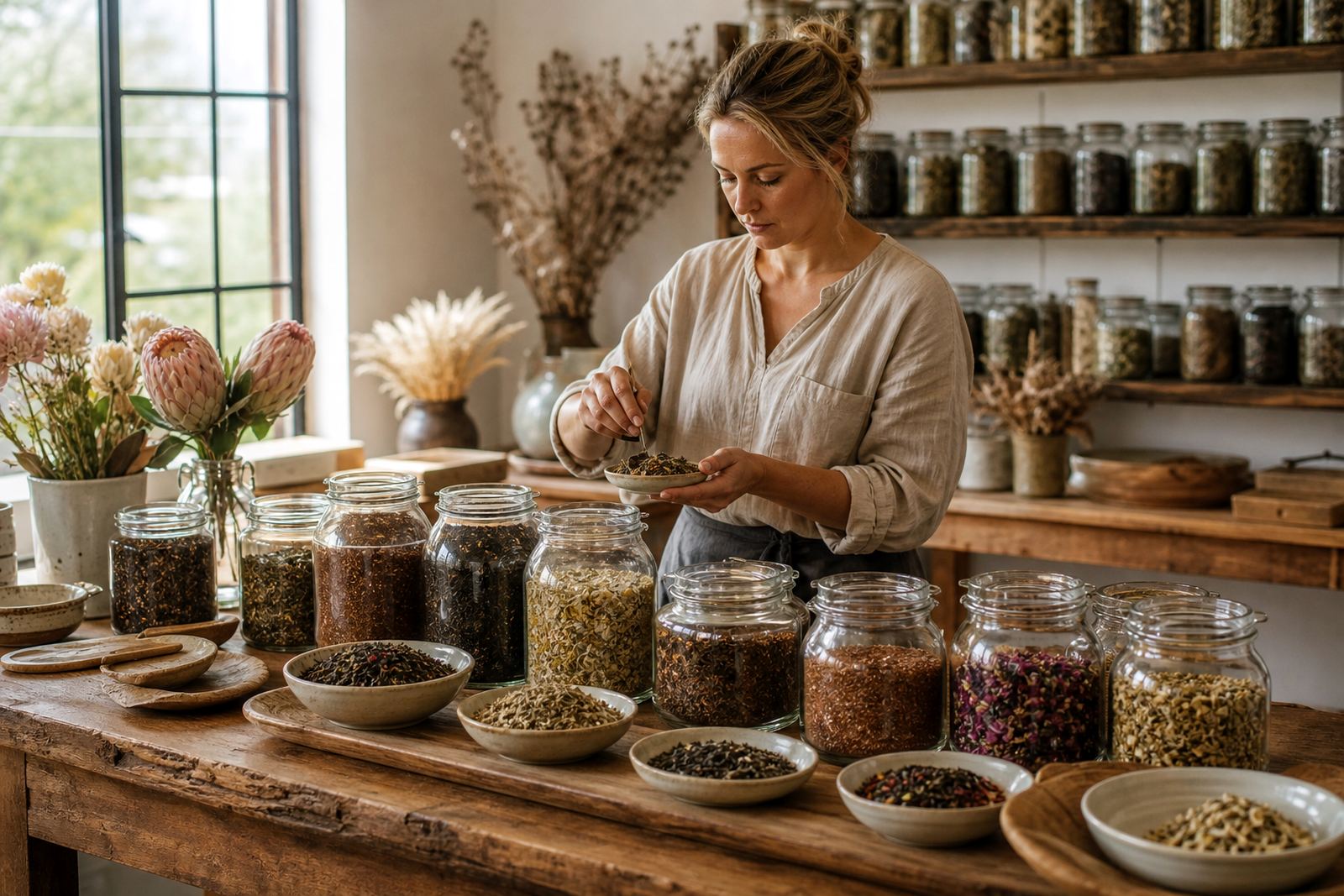
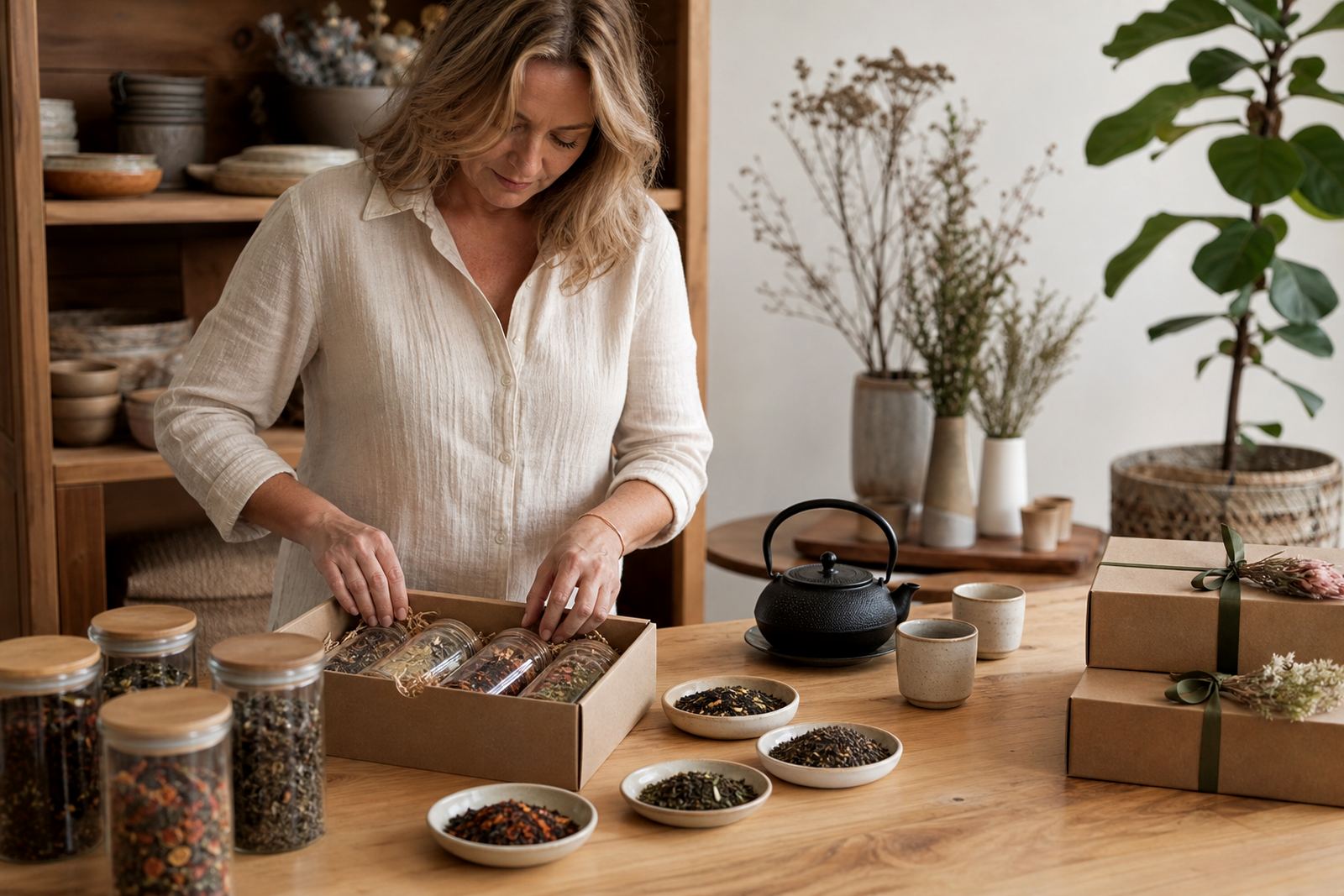
What tea strength really means in the cup
When people ask for a stronger tea, they often mean more flavour, more body or more caffeine, but those are not always the same thing. A tea can look dark and still taste thin if it has been over steeped, while a lighter cup can still be full and satisfying when the leaf was measured properly.
At Cup Of Tea Co in Stellenbosch, we often explain strength as the amount of flavour that is drawn out of the leaf without making the cup harsh. That balance matters whether you are making rooibos, black tea or a herbal infusion, because each one behaves differently in hot water.
- More leaf usually gives more flavour, not just more colour.
- Longer steeping can increase bitterness if the tea is delicate.
- Hotter water extracts faster, but it can also pull out rough notes.
Start with the right leaf amount
The easiest way to control strength is to measure the tea instead of guessing. A teaspoon can be helpful for home use, but it is not always exact because tea cut sizes differ. Whole leaf teas take up more space in the spoon than finely cut leaves, so the same spoon can give very different results.
A practical starting point is about 2 to 3 grams of loose-leaf tea per 250 ml cup. From there, adjust up or down based on taste. For a stronger morning cup, increase the leaf first before you extend the steeping time. This usually gives a fuller cup with less chance of bitterness.
- Light cup: 2 grams per 250 ml
- Medium cup: 2.5 to 3 grams per 250 ml
- Full cup: 3.5 grams or more per 250 ml
If you are making tea for a group, use the same measure in every pot so the flavour stays consistent. Small changes become very noticeable when serving eight or ten cups at once.
Water temperature changes everything
Water is not just a delivery system. It controls how quickly flavour leaves the tea and what comes out first. In South Africa, many households boil water in a kettle and pour immediately, but that is not always ideal for every tea. Rooibos can handle near boiling water well, while green teas and some herbal blends often do better with slightly cooler water.
If the water is too hot, finer teas can turn sharp or dry. If it is too cool, the cup may taste flat and under extracted. The right temperature helps the flavour open properly, and it is especially useful on cold mornings in Stellenbosch or Somerset West when a good cup needs to do the job quickly.
- Rooibos: near boiling water
- Black tea: very hot water, just off the boil
- More delicate teas: allow the water to cool for a minute or two
Steeping time decides the finish
Time is where many cups go wrong. A tea left too long can become heavy, woody or astringent, even if the leaf amount was right. On the other hand, cutting the steep too short can leave the cup thin and unsatisfying. The goal is to taste the tea at its best, not simply to wait longer.
As a rule, start with the recommended steep time, then adjust in 15 to 30 second steps. This is a practical way to find the flavour your household enjoys. If you are serving clients in an office or a guest space, keep notes so the same blend tastes the same every time. That matters when load shedding interrupts routines and someone has to make a fresh pot in a hurry.
- Short steep: lighter body, brighter flavour
- Medium steep: balanced cup with clearer sweetness
- Long steep: stronger, but can become rough if pushed too far
Rooibos, herbal infusions and loose leaf teas each behave differently
Not every tea responds in the same way. Authentic rooibos is forgiving and usually holds its flavour well, even with a longer steep. Herbal infusions vary widely because some ingredients release flavour quickly while others need time to soften and bloom. Loose leaf black tea is often more sensitive and needs a steadier hand to avoid a tannic finish.
This is why a single rule does not work for every blend. A citrus rooibos for a winter afternoon in Bloemfontein may call for a stronger leaf measure, while a calming chamomile blend for an evening routine may taste better with a lighter hand. The same is true for tea in hospitality settings, where guests want consistency more than surprise.
- Rooibos: strong, round and forgiving
- Herbal infusions: depends on the ingredients in the blend
- Black tea: can become astringent if over extracted
A Stellenbosch example from a busy office kitchen
In a Stellenbosch office kitchen, one team may want a brisk cup at 7:30 in the morning while another prefers a softer cup after lunch. If the same teabag or loose leaf scoop is used for both, somebody will usually complain that the tea is either too weak or too strong. The fix is simple: choose one base recipe and adjust only one variable at a time.
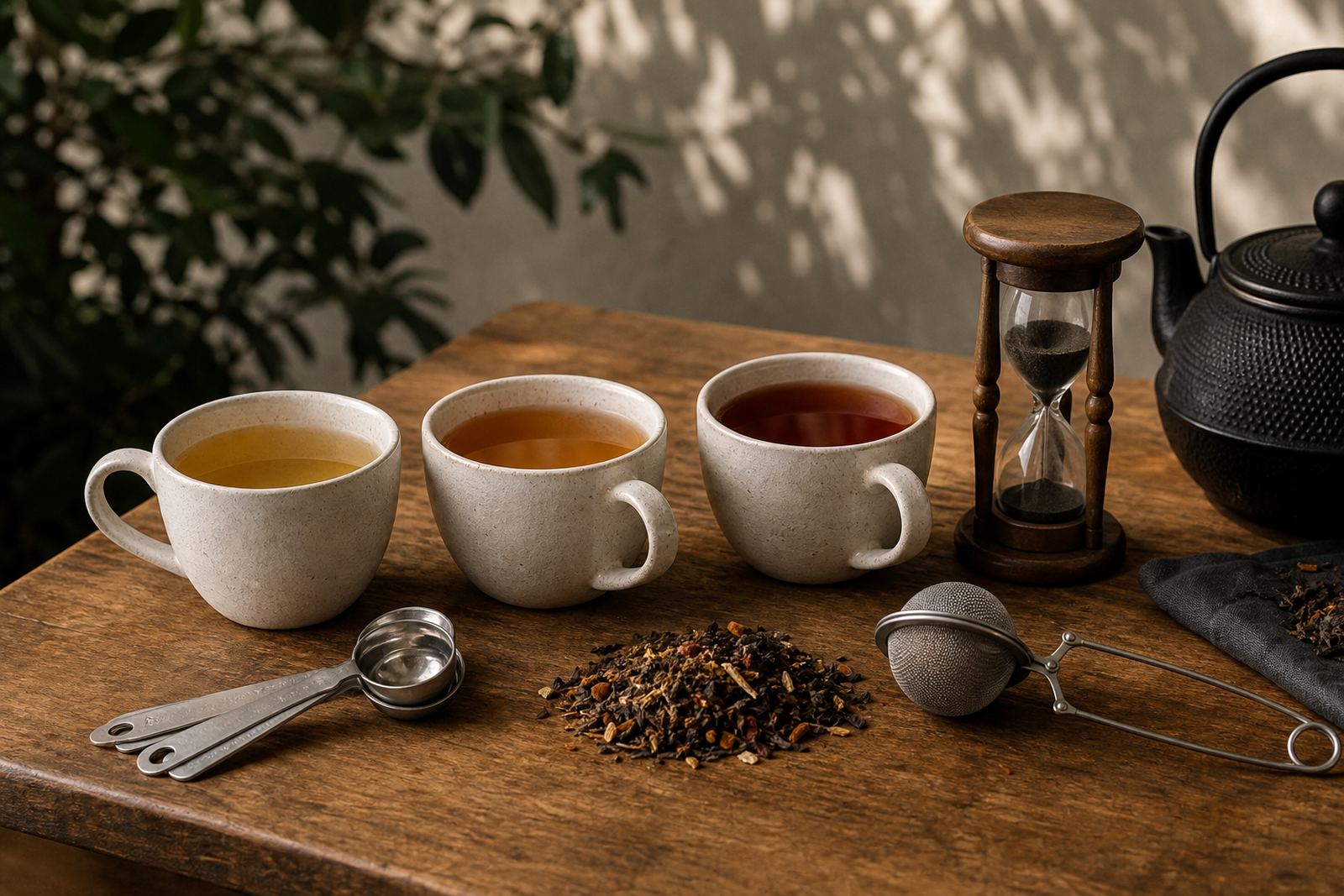
For example, use the same 2.5 gram measure, then test three steep times: 2 minutes, 3 minutes and 4 minutes. Taste each cup without milk or sweetener first. Once the preferred strength is found, write it down and use it for the whole office. That kind of small system saves time, waste and a lot of back-and-forth over the kettle.
- Keep the same cup size for every test
- Change only leaf amount, time or temperature at once
- Record the result so the next pot matches the first
How to find your own preferred strength at home
The best tea strength is the one you will happily drink every day. Start with one blend and taste it in a few small tests rather than changing everything at once. If the tea feels thin, add a little more leaf. If it feels heavy or drying, shorten the steep time before changing the blend itself.
At Cup Of Tea Co, we often suggest making one cup at a time until the balance feels right. After that, scale the method up for a pot, a tea bar or a gifting order. That approach works well for households, guesthouses, wedding favours and office tea supply because it keeps the flavour steady and simple to repeat.
- Use the same water source when testing
- Preheat the cup or pot if possible
- Taste before adding milk, sugar or honey