
Choose the right spot for daily tea use
Start by choosing a place that gets used often but does not get in the way. In a kitchen, a section of counter near the kettle and mugs works well. In an office, a sideboard, shelf or small service area keeps things orderly. If you are setting up a guest room, a compact tray on a table is enough for a simple self-service tea point.
Think about traffic, light and heat. Tea stays better when it is kept away from the stove, direct sun and damp windows. In coastal areas like Cape Town or Somerset West, humidity can creep into tins and packets quicker than many people expect, so a dry cupboard or closed container is worth it. In Stellenbosch homes where the kitchen may be busy from early morning to late evening, a tea corner near the kettle saves time and keeps the routine neat.
- Keep the tea corner close to water and cups
- Avoid spots beside the oven or dishwasher
- Use a dry shelf or cupboard if the room feels humid
- Allow enough space for jars, spoons and a tray
Build a simple setup that stays tidy
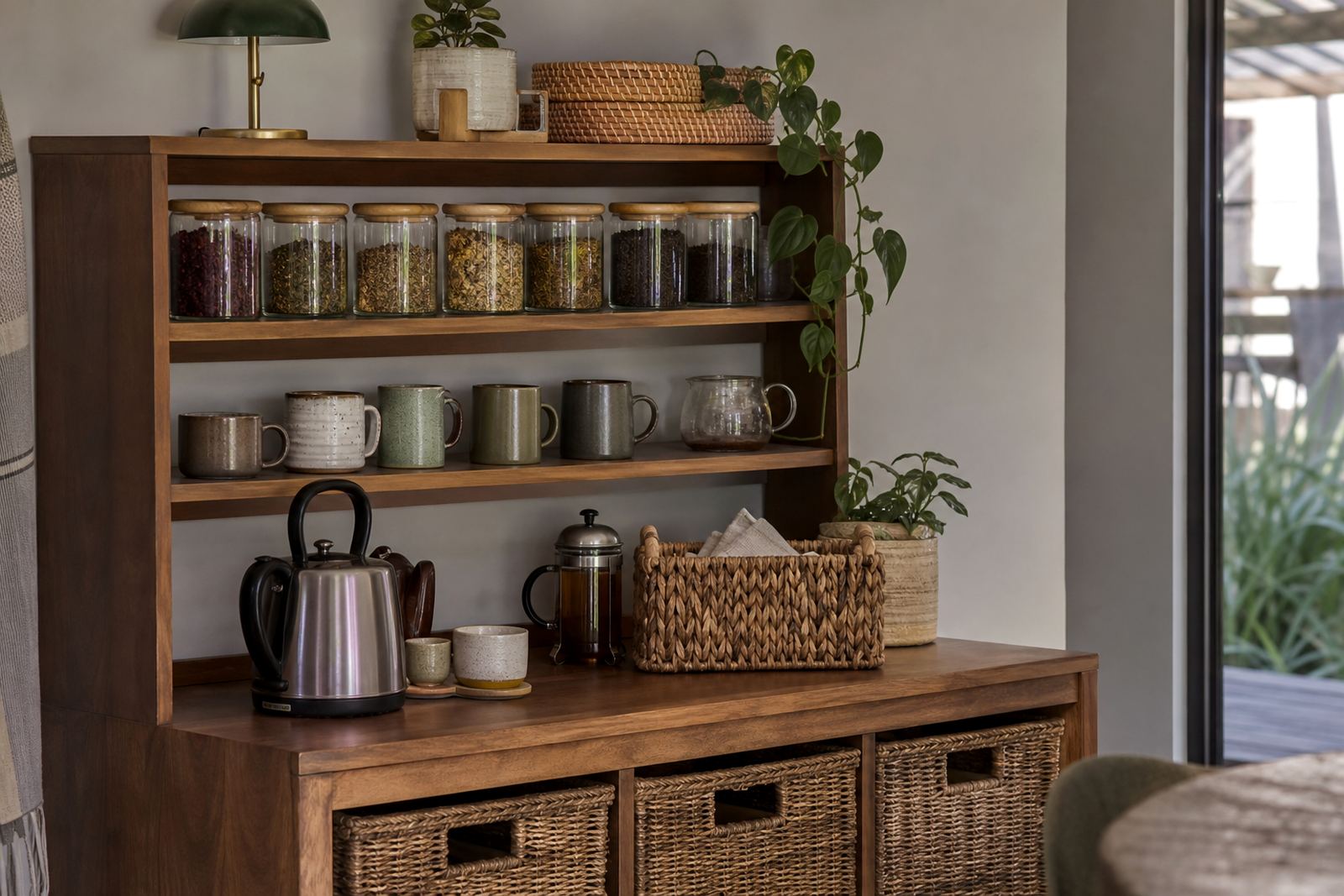
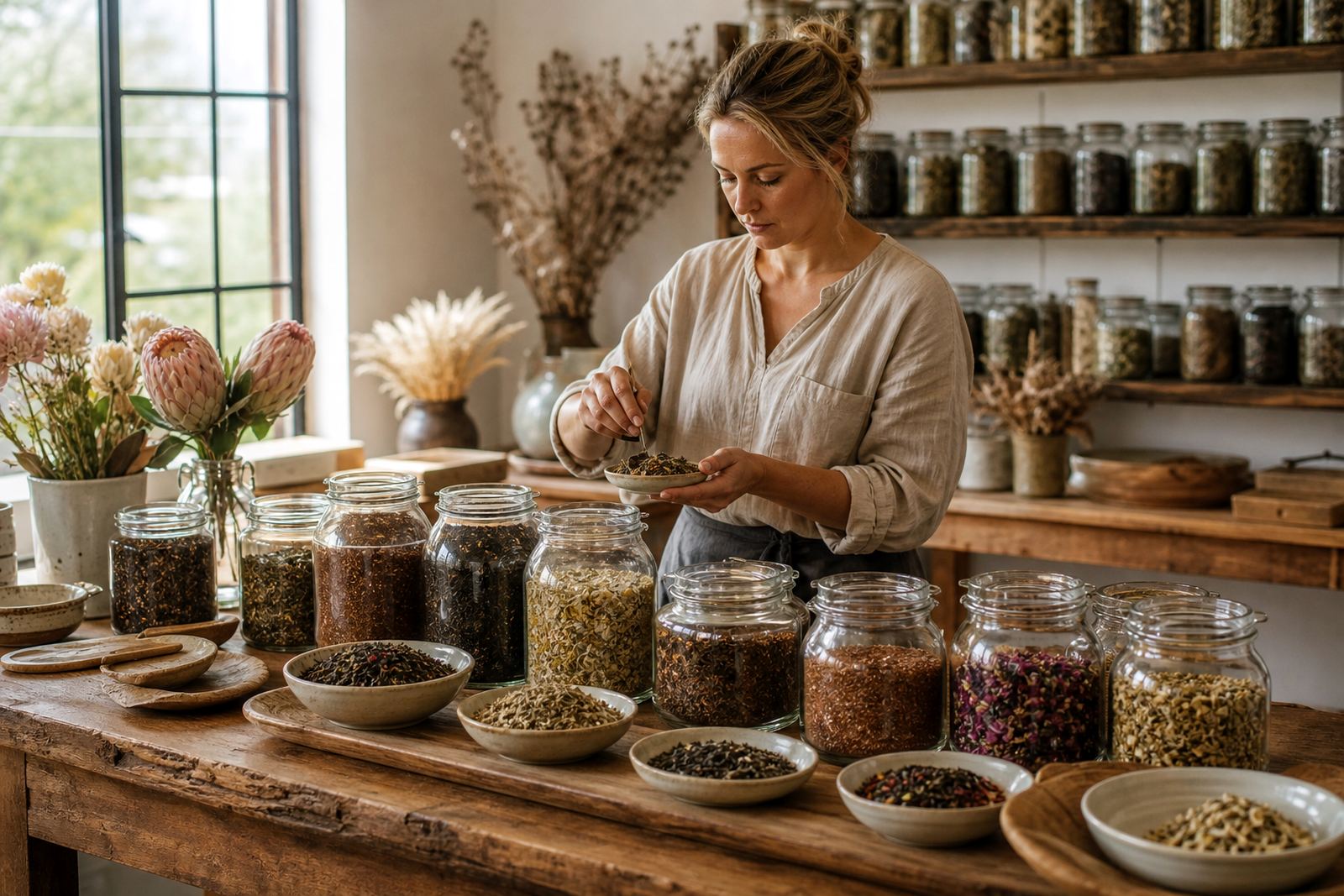
The best tea corner is not overloaded. A small tray, a few airtight containers and a clear mug stack can be enough. If you keep loose-leaf teas and rooibos in their own jars, it becomes easier to spot what is running low and what needs refilling. Labels help too, especially if several people use the same space.
Use containers that close properly and are easy to wipe clean. Glass jars look neat, but metal tins or food-safe canisters work just as well. The point is to keep air and moisture out. For herbal infusions, this matters even more because delicate leaves can lose flavour if they sit open for too long. If you buy in bulk, portion smaller amounts into daily-use containers and keep the rest sealed away.
- Airtight jars or tins for each tea type
- One small spoon or scoop per jar
- Labels for black tea, green tea, rooibos and herbal blends
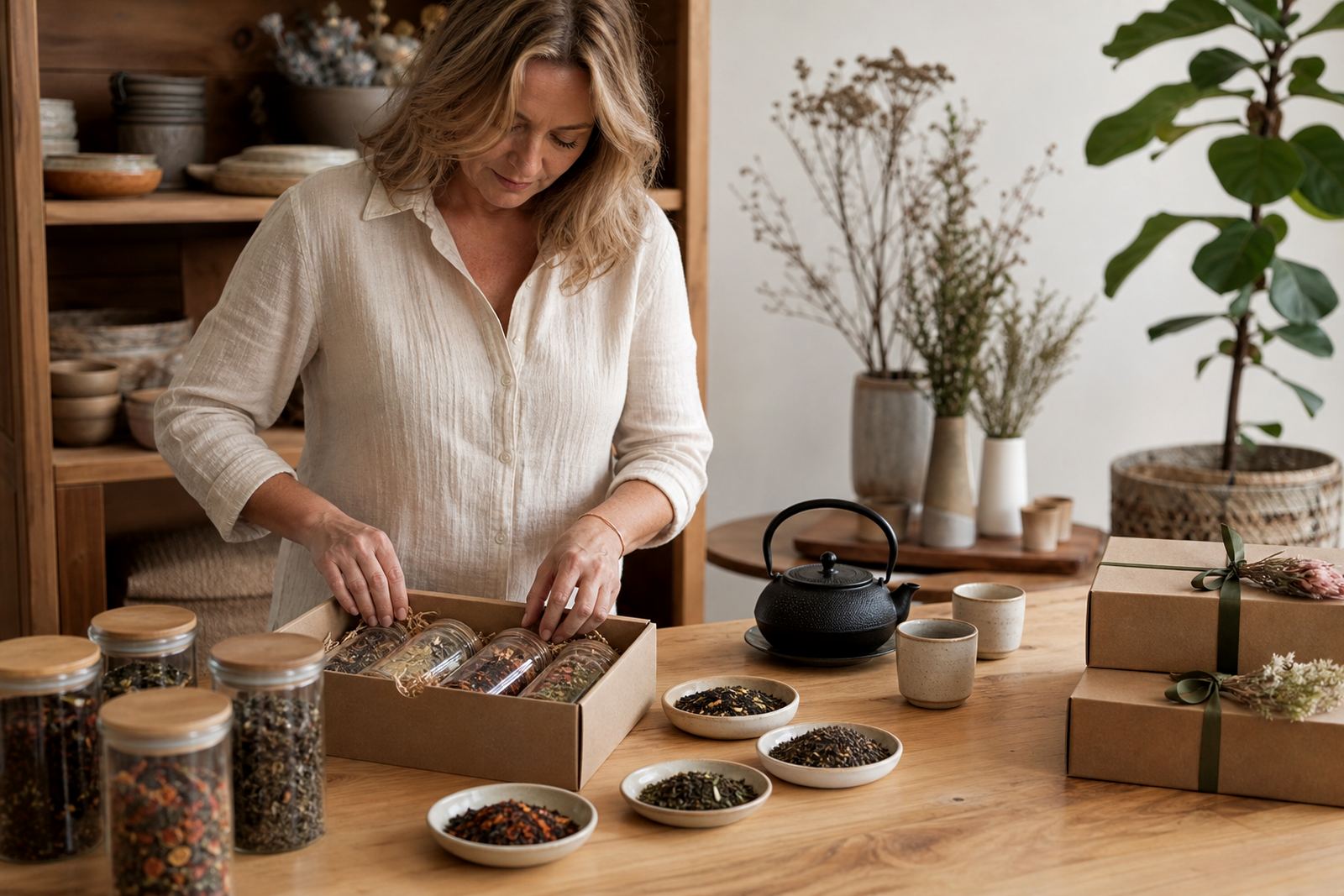
- A tray or mat to catch drips and keep the surface clean
Choose teas that suit the people using the space
A tea corner works best when it reflects the people who use it. In a family kitchen, it helps to have a mix that covers quick weekday cups and slower weekend brewing. In an office, it is useful to include caffeine-free options for afternoon breaks. Rooibos is a strong favourite in South Africa because it suits many tastes and works well through the day, while herbal infusions give variety for those who want something lighter.
If you are setting up for visitors or guests, pick teas that are easy to understand at a glance. Keep the range focused and practical. Too many choices can make the corner feel messy. A good spread may include a classic black tea, a pure rooibos, a flavoured rooibos and one or two herbal infusions. That is usually enough for most homes and small workplaces.
- One everyday tea for morning use
- One caffeine-free rooibos for all-day drinking
- One herbal infusion for a lighter option
- A seasonal blend for guests or weekends
Make the tea corner work in an office or guest room
In a workplace, a tea corner should support short breaks without causing clutter. Keep the kettle, cups, stirrers and bins close together so people do not wander around looking for basics. Clear signage can help if the space is shared by a team. For offices in Pretoria, Durban or Johannesburg where staff numbers may be larger, a refill system keeps the area in order and avoids empty jars by midday.
Guest rooms need a different approach. Here, the aim is comfort and clarity. A small kettle, two mugs, a teaspoon and a neat selection of teas is enough. Include a card or short note that explains where to find milk, sugar or hot water if relevant. Guests appreciate the simple touches, especially when they arrive after a long drive and want a quiet cup before settling in.
For business settings, tea can also be part of the impression you give. A tidy corner tells visitors that the details are handled properly. That matters in reception areas, meeting rooms and shared staff spaces where people notice the small things.
Keep supplies fresh and easy to refill
Tea corners stay useful when refilling is part of the routine. Do a quick check once a week and top up what is running low. Mark out a simple storage place for backup stock, whether that is a pantry shelf at home or a locked cupboard in the office. In smaller spaces, bulk packs can be decanted into everyday jars while the rest stays sealed.
Pay attention to storage dates and rotate stock so older tea gets used first. This is especially helpful if you have several blends on the shelf. A tea corner should feel organised, not forgotten. If the area includes milk, sugar or biscuits, keep those items in their own containers and replace them before they sit too long. It only takes a few minutes, but it keeps the whole space more pleasant and practical.
- Check stock once a week
- Store back-up tea in a dry cupboard
- Rotate older stock to the front
- Wipe spills and crumbs before they build up
A Stellenbosch example that keeps tea close at hand
One of the easiest ways to plan a tea corner is to think about a real space. A small home in Stellenbosch Central may have a narrow kitchen, a busy breakfast routine and visitors dropping by in the afternoon. In that case, a tray beside the kettle with two jars of rooibos, one jar of black tea and one herbal infusion is often enough. Add a mug rack above it and the whole area stays simple.
A local office or guesthouse can use the same idea on a larger scale. A side table in a shared kitchen, or a service shelf in a meeting room, can hold a neat range without taking over the room. The goal is to make tea easy to reach and easy to put away again. That way the corner stays useful day after day, not just for a week after it is set up. Good tea spaces are practical, and they make ordinary breaks a bit better.