Why water temperature matters in the cup
The same tea can taste soft, sharp, bitter or flat depending on the heat of the water. Too hot and delicate leaves can turn harsh. Too cool and strong blends may taste thin or under-extracted. In a busy South African home, office or guesthouse, getting this right saves tea and avoids repeat brews that waste time and product.
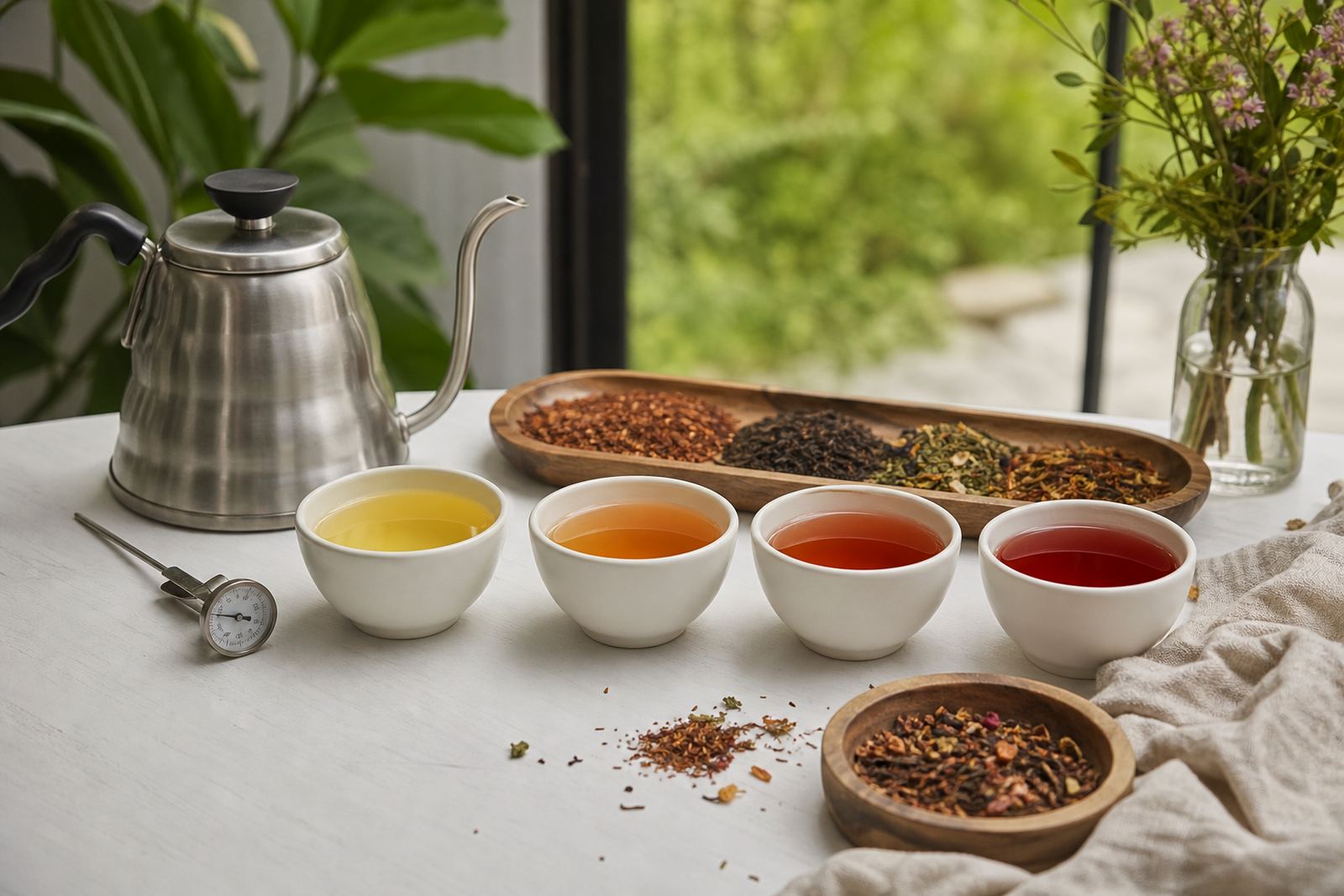
As a simple rule, hotter water pulls flavour out faster, while cooler water draws it out more slowly. That is why rooibos can take boiling water quite well, but green tea usually needs a gentler pour. If your kettle only has one setting, let the water stand for a short time before pouring. Even a few minutes can make a big difference.
- Boiling water suits rooibos and many black teas.
- Water below boiling suits green teas and some delicate herbal infusions.
- If tea tastes bitter, the water may have been too hot or the steep too long.
Rooibos and herbal infusions: strong heat, steady flavour
Rooibos is one of the easiest teas to work with because it handles high heat well. In most cases, freshly boiled water is the best choice. This helps draw out the warm honeyed character and deep colour without making the cup harsh. Many herbal blends also do well with near-boiling water, especially if they include roots, bark, seeds or dried fruit.
For a clean, full cup, use a covered teapot or mug and allow enough time for the tea to steep properly. In coastal areas like Cape Town or Durban, where humidity can affect how tea is stored, keep your leaves in a dry sealed container before brewing. Moisture softens flavour and can leave the cup dull.
- Rooibos: use boiling water, then steep 5 to 7 minutes.
- Herbal infusions with flowers or leaves: 90 to 100 degrees Celsius.
- Herbal blends with roots or spices: boiling water usually works best.
Black tea: hot water for body, but not too much
Black tea usually needs hot water to open up properly. Aim for water just off the boil if the tea is lighter in style, or freshly boiled water for stronger blends. The aim is a cup with body and colour, not one that turns dry on the tongue. If you prefer milk with your black tea, a slightly stronger brew helps the flavour carry through.
In colder towns like Bloemfontein, hot tea often cools quickly so pre-warming the pot or cup helps keep the brew on track. In offices, especially during load-shedding, use water that is hot enough from the start because reheated tea water can taste flat. A good black tea should hold up well even when the day is busy.
- Use boiling or just-off-boil water for most black teas.
- Steep 3 to 5 minutes, then taste before extending the time.
- If the cup is too sharp, reduce steep time before reducing water heat.
Green tea: cooler water keeps the leaf gentle
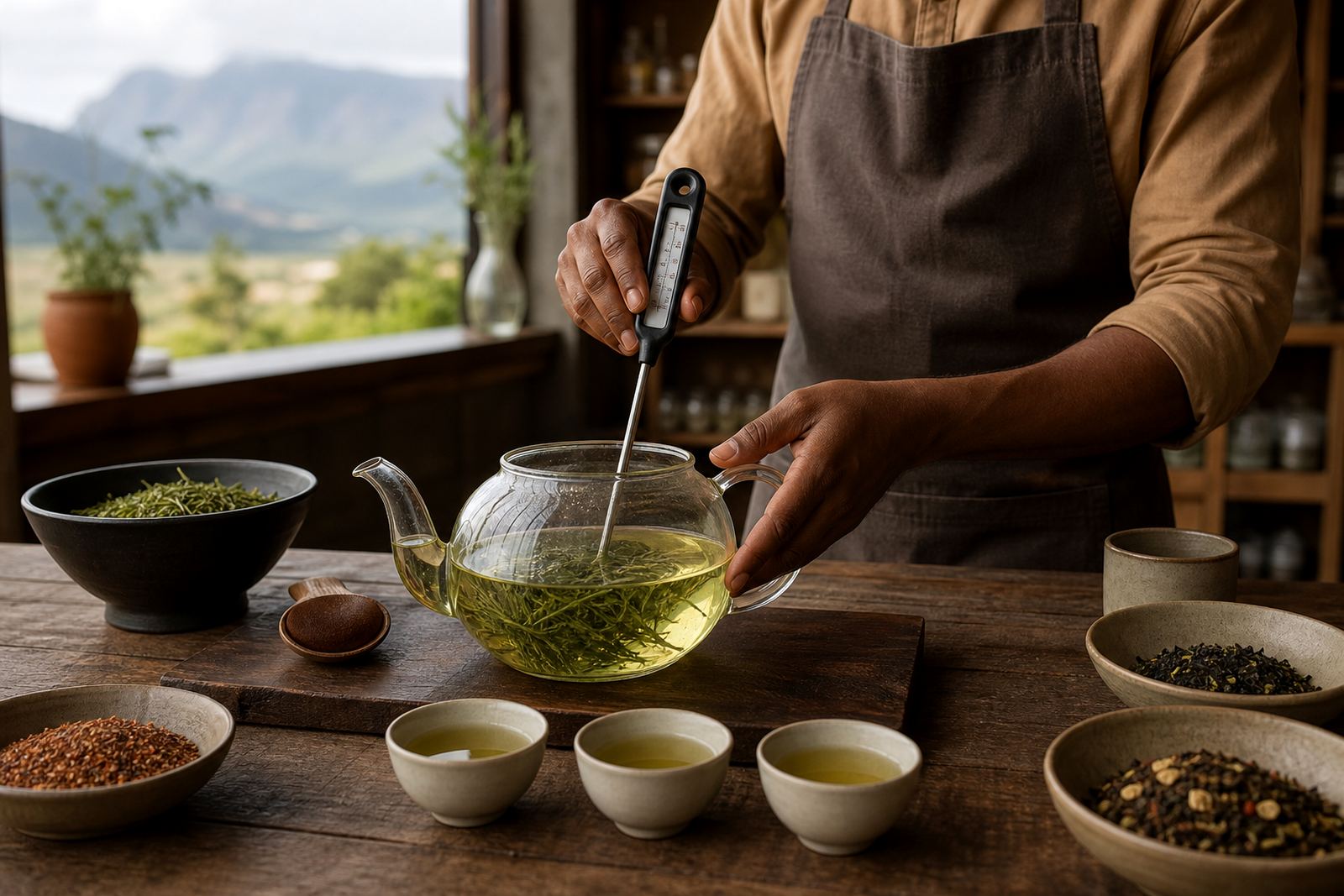
Green tea is the one most likely to go bitter if the water is too hot. Use water that has cooled a little after boiling, usually around 75 to 85 degrees Celsius. If you do not have a thermometer, boil the water then let it stand for 3 to 5 minutes before pouring. That small pause is often enough to protect the flavour.
A lighter pour gives green tea a cleaner, more fresh taste. It also helps avoid that cooked or grassy edge that can appear when the leaf is shocked by boiling water. This matters even more for fine loose leaf teas, where the leaf shape and freshness play a big role in the final cup.
- Do not use rolling boiling water on green tea.
- Start with 75 to 85 degrees Celsius.
- Steep for 1 to 3 minutes, then pour off straight away.
Simple temperature steps you can use at home or at work
If you are making tea for a family table, a meeting room or a small hospitality setup, a repeatable method helps. You do not need fancy gear. A kettle, a timer and a bit of practice are enough to get consistent results. The main thing is to match the water heat to the tea type and the steep time to the leaf size.
When preparing several cups at once, follow the same process every time so the tea tastes the same from the first cup to the last. That is especially useful for offices in Stellenbosch, Somerset West or Paarl where tea is made through the day and people expect a steady result.
- Rooibos and most herbals: pour straight after boiling.
- Black tea: pour when the boil has just settled.
- Green tea: let boiled water rest before pouring.
- Use enough water for the full steep, not a splash added later.
Common mistakes that change the taste
Many tea problems come from the water, not the tea itself. Overheating, oversteeping and using stale water are the usual culprits. If the kettle water has been boiled many times, it can taste dull and leave the cup flat. Fresh water gives a cleaner flavour and a brighter finish. It is a small thing but it makes a proper difference.
Another common mistake is leaving the tea leaves in the pot too long. Even the right temperature can turn a pleasant cup bitter if the brew keeps sitting on the leaf. Strain or remove the bag once the tea has reached the right strength. If you are serving guests or clients, a little consistency goes a long way and it saves the need to start again.
- Do not reuse water that has been boiled several times.
- Do not leave tea steeping while you answer calls or step away.
- Do not guess when you can taste and adjust the next cup.
If you want better tea every day, start with the heat, then work on steep time and leaf amount. Those three choices shape the cup more than almost anything else.