Start With the Cup Size and the Tea Style
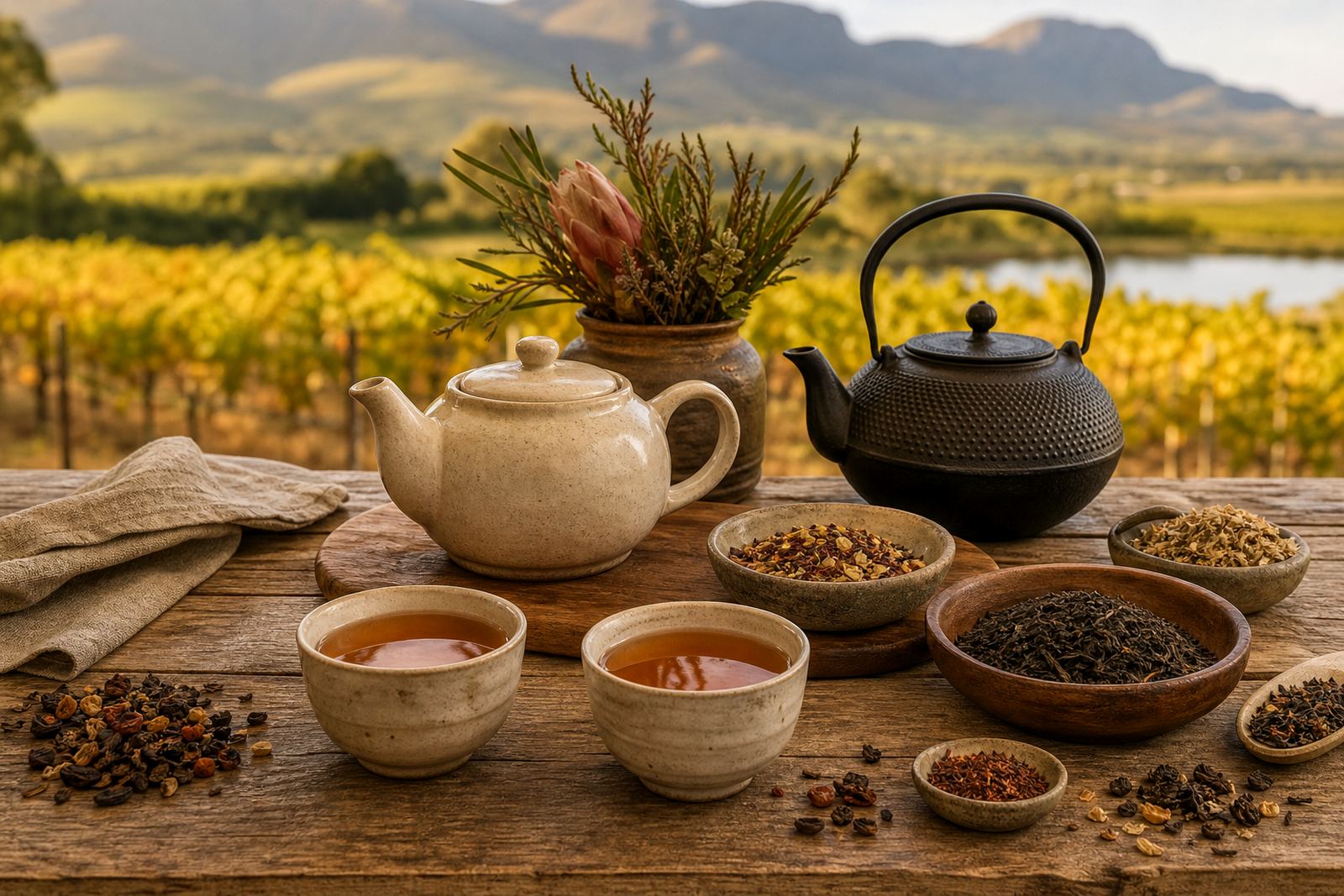
Before you scoop anything, work out how much tea you are making and what style you are brewing. A small 200 ml cup needs far less leaf than a 500 ml mug or a teapot for two, and loose-leaf tea, rooibos and herbal infusions all behave differently in the pot. Fine blends pack down more tightly, while larger leaf teas need a looser measure to open properly.
As a general starting point, use 2 to 3 g of tea for 250 ml of water. Rooibos and many herbal blends can sit closer to 2.5 to 3 g, while some fuller leaf teas may work well at 2 g if the flavour is strong. If you are serving in a Stellenbosch guest house, a small tasting room or a busy office kitchen, keep one measurement method and stick to it so every cup comes out the same.
Use a Spoon When You Need a Quick, Repeatable Measure
A teaspoon can work well if you use it the same way each time. The problem is that not every spoon holds the same amount, and a heaped spoon is not the same as a level spoon. For home brewing, start with a level teaspoon for lighter blends and a slightly rounded teaspoon for rooibos or chunkier infusions. Then taste and adjust.
- Use the same spoon for every brew session.
- Level the spoon with a knife or finger for consistency.
- Do not compress the leaves into the spoon.
- Write down what works for your favourite mug or teapot.
If you prepare tea for guests or staff, this method keeps things simple. It also helps during load-shedding when you want a quick cup without pulling out extra gear. Just remember that spoon measures are practical, not exact, so a small difference in flavour is normal.
Weighing Tea Gives the Most Accurate Result
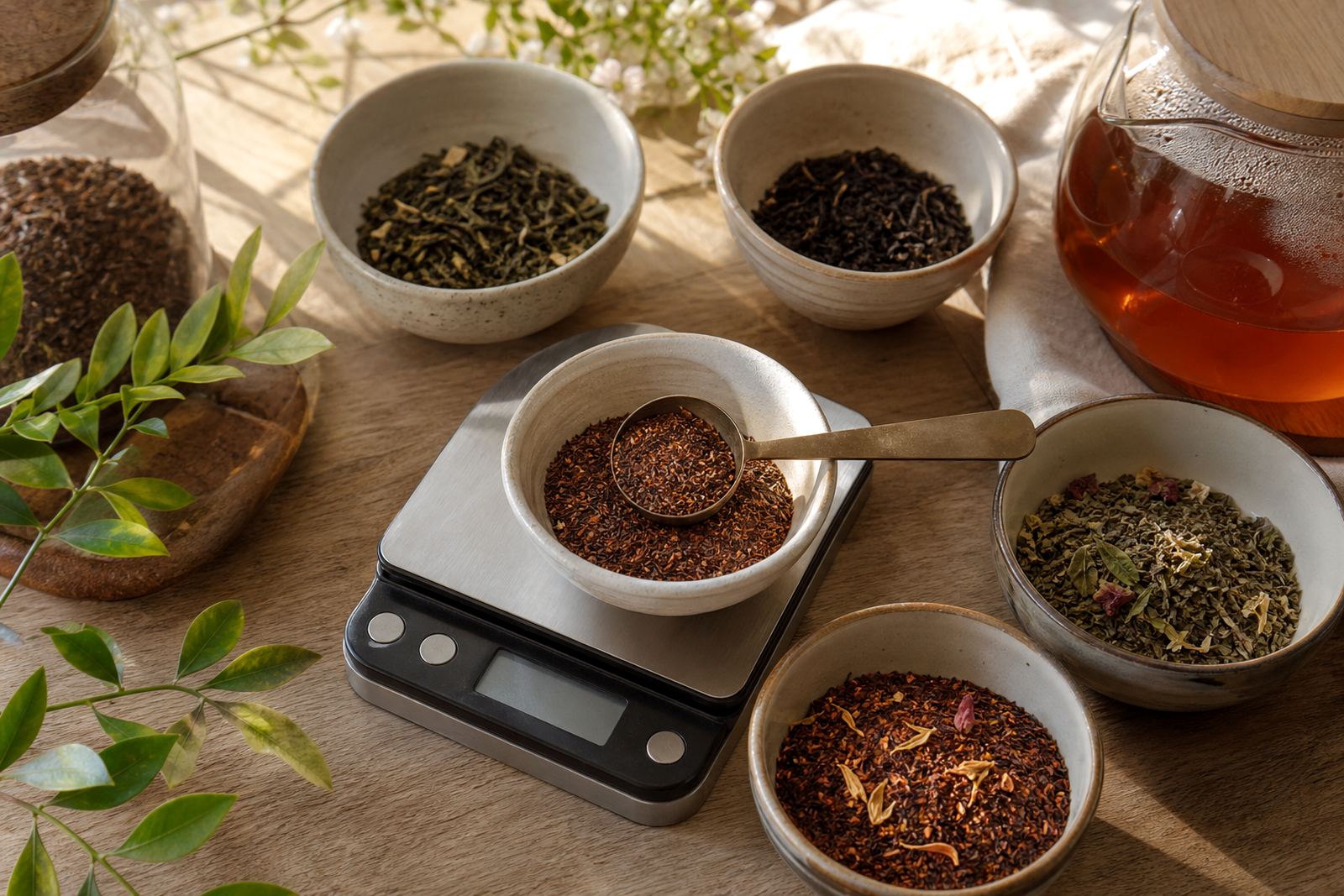
If you want the same brew every time, a small digital scale is the most reliable tool. It is especially useful for hospitality tea supply, tea menu curation and subscription boxes where the leaf must be portioned carefully. Weighing removes guesswork and helps you adjust for cup size, water strength and steeping time.
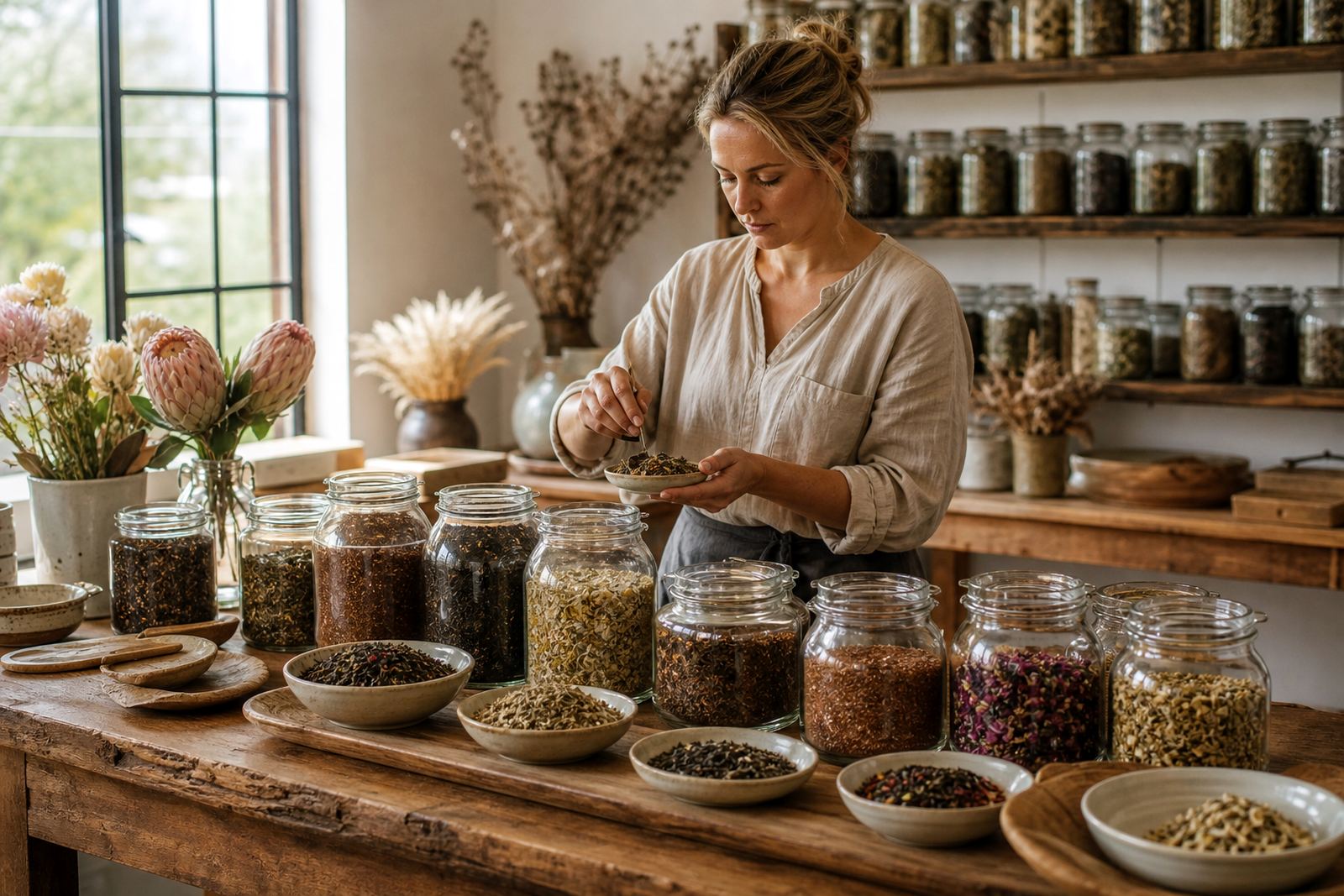
For day to day use, weigh a few test brews and note the result. Try 2 g, 2.5 g and 3 g for a 250 ml cup, then compare the flavour, colour and finish. Once you find the sweet spot, batch your portions in small containers or sachets for easy use. This is handy in humid coastal areas too, where tea left open can take on moisture if it is not sealed properly.
- Use grams, not teaspoons, if you want exact repeatability.
- Weigh tea after you choose the cup or pot size.
- Keep portions in airtight containers away from heat and sunlight.
- Recheck your measure if the leaf cut changes from one blend to another.
Learn the Visual Cues That Tell You the Measure Is Right
Not every brewing space has a scale, and not every blend needs one. With practice, you can use sight to judge a fair measure. A good portion should cover the base of a mug without forming a thick pile, or sit comfortably in the bottom of a teapot basket without being packed tight. The leaves should look free to move once water is added.
For rooibos, a slightly fuller scoop often works because the cut is lighter and more airy. For finer herbal infusions, go easier so the brew does not turn bitter or overly strong. If the tea looks cramped in the infuser, use a larger basket or reduce the amount slightly. That small adjustment can make a real difference in flavour and flow.
Match the Measure to the Brew Method
The way you brew tea changes how much leaf you need. A covered pot, a tea press, a basket infuser and a cup with a simple strainer all extract flavour differently. A longer steep in a large pot may need less leaf than a fast single-cup brew, while a small infuser often needs a little more room for the tea to expand.
Use this quick guide as a starting point:
- Single cup, 250 ml: 2 to 3 g tea
- Large mug, 350 to 400 ml: 3 to 4 g tea
- Teapot for two cups: 5 to 6 g tea
- Rooibos infusion: allow a touch more leaf if you want a fuller cup
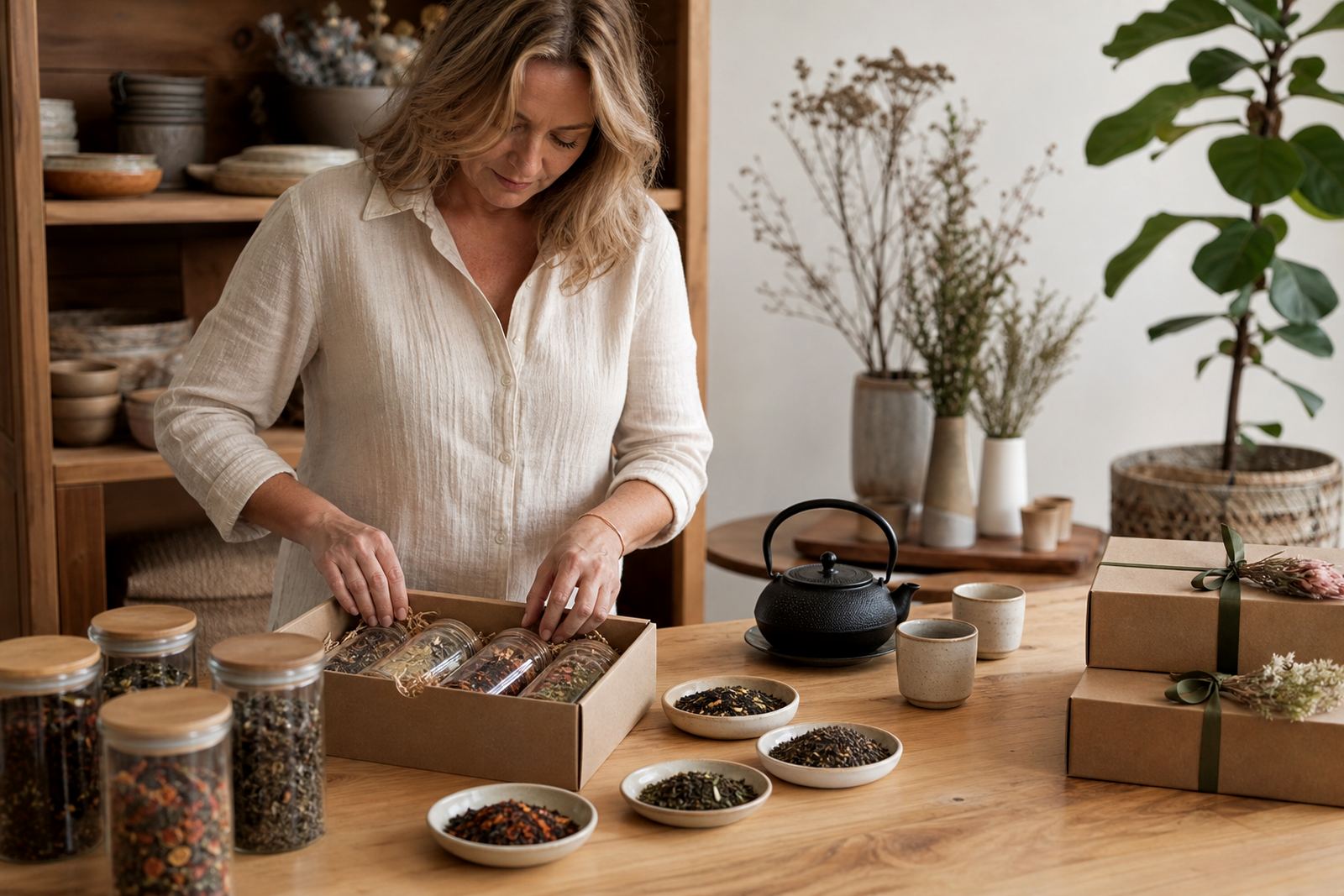
If you are serving in an office tea station or a wedding tea bar, pre-measure portions into small cups or bags. This saves time and keeps every serving close to the same strength.
Check, Taste and Adjust Before You Serve Again
The best measure is the one that gives you the flavour you want every time. Taste the tea as soon as it is brewed, then decide if the next cup should use more leaf, a smaller scoop or a shorter steep. A tea that tastes thin often needs a little more tea, while a cup that is too strong may only need a lighter measure next time.
Keep a simple brew note for each blend: amount of tea, water volume, steep time and result. After two or three brews you will usually know what works best. This is especially helpful for hospitality teams and corporate gifting orders where consistency matters. Once your method is set, the whole process becomes quicker and less wasteful, even on a busy morning.
- Start with one standard measure for each blend.
- Test the flavour in plain water, not milk first.
- Adjust one variable at a time.
- Keep notes where the whole team can find them.
Measure well and the rest follows naturally. A steady spoonful, a careful weigh-in or a reliable visual cue can take the guesswork out of every brew.