Start with the right water temperature
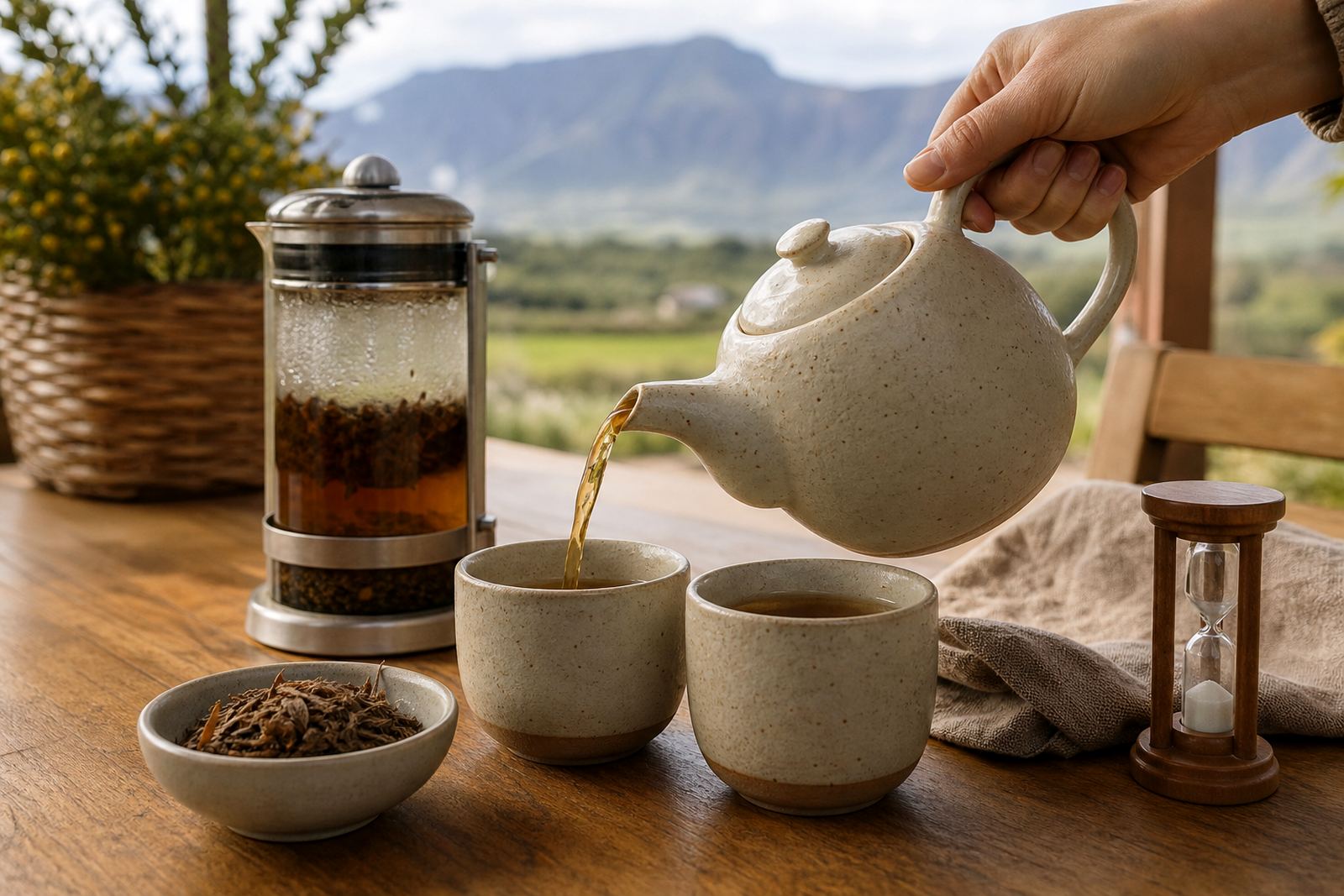
Boiling water is not ideal for every tea. Black tea can take hotter water, but green tea, white tea and many herbal infusions can turn harsh if the water is too hot. If you pour straight from a rolling boil, the leaves can release too many tannins too fast, and that is when the cup tastes dry or bitter.
For loose-leaf tea, let the kettle rest for a short time before pouring. As a simple guide, use just off the boil water for black tea, and cooler water for lighter teas. In Stellenbosch and along the coast, where humidity can affect stored tea, keep your leaves sealed and dry so they brew properly when you do make a cup.
- Black tea: use hot water, but not a violent boil in the cup
- Green tea: allow the water to cool a bit before pouring
- Rooibos and herbal infusions: use hot water, then control the steep time
Measure the leaf before you pour
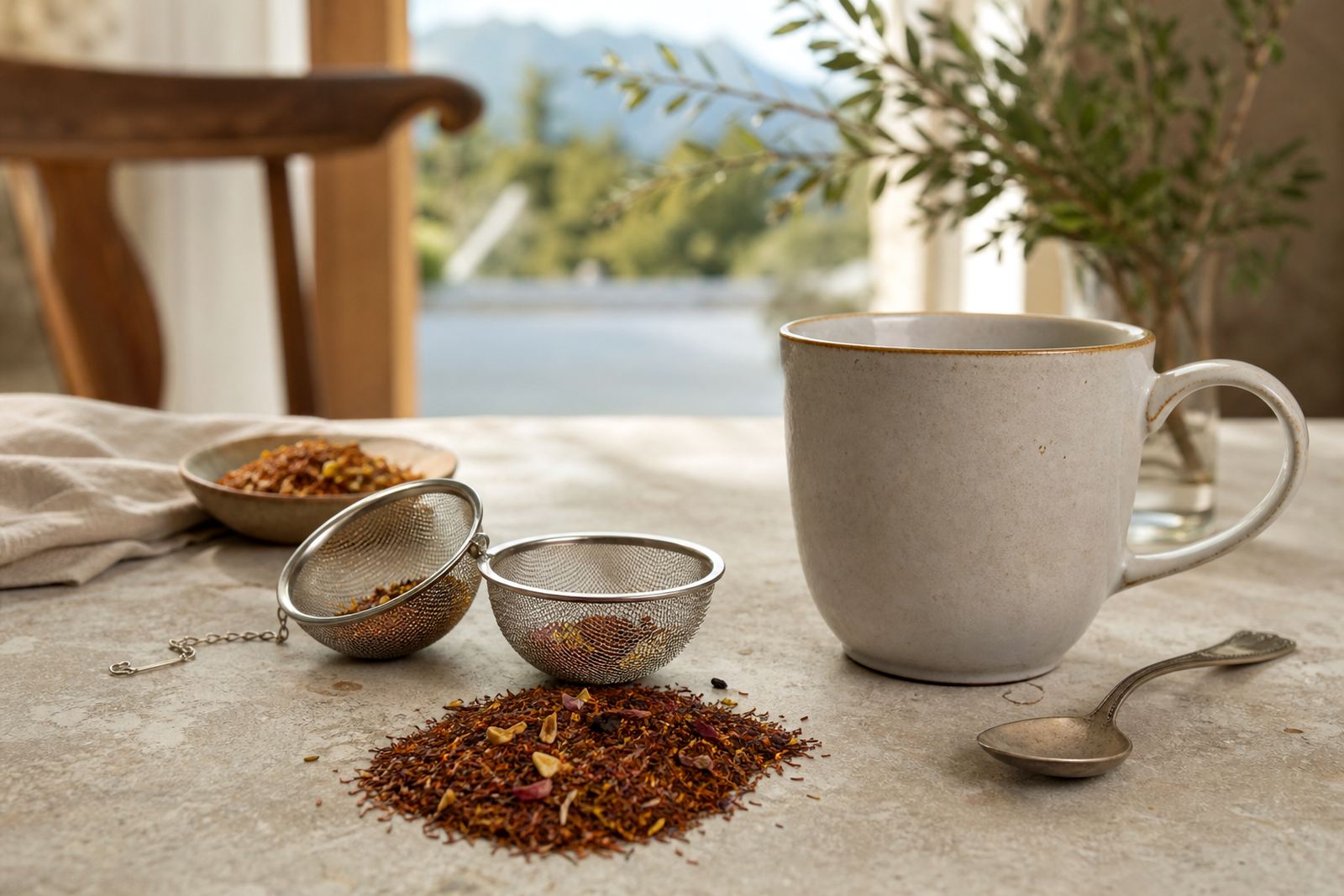
Too much tea in too little water is one of the fastest ways to end up with a bitter mug. Loose-leaf tea needs room to unfurl, and if the brew is overly concentrated it can taste hard and overdone. A small spoonful too many can change the whole balance, especially with finer blends.
As a starting point, use one teaspoon per cup and adjust from there depending on the blend and your own taste. For bigger mugs, use a little more water rather than packing in extra leaf. If you are brewing for a group in an office or at a function, measure consistently so every cup tastes the same.
- Use a proper teaspoon measure rather than guessing
- Keep the leaf loose, not compressed
- Increase water before increasing tea
Watch the steep time closely
Leaving tea to stand too long is a common cause of bitterness. Even a good blend can become unpleasant if the leaves sit in water for minutes too long. The flavour keeps changing after the first few minutes, and the later stage is often where the sharp edge appears.
Set a timer. That small habit makes a big difference. Some people forget while answering the gate, taking a call, or dealing with load-shedding and then come back to a cup that has gone well past its best. If you like a stronger brew, try a little more leaf or slightly hotter water instead of leaving it longer.
- Set a timer for every brew
- Remove the leaves or strain promptly
- Test one minute less if the cup tastes harsh
Choose the right vessel and strain properly
The teapot or mug you use can also affect the final cup. A vessel that holds heat too long can keep extraction going after you meant to stop. That is fine for some teas, but not if you are trying to avoid bitterness. A clean strainer also matters, because leftover residue from earlier brews can make the next cup taste stale.
If you brew loose-leaf tea in a pot, pour it out once it has reached the right strength. Do not leave the leaves sitting in the pot for the whole morning. For smaller batches at home or in a hospitality setting, rinse the pot first and make sure it is free of old tea film. Tiny details count more than people think, especially when serving guests.
- Use a clean pot or mug every time
- Strain tea as soon as the steep is done
- Do not let brewed tea sit on a hot plate for too long
How to reduce bitterness in rooibos and herbal blends
Rooibos is naturally smoother than many teas, but it can still taste flat or slightly bitter if overbrewed or mixed with too much spice. Herbal infusions vary widely, so there is no single rule for every blend. Citrus peel, mint, hibiscus and some root ingredients can all become sharper if left too long in the water.
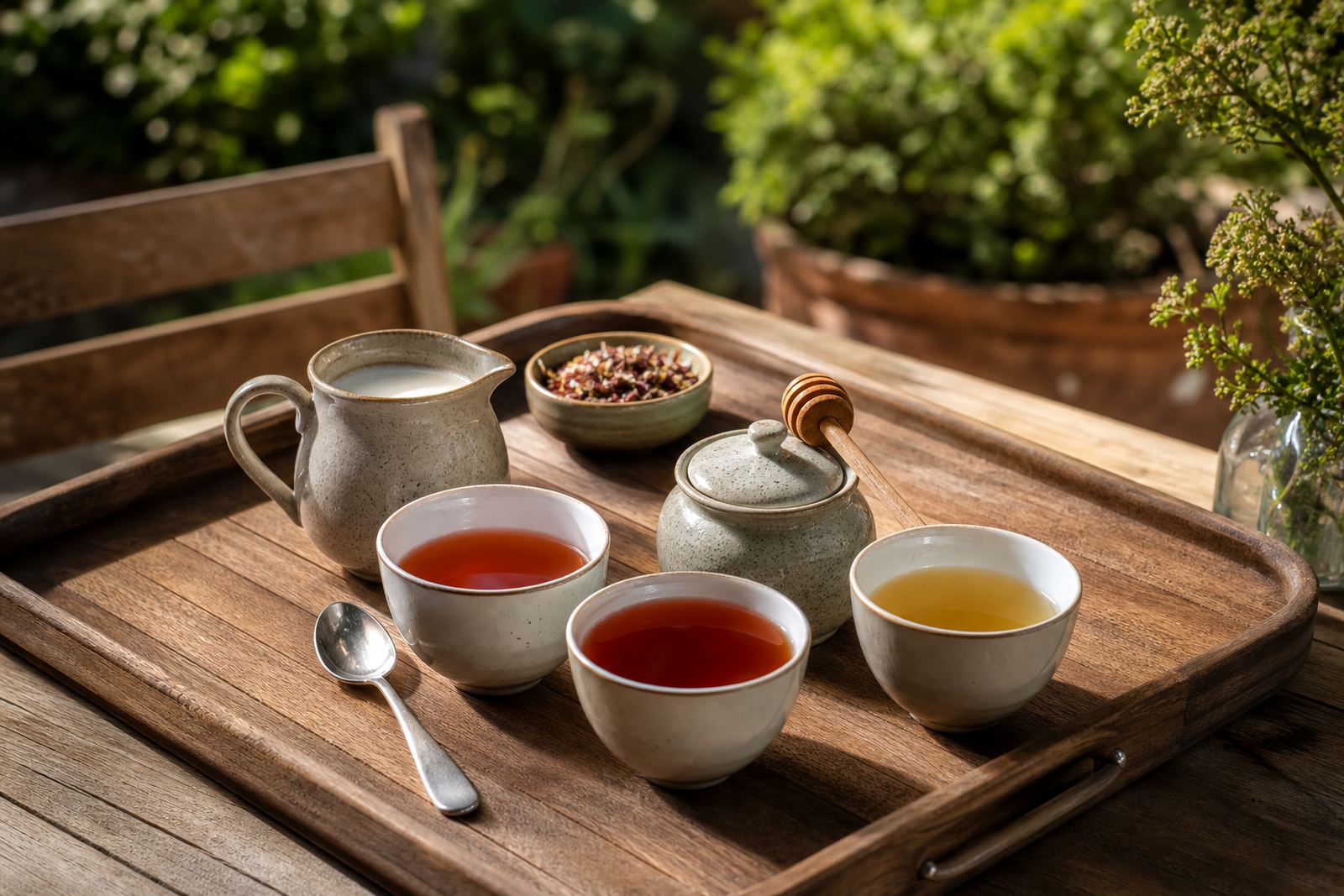
For these blends, keep an eye on colour and aroma as well as the clock. Once the cup smells right and the flavour has opened up, strain it. If you are serving a mixed crowd, such as at a wedding favour table or tea tasting session, offer a milder brew and a stronger brew so people can choose what suits them.
- Rooibos: steep until flavour develops, then strain without delay
- Herbal blends: treat each ingredient mix with care
- Sweeten after brewing if needed, not during oversteeping
Simple checklist for a smoother cup every time
If bitter tea keeps happening, use a short checklist and check each step before you pour. Most brewing problems come from a small number of habits, not from the tea itself. Once you fix the basics, the cup usually improves straight away.
At Cup Of Tea Co, we often see the same issues in homes, offices and guest spaces across South Africa. A better brew is usually a matter of water temperature, leaf quantity and timing. Keep the process simple and repeatable, and the flavour will be more consistent from the first cup to the last one.
- Use fresh water
- Measure the leaf correctly
- Match the water temperature to the tea
- Steep for the recommended time only
- Strain and serve straight away
If you need help choosing a tea that suits your taste, or want advice for a workplace, hospitality menu or gifting order, you can reach us through the enquiry form on our contact page.