Choose the Right Green Tea for a Smoother Cup
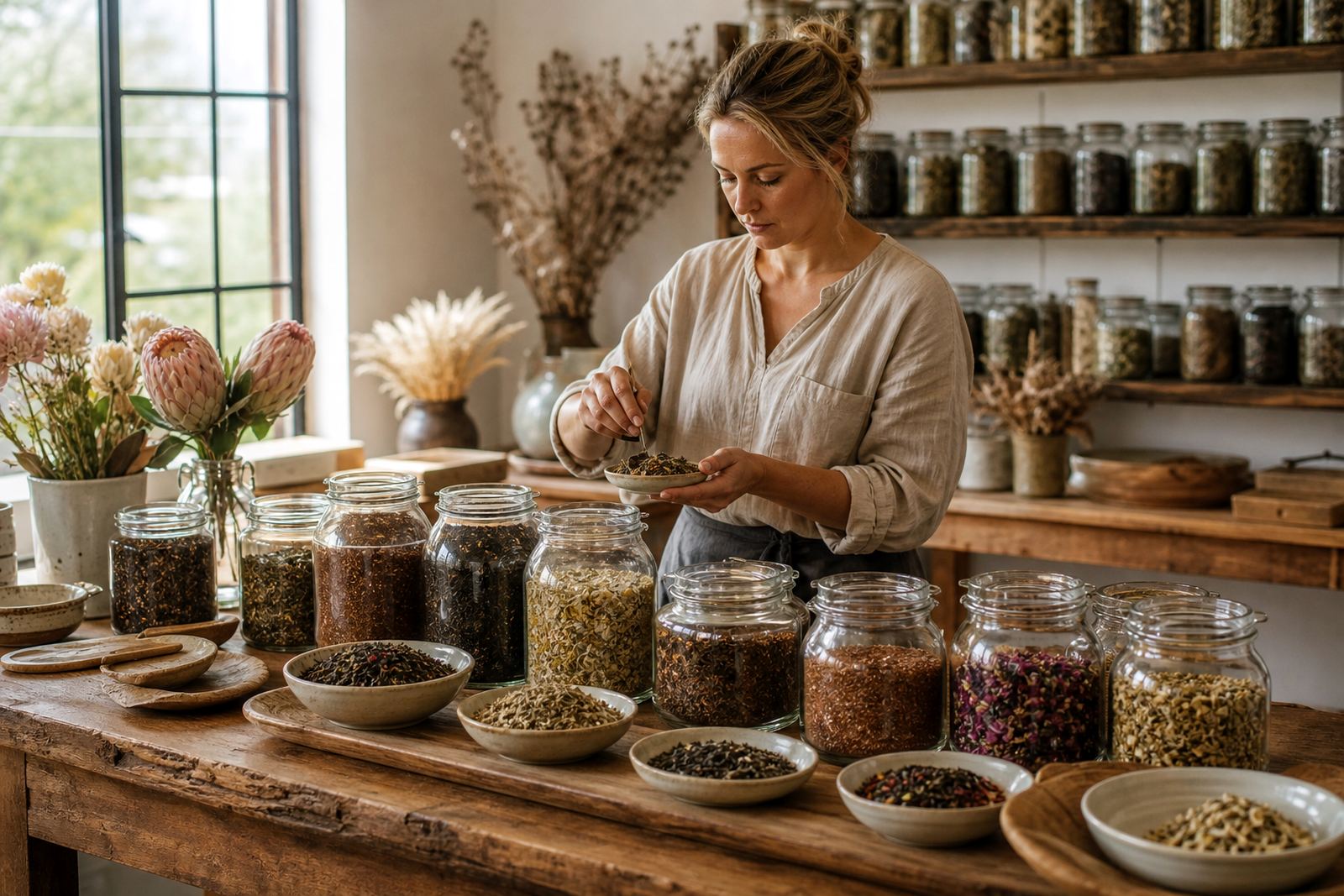
Start with loose-leaf green tea that looks fresh and smells clean, grassy or lightly sweet. If the leaves are old or dusty, the cup can taste flat or harsh, especially when you use water that is too hot. For South African homes where the kettle gets used often during load-shedding shifts, it helps to keep a small tin or jar close to the kettle so the tea stays dry and away from steam.
Green tea varies quite a bit from one style to another. Some leaves open quickly and give a light cup in 2 minutes, while others need a little more time. If you are new to brewing, choose a mild loose-leaf blend first and keep notes on what works best for your taste.
- Look for whole leaves rather than fine dust.
- Store tea in an airtight container away from heat and moisture.
- Use fresh water each time, not water that has been boiled over and over.
Heat the Water, Then Let It Rest
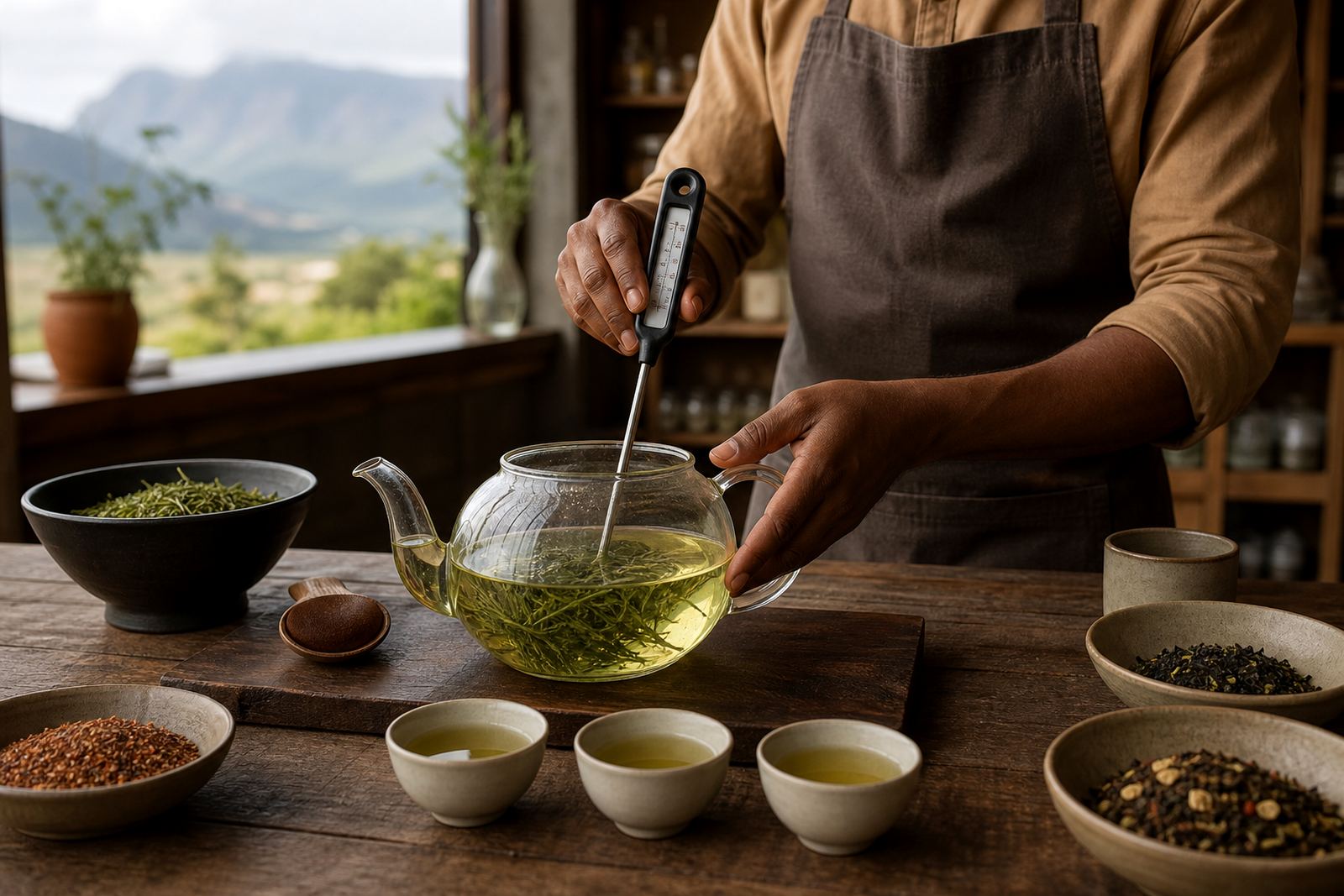
The main secret to a smoother green tea result is gentler water. Boiling water can scorch the leaves and bring out bitterness, so let the kettle switch off and rest for a short while before you pour. A good target is around 70 to 80 C for many green teas, though you do not need a thermometer every time. If the water is steaming hard and bubbling, it is still too hot.
A simple home method works well. Boil the water, then wait 3 to 5 minutes before brewing. In cooler winter weather in Stellenbosch or on a chilly morning in Bloemfontein, you may need less waiting time. On a hot Durban afternoon, the cup can cool a little faster so your serving mug should be warm, not cold.
- Do not pour boiling water straight onto the leaves.
- Use a kettle with a clear switch-off if possible.
- If the water smells stale, empty it and refill with fresh water.
Measure the Leaves and Keep the Ratio Steady
Too much leaf can make green tea taste sharp, while too little leaves the cup weak. A sensible starting point is 1 teaspoon of loose-leaf tea per 250 ml of water. For a larger mug, use a little more, but keep the same balance. If you are serving guests, it is better to brew a second pot than to overload the first one.
Measuring the leaf also helps when you are comparing different teas. A delicate Chinese-style green tea may need a lighter hand, while a more full-bodied leaf can handle slightly more tea. Use the same spoon each time so your results stay consistent, otherwise the taste shifts too much from cup to cup.
- 1 teaspoon per 250 ml is a good starting point.
- Use a teapot, infuser basket, or filter that gives the leaves space to open.
- Do not pack the leaves down tight.
Steep Briefly and Taste Before You Add More Time
Green tea usually needs a short steep. Start with 1 to 2 minutes, then taste. If the cup is too light, let it stand for another 20 to 30 seconds. It is easier to add time than to rescue a bitter cup once the water has pulled too much from the leaves. A timer on your phone works fine, and it saves guesswork during a busy morning.
When the steep is right, the flavour should feel clean and soft with a gentle finish. If it turns bitter at the back of the throat, the water was likely too hot or the steep too long. Some blends are forgiving, but green tea usually rewards patience and a light touch.
- Begin with 1 to 2 minutes.
- Taste before pouring the whole pot.
- Remove the leaves once the flavour is where you want it.
Use the Cup, Mug or Teapot That Fits the Moment
Your brewing vessel changes the result more than many people think. A small teapot keeps the water hotter for longer, while a wide mug cools the tea quicker. For office tea supply in Cape Town or Pretoria, a simple infuser mug is practical because it is easy to rinse and does not need much space. In hospitality settings, a proper teapot gives a steadier pour and a neater table service.
If you are brewing for a tea tasting session or a small event, pre-warm the pot with hot water first. That small step helps the tea brew evenly, and it keeps the cup from cooling too fast in an air-conditioned room. It also makes the whole process feel calmer and more controlled.
- Warm the vessel before brewing.
- Choose glass, ceramic or stainless steel for easy cleaning.
- Use lids to hold the heat during steeping.
Simple Troubleshooting for Bitterness, Weakness and Cloudiness
If the tea tastes bitter, lower the water temperature next time or shorten the steep. If it tastes weak, add a little more leaf rather than leaving it in much longer. Cloudy tea can happen when the water is too hot or the leaves are crushed too fine. The fix is usually small and practical, no need to start over from scratch.
For a home routine, keep a few notes on your phone or on a notepad near the kettle. Write down the tea used, the water rest time, and the steep time. After two or three tries you will see a pattern and the result gets more reliable. That is especially useful if you are brewing for family, guests or a staff room where everyone likes tea a bit differently.
- Bitter tea: cooler water, shorter steep.
- Weak tea: more leaf, not much more time.
- Cloudy tea: avoid rolling-boil water and broken leaves.