Choose the right infuser for the tea you are brewing
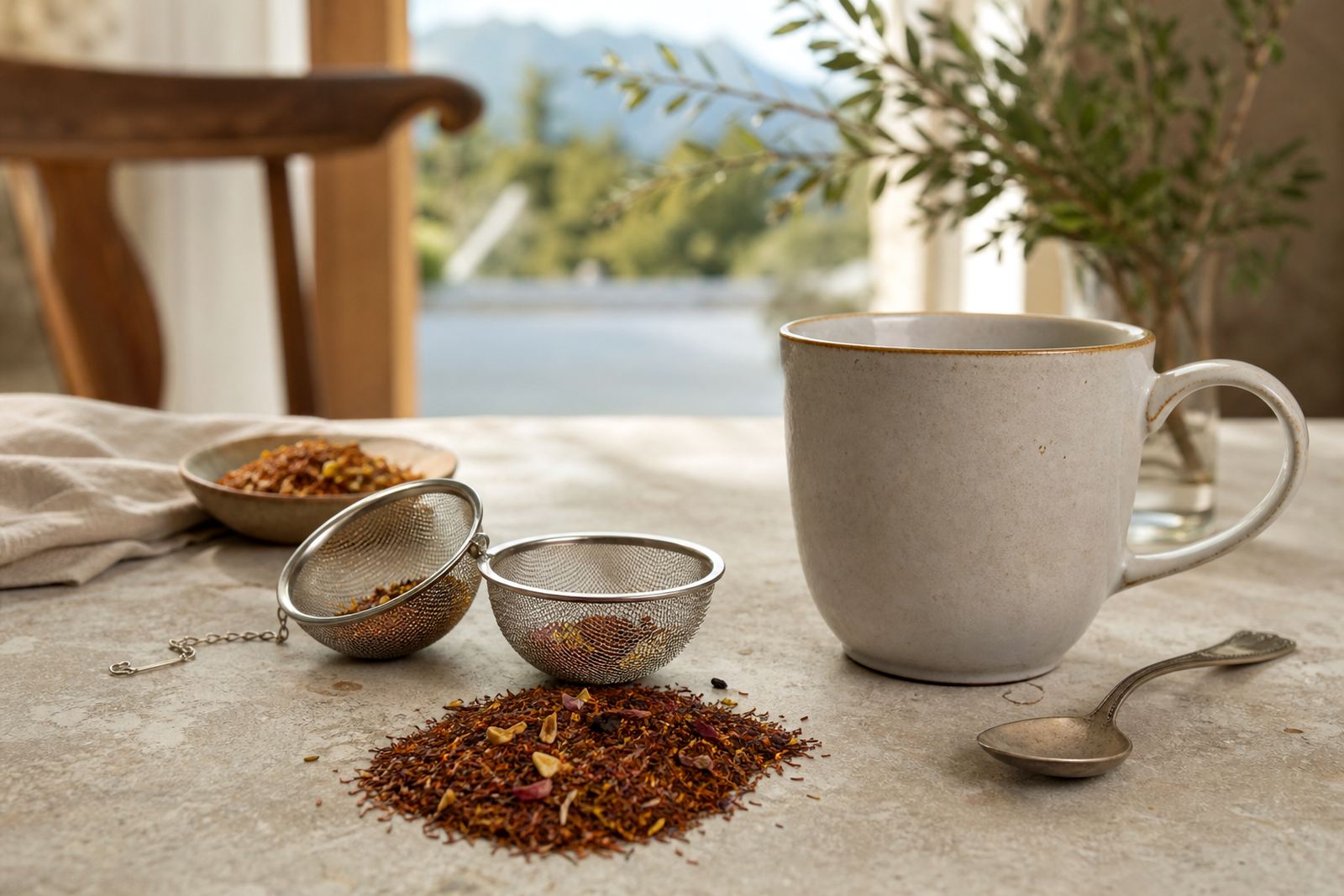
Start with an infuser that gives the leaves room to open. Loose-leaf tea and rooibos need space to move in the water, otherwise the brew can come out weak on top and overworked at the bottom. A basket-style infuser or a roomy mesh ball is usually better than a tiny spoon-sized type, especially for finer rooibos or leaf blends.
If you are making tea for one mug, check that the infuser sits securely on the rim and does not tip over when you add hot water. For a teapot, use an infuser that covers enough surface area so the leaves can spread out. In Stellenbosch homes, where many people brew more than one cup at a time, a larger infuser often saves time and gives a more even cup.
- Use a basket infuser for fuller leaf movement
- Choose stainless steel or food-safe silicone for everyday use
- Make sure the infuser is deep enough for expansion
- Check that fine mesh will not let small particles escape
Measure the right amount of loose leaf tea
A common mistake is filling the infuser too tightly. Tea needs space to unfurl and release flavour, so a loose fill is usually best. For a standard mug of 250 ml, use about 1 heaped teaspoon for most black or green teas, and 1 to 2 heaped teaspoons for rooibos or herbal infusions. If the blend is very light and leafy, you may need a little more.
For larger mugs or travel cups, increase the amount slightly rather than pressing the tea down harder. If the leaves are broken and fine, like many rooibos blends, use the lower end of the measure so the cup does not become dusty or over-strong. Keep a small scoop in the tea tin or jar, it makes the routine much easier on busy mornings.
- Do not pack the infuser full to the top
- Leave visible space for the leaves to expand
- Use more tea for larger cups, not tighter packing
- Keep a teaspoon or scoop nearby for consistency
Add hot water at the correct temperature
Water temperature changes the result more than many people expect. Rooibos and herbal infusions do well with freshly boiled water, while green and some delicate leaf teas need slightly cooler water so they do not taste harsh. If you are heating water during load-shedding with a gas stove or kettle on a backup power source, still wait a short moment after boiling before pouring for the more delicate blends.
Pour enough water to cover the leaves fully and allow them to circulate. You should see the tea move freely in the infuser rather than sitting in a tight clump. If you are brewing in a hard-water area, rinsing the kettle now and then helps reduce scale, which can affect the flavour. It seems small, but it makes a difference.
- Boiling water suits rooibos and most herbal teas
- Let water cool a little for green or delicate teas
- Cover all leaves with water straight away
- Use fresh water for a cleaner taste
Steep with care and remove the infuser on time
Steeping time is where many cups go wrong. Leave the infuser in too long and the tea can turn bitter, especially stronger leaf blends. Remove it when the flavour is where you want it. Rooibos usually sits comfortably in hot water for longer than green tea, while herbal infusions vary depending on the ingredients. Taste after a few minutes and adjust next time if needed.
If you are making tea for more than one person, set a timer rather than guessing. That helps when the phone rings or the delivery comes to the gate. Once the tea is ready, lift the infuser and let it drip for a few seconds before placing it on a saucer or small dish. That keeps your counter cleaner and avoids wasted tea.
- Use a timer instead of timing by eye
- Remove the infuser before the cup becomes too strong
- Let it drip for a few seconds before setting it down
- Taste and adjust steep time for your next cup
Keep the infuser clean between brews
Cleaning the infuser properly helps keep each cup tasting fresh. Rinse it as soon as you have finished brewing so leaves do not dry inside the mesh. If tea residue builds up, soak the infuser in warm water with a little mild detergent, then rinse well. For stubborn marks, a soft brush can help get into the corners without bending the mesh.
If you use your infuser every day, give it a deeper clean once a week. This is especially useful for herbal blends with oils, spices or fine particles that cling to the metal. Dry it properly before storing it away. A damp infuser left in a closed tin or cupboard can pick up a stale smell, which is not what you want in the morning.
- Rinse immediately after use
- Soak stubborn residue in warm soapy water
- Use a soft brush for fine mesh
- Dry fully before storing
Fix common problems with your infuser
If your tea tastes weak, the infuser is probably underfilled or too small for the blend. If it tastes harsh, the water may have been too hot for that tea, or the leaves stayed in too long. If tiny pieces are escaping into the cup, the mesh may be too wide for fine rooibos or loose herbal cuts. A small change in infuser size or steeping method usually solves it.
In South African kitchens, it is also common to brew around family schedules, school runs and municipal water interruptions. Keeping a spare infuser and a sealed tin of tea nearby makes the process easier when routine gets messy. Once you have the right setup, tea preparation becomes quick and reliable, not something you have to think twice about.
- Weak flavour often means too little tea or too little space
- Bitterness usually means water was too hot or steeping was too long
- Fine particles suggest a tighter mesh is needed
- Keep a spare infuser for busy days