
Start with the tea style before you add anything
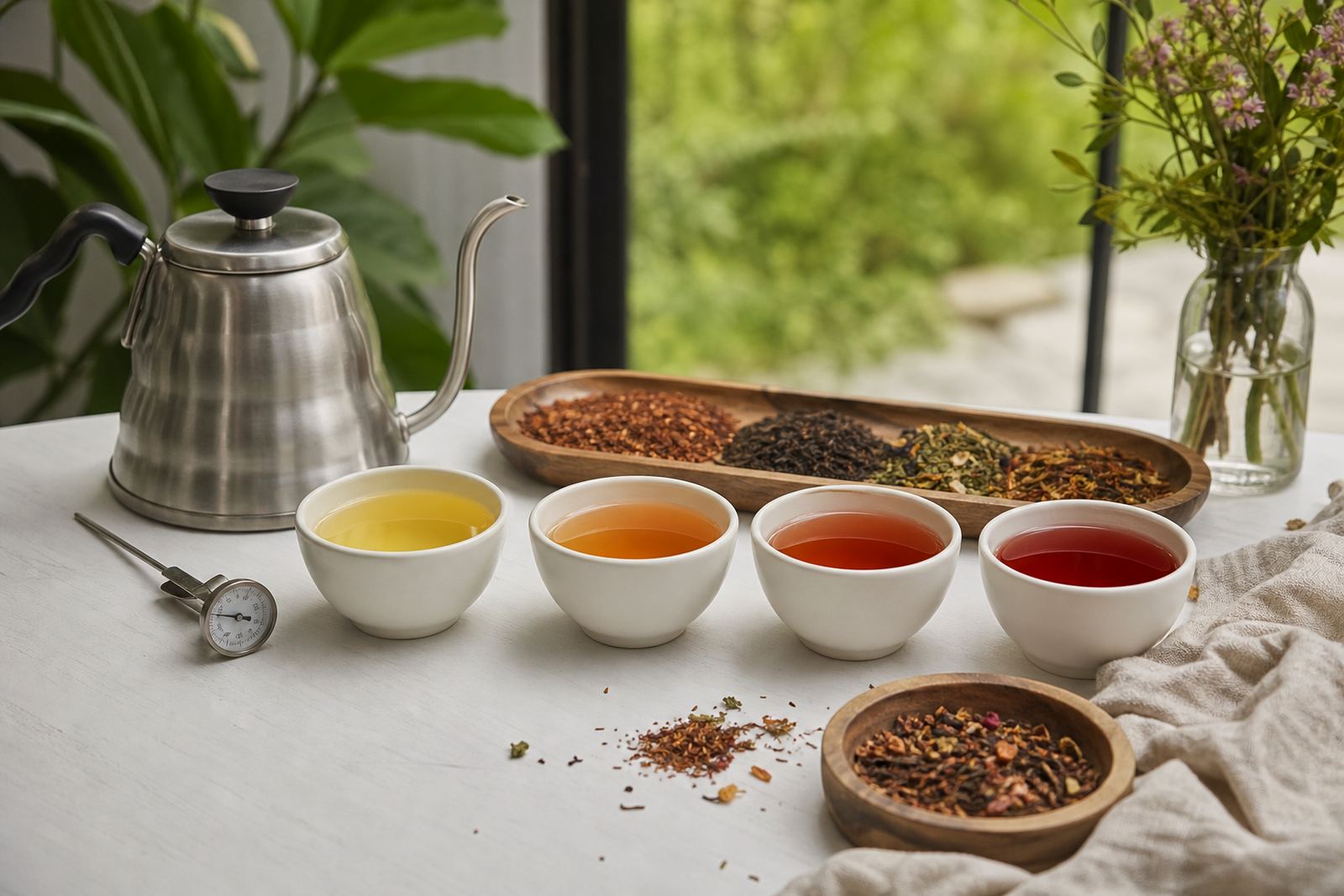
The easiest way to decide is to begin with the character of the tea itself. Strong black teas usually take milk well, rooibos is often excellent with either milk or honey, and lighter herbal infusions are usually better plain so their natural flavour can come through. If you are using loose-leaf tea, the amount of leaf, water temperature and steeping time all affect how much body is in the cup.
In Stellenbosch and across the Western Cape, many people want a cup that suits early mornings, office breaks and cooler evenings. For that reason, it helps to know whether you want a drink that feels creamy, softly sweet, or clean and light. Once you understand the base tea, it becomes much easier to serve it the right way.
- Strong black tea: usually good with milk
- Rooibos: often good with milk, honey or plain
- Green tea: usually best plain
- Herbal infusion: best plain unless the blend needs a little honey
When milk works well and when to leave it out
Milk suits teas with enough strength to carry it. A full-bodied black tea can still taste clear after the milk is added, while a delicate tea can become flat or dull. If you are serving tea in an office, guest lounge or hospitality setting, a sensible rule is to keep milk for stronger brews and leave lighter cups as they are.
Rooibos is naturally soft and rounded, so it can take a small splash of milk if you want a smoother cup. That said, not every rooibos blend needs it. Flavoured blends with vanilla, cinnamon or caramel notes may already have enough warmth, and some people prefer them straight. Start with a little and taste before adding more, otherwise the cup can become heavier than needed.
- Use milk with strong black tea and breakfast style blends
- Try a small amount with rooibos if you want a softer cup
- Skip milk in green tea, floral teas and most fruit infusions
- If the tea tastes thin, the problem may be steeping time, not the lack of milk
Honey for roundness, sweetness and easier sipping
Honey is useful when you want a gentler sweet note rather than the heavier feel of milk. It works especially well with rooibos, chamomile, peppermint and ginger based infusions. A little honey can soften bitterness, bring out spice and help a cup feel more comforting on cold afternoons or when the weather turns damp along the coast.
Add honey after the tea has cooled slightly for a moment, not when it is still boiling. Very hot water can strip some of the aroma and make the sweetness feel one-dimensional. If you use flavoured tea blends, one teaspoon may be enough. In many cases the tea already has natural sweetness in the leaf and you do not need much more.
- Use honey when you want mild sweetness without milkiness
- Best with rooibos, herbal infusions and spiced blends
- Add after brewing, once the cup has settled for 1 to 2 minutes
- Start with half a teaspoon and adjust from there
Which teas are best plain
Some teas are simply better without anything added. Green teas, delicate white teas and many floral infusions have subtle notes that disappear under milk or honey. Drinking them plain lets you notice the first aroma, the mid sip flavour and the aftertaste properly. That is especially useful when you are tasting a new loose-leaf tea for the first time or choosing a tea for a client, guest or tasting session.
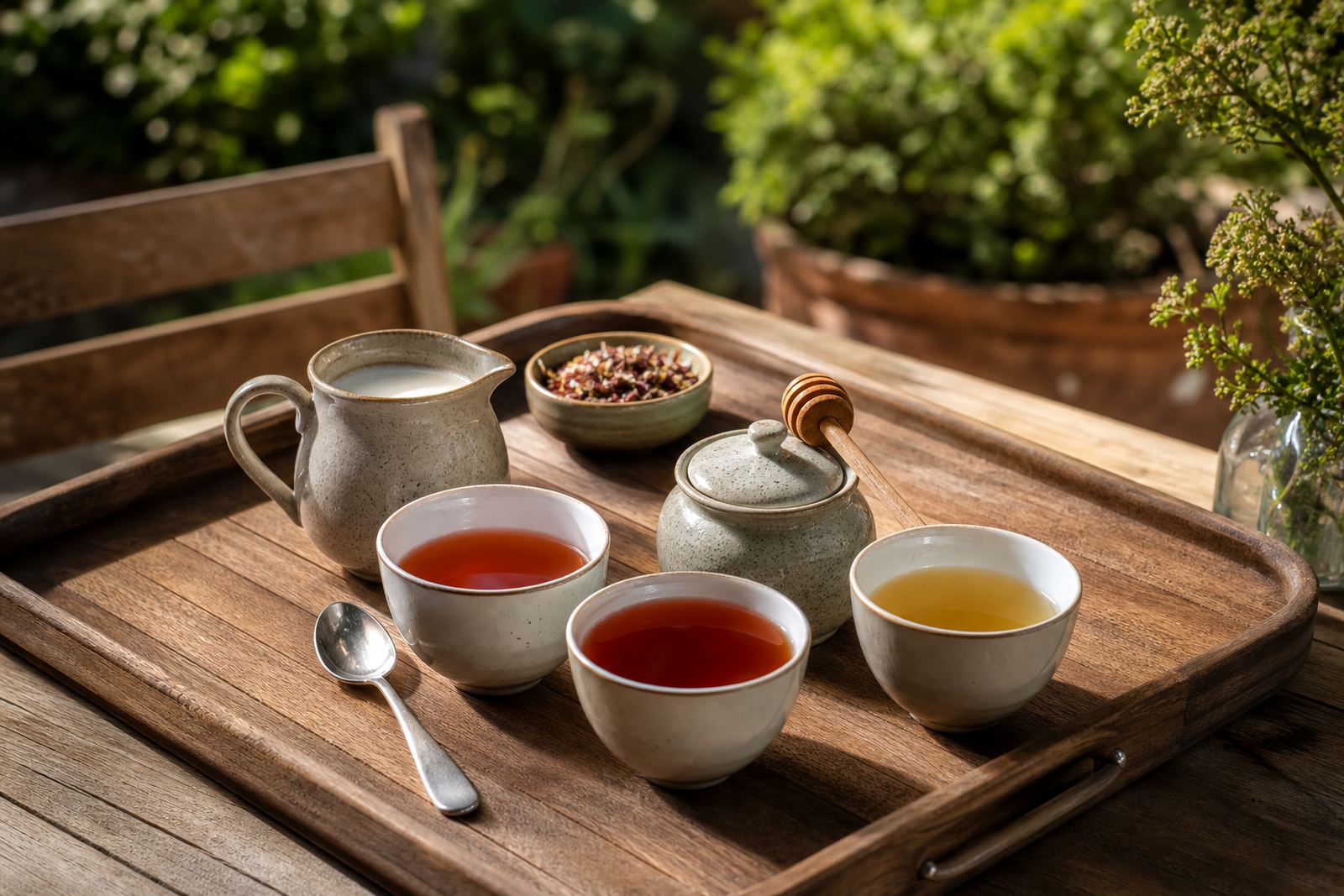
Plain tea is also a good option when you want a lighter cup during the day. In warm weather or during load-shedding stretches, a clean tea can be easier to enjoy because it does not feel too rich. If you are serving guests, put milk and honey on the side rather than in the cup, so each person can decide for themselves.
- Green tea: usually best plain
- White tea: best plain
- Jasmine and floral teas: best plain
- Fruit infusions: usually better plain, unless a guest asks for honey
Simple serving guide for home, office and hospitality
If you are brewing for a group, consistency matters. Keep one kettle for black tea and rooibos, and another water temperature for green or herbal tea. Use separate jugs or small serving pots if possible so milk does not mix into everything. That makes the service cleaner and avoids wasting a good blend on the wrong style of cup.
For offices, guest houses and cafés, a clear tea station saves time. Label the teas by serving style and keep the sweetener choices close at hand. In larger spaces, especially where staff change often, a small note card with simple instructions helps everyone serve the tea properly. It sounds minor, but it cuts down on waste and rebrews.
- Label teas as milk friendly, honey friendly or best plain
- Keep milk chilled and changed regularly in warm conditions
- Offer honey in a clean dispenser or small spooned jar
- Use fresh water and the correct brew time for each tea
A quick tasting checklist before you serve
Before you pour, do a quick check of the tea itself. Smell the leaf, taste the first sip plain and decide if the cup needs anything more. If the flavour is sharp, a little honey may help. If it is bold and dry, milk could suit it. If the tea already tastes balanced, leave it alone. That is often the best choice, even if you are used to adding something every time.
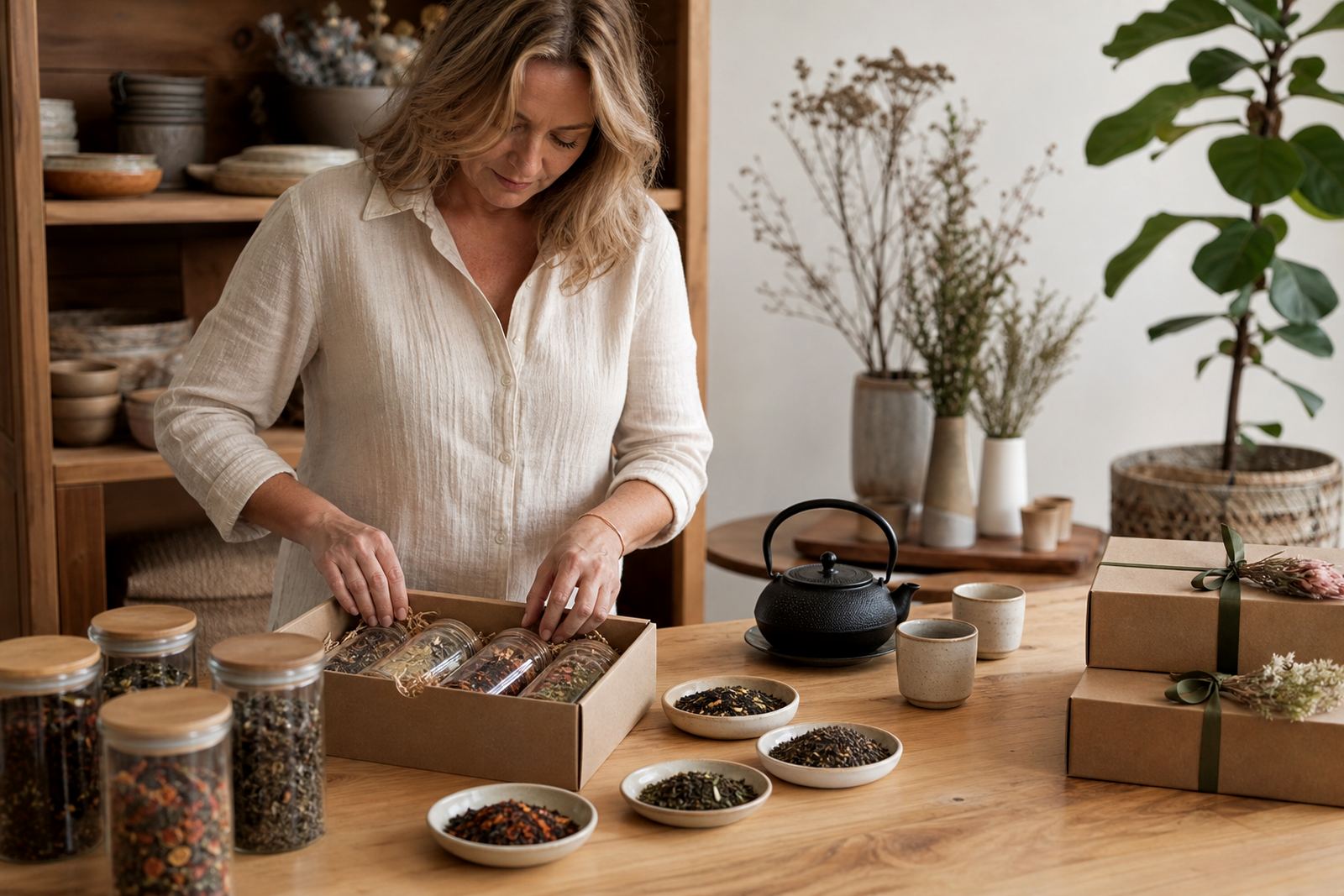
For private label packs, hospitality supply or gift boxes, this kind of guidance is useful because it helps the recipient enjoy the tea as intended. A good cup should feel easy, not complicated. Once you know the base tea and the finish you want, the decision becomes simple.
- Smell the tea before brewing
- Taste the first sip before adding anything
- Use milk for body, honey for soft sweetness, or nothing at all
- Keep the drink aligned with the tea rather than masking it