Start With Clean, Dry Containers
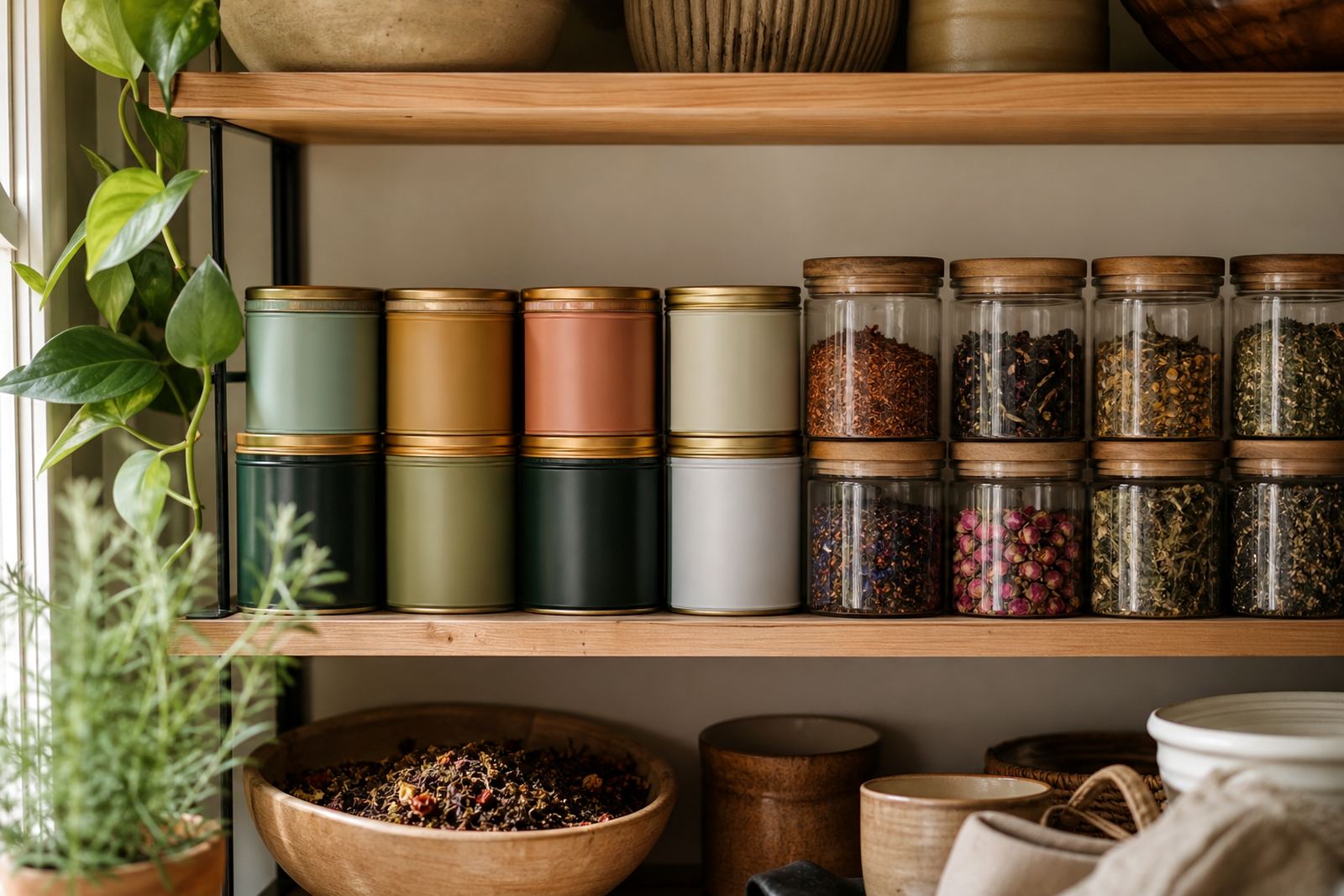
The first step is simple: use a container that is clean, dry and properly closed. Glass jars, food-grade tins and thick ceramic canisters all work well, provided the lid seals tightly. If a container lets in air or sits open on the counter it will pick up cupboard smells, moisture and stale odours from the kitchen. That is not what you want for tea.
Choose a size that suits how quickly you use the tea. A very large jar with only a little tea inside will leave too much air in the container, so the contents lose character faster. If you buy in bulk, divide the tea into smaller containers and keep the main supply sealed until needed. This is especially useful in Stellenbosch, Somerset West and coastal areas where humidity can creep in during the day.
- Wash containers with unscented soap and dry fully before filling
- Check that lids close snugly without gaps
- Use one container per tea type to avoid flavour transfer
- Do not store tea in a container that held spices, coffee or sweets unless it has been scrubbed well
Keep Tea Away From Heat, Sunlight And Steam
Heat changes tea faster than most people expect. A cupboard above the stove or next to the kettle may seem handy, but steam and warmth shorten shelf life and flatten the flavour. Keep loose tea in a cool cupboard away from direct sun, dishwashers and ovens. A shaded pantry shelf is better than a warm kitchen corner.
If you live near the coast or in a home with small kitchen windows, watch out for condensation. Even a tiny amount of damp can affect the leaves and cause clumping. Rooibos is fairly forgiving, but green tea, herbal blends and scented infusions are more sensitive. The goal is steady conditions, not constant opening and closing of the storage cupboard.
- Store tea below 25 degrees where possible
- Keep containers away from windows and direct light
- Avoid shelves above kettles, microwaves and ovens
- Move tea to a cooler spot during hot spells or load shedding when kitchens trap heat
Use Labels So You Always Know What Is Inside
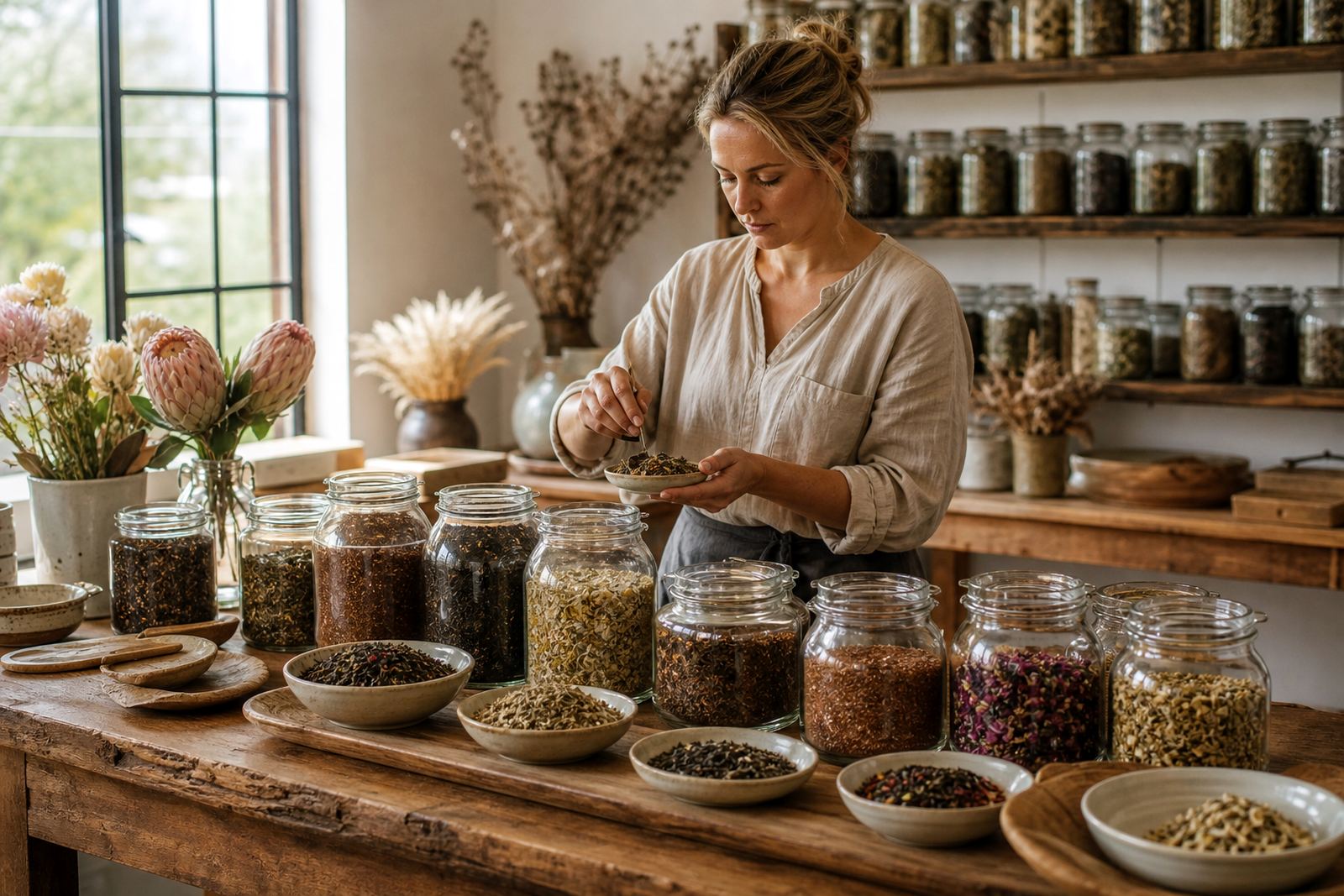
Loose tea can look similar once it is decanted, especially if you keep several rooibos blends and herbal infusions on the same shelf. Clear labels save time and prevent mistakes. Write the tea name, flavour profile and the date you opened it. If you like to rotate stock, add a simple use-by note based on how often you drink it.
Labelling also helps if you keep tea for office use, hospitality service or family guests. No one wants to confuse a citrus rooibos with a plain herbal infusion when making a pot for visitors. A neat label also makes cupboard organisation easier, and it helps you see at a glance which jars need topping up. A small habit, but it makes a differance over time.
- Mark the tea name clearly on every container
- Add the opening date and a rough finish date
- Separate caffeine-free teas from black tea and breakfast blends
- Keep labels moisture-resistant if the cupboard sits near a sink
Keep Flavours Separate In The Cupboard
Tea absorbs nearby smells, so strong items like onions, curry powders, cleaning products and coffee should never share the same cupboard space. Even a good seal cannot always stop aroma transfer if the storage area is overloaded. For best results, keep tea in its own section or box within the pantry.
If you store more than one blend, arrange them by frequency of use. Everyday rooibos can sit at the front, while seasonal or gift teas stay behind it. This reduces how often you open every jar and helps preserve the more delicate blends. In busy homes and offices across Cape Town, Johannesburg, Pretoria, Durban and Bloemfontein, that little bit of order goes a long way.
- Do not store tea beside spices, onions or scented cleaning products
- Keep sealed tea away from fresh herbs and strong pantry items
- Use a separate tray or basket for tea storage if cupboard space is shared
- Place the most-used blends at eye level for quick access
How Long Loose Tea Stays Fresh At Home
Freshness depends on the tea type, how it is packed and how often the container is opened. As a practical guide, most rooibos and herbal infusions keep well for many months when stored correctly, while more delicate tea leaves can lose lift sooner. The flavour does not always vanish suddenly, but it does become flatter and less fragrant with time.
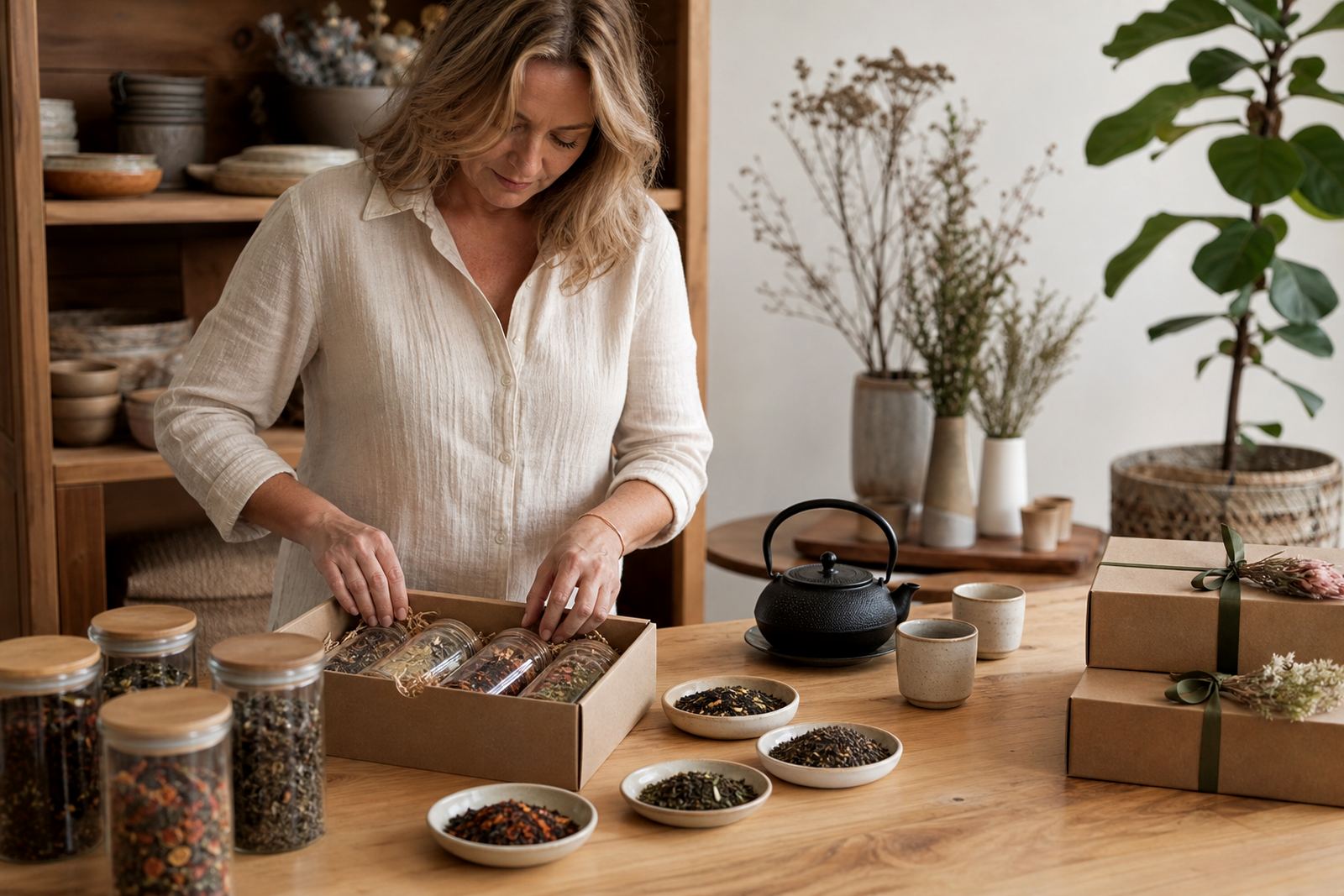
If you buy tea for the office, a guest house or a small hospitality setup, plan usage so stock moves steadily. Do not overbuy unless you know the tea will be used quickly. The same rule applies to subscriptions, gift stock and event tea bars. Better to keep a smaller amount in good condition than a large amount that sits around for too long.
- Use older stock first and rotate new stock to the back
- Check aroma before brewing if tea has been stored for many months
- Buy in sizes that match your household or business usage
- Keep a simple note of what was opened and when
Quick Storage Checklist For Cupboards, Drawers And Jars
Before you pack away your tea, run through a short checklist. It takes less than a minute and can save a favourite blend from going stale. This is useful for home kitchens, guest areas, boardrooms and gifting packs. If your tea lives in more than one place, use the same standard every time so nothing gets forgotten.
Check the cupboard conditions first, then the container, then the label. If all three are right, your tea has a far better chance of staying fresh. It is a practical habit, not a fussy one, and it works in both small flats and larger family homes. Once you get used to it, the routine becomes second nature.
- Dry container, tight lid, clean label
- Cool cupboard, no steam, no direct sun
- No strong smells nearby
- Opened stock clearly dated
- Smaller amounts decanted for daily use, bulk kept sealed
When To Refresh Your Tea Stock
If tea has lost its aroma, tastes flat or looks dull in the cup, it may be time to replace it. That does not always mean the tea is unusable, but it may no longer give the same cup you expected. For households and businesses alike, a regular refresh keeps stock moving and helps you avoid waste.
If you are unsure how to store a particular blend, ask when ordering through the enquiry form on our contact page. The right storage method depends on the blend, the pack size and how quickly you use it. With the right jars, tins and cupboard habits, loose tea stays pleasant to brew and simple to manage, even through warm Western Cape summers and busy weeks of work.