Start with the right container, not the kitchen shelf
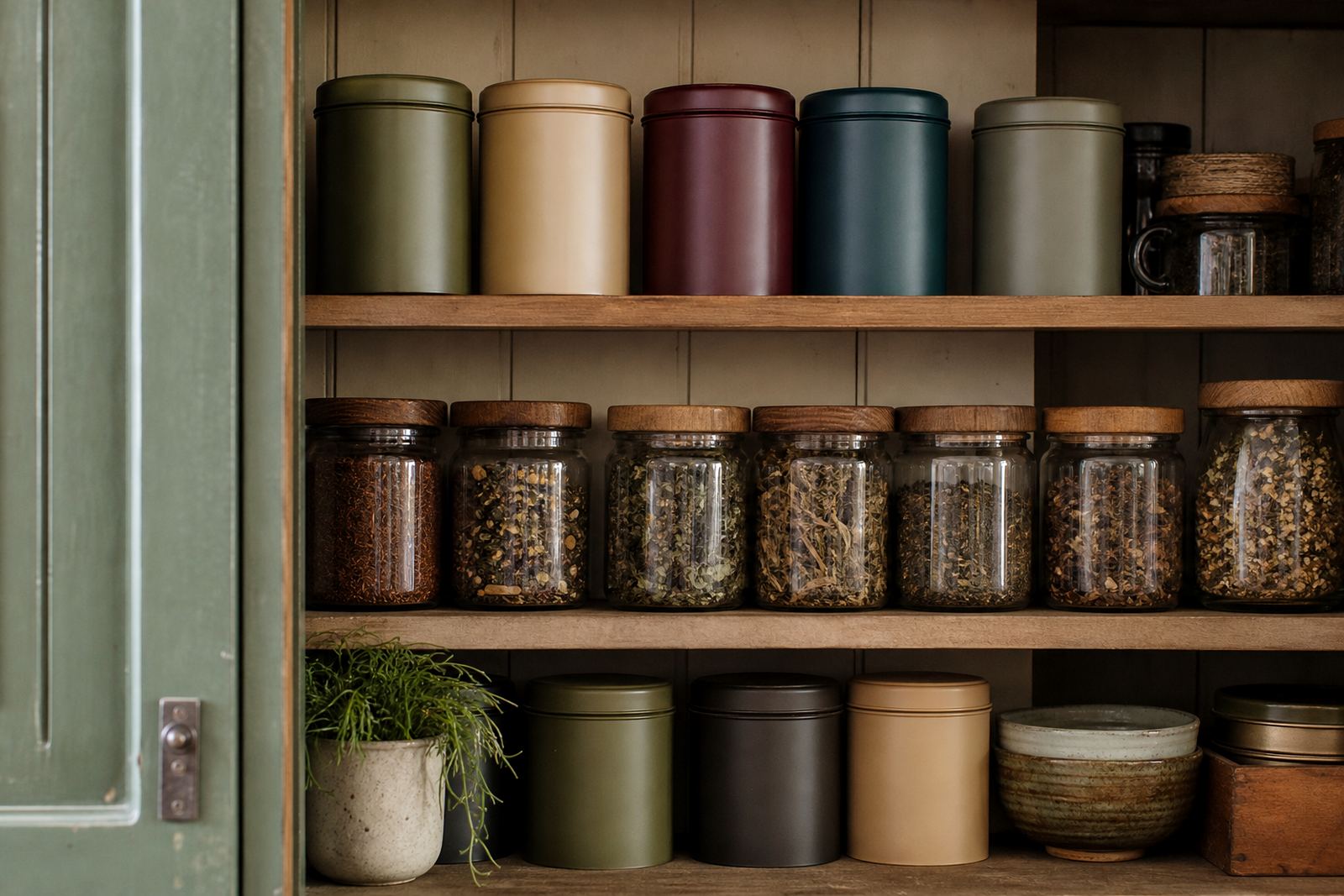
The best tea storage begins with a container that keeps out light, air and moisture. A tight lid matters more than the shape, although a good tin, ceramic jar or food-safe glass jar with an inner seal will usually do the job well. If you buy tea in a paper bag, decant it soon after opening, especially if you keep several teas on the go at once.
Loose-leaf tea absorbs smells easily. That means the tea can pick up onion, spice, coffee or dishwashing residue if it is stored near strong odours. For most homes, one container per tea type is the safest choice. Rooibos, green tea, black tea and herbal infusions should each have their own tin or jar, and the lid must close properly every time.
- Choose opaque containers for teas that will stand on open shelves.
- Use smaller containers for daily use so the tea is opened less often.
- Label each jar clearly with the tea name and the date opened.
- Keep the original outer bag if it has useful storage notes or batch details.
Keep tea away from heat, sunlight and the kettle zone
In many South African kitchens, the tea shelf sits too close to the stove, oven or kettle. That is convenient for one week, then the tea starts losing freshness. Heat speeds up flavour loss and sunlight can flatten colour and aroma, particularly in delicate green teas and flavoured herbal blends. A cupboard in a cool, dry part of the kitchen is usually a better choice.
In Stellenbosch, summer afternoons can get warm inside small flats and homes, and in coastal towns like Somerset West or Cape Town the air can feel damp on certain days. Tea does not like either extreme. A cupboard away from the window is better than a shelf above the kettle, even if it is less convenient. If your kitchen catches afternoon sun, avoid storing tea near that wall completely.
- Do not keep tea on top of the fridge or microwave, where heat gathers.
- Do not store it near spices unless everything is sealed properly.
- Avoid clear jars in direct sun, even for short periods.
- If your kitchen is humid, check tins for condensation after washing up or cooking.
Handle loose leaf gently so the leaves stay intact
The way tea is handled matters almost as much as where it is stored. Every time a hand reaches into a bag, a bit of moisture, oil or smell can transfer to the tea. Scooping with a dry spoon is a better habit, and it helps to close the lid immediately after use. Crushing the leaves or rubbing them between your fingers too often can release aroma early, which means less flavour in the cup later.
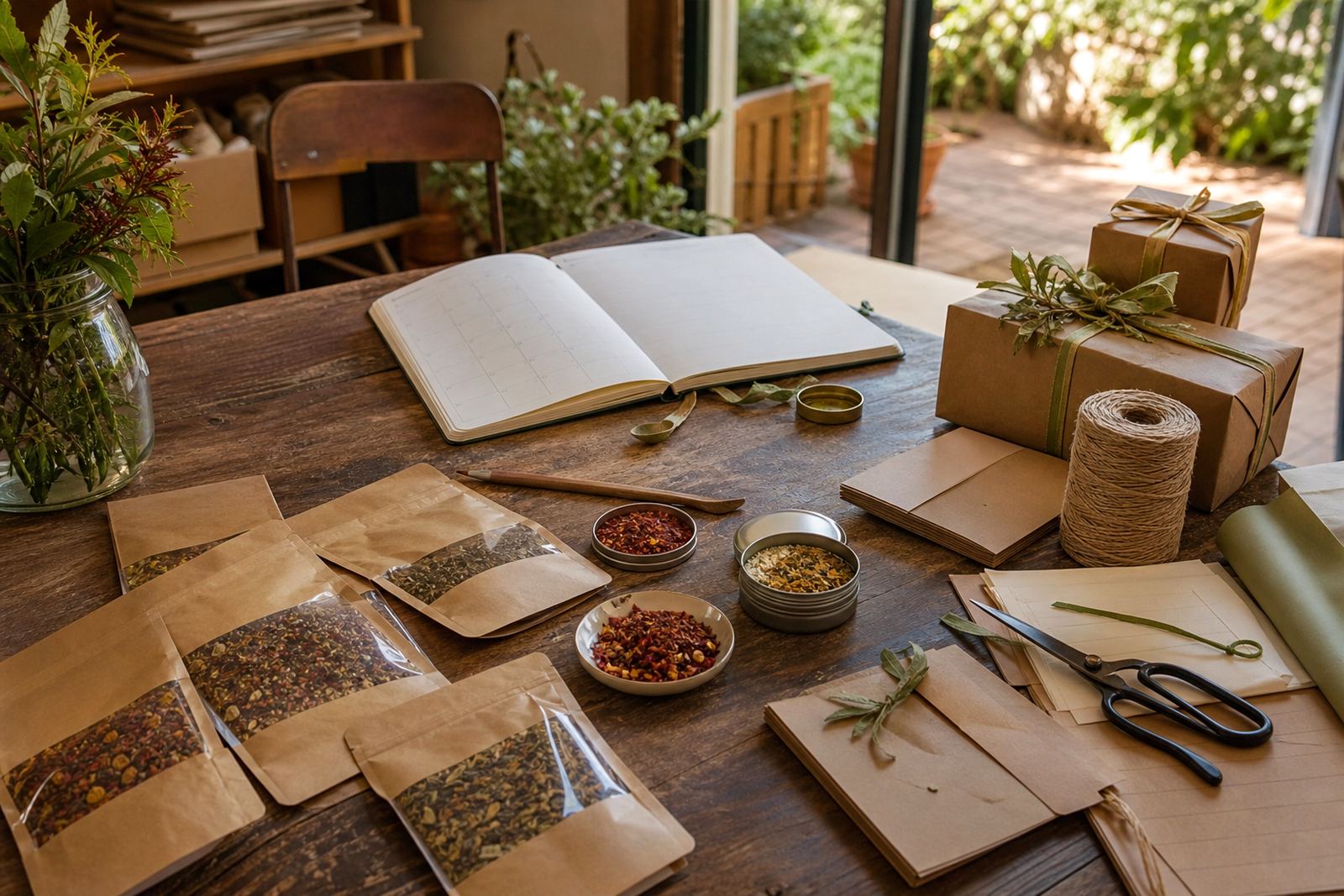
If you use a measuring spoon, keep one spoon only for tea. Do not use the same spoon for sugar, coffee or spice. It sounds small, but mixed smells change the cup. For tea that is used only now and then, portioning into smaller containers can help preserve the main stock. This is especially useful when you buy in bulk or receive a larger gift pack.
- Use a dry spoon every time.
- Close the container before the kettle finishes boiling.
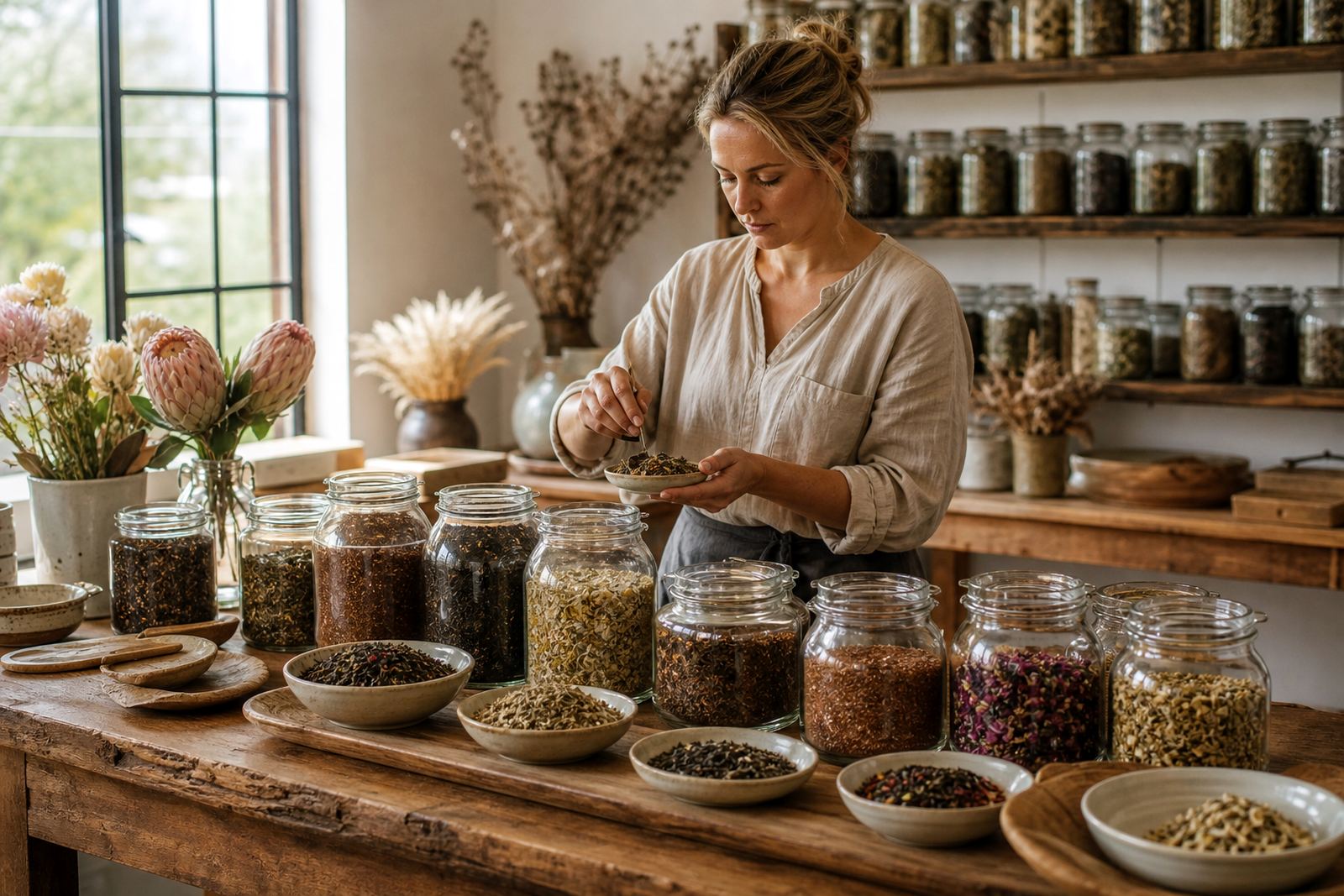
- Decant bulk tea into smaller jars for daily use.
- Keep wet hands away from the tea storage area.
Match the storage method to the tea type
Not every tea needs the same treatment. Rooibos is fairly forgiving, but it still benefits from a cool, dry cupboard and a sealed tin. Green tea and lighter herbal infusions are more sensitive, so they need extra care with light and air. Fruit blends can also lose their bright top notes if they sit open too long. Strongly scented teas should be separated from plain teas because the flavours can cross over.
If you enjoy several teas through the week, a simple rotation system works well. Keep the main stock sealed, then refill a smaller working tin for the kitchen counter. That way the whole supply is not opened every day. It also makes it easier to see what needs reordering before you run out, which is useful for homes, guest houses and small offices alike.
For hospitality and office tea supply, a neat storage plan helps avoid waste. Staff are more likely to use the right blend if each tin is labelled and kept in a consistent place, instead of being moved around from shelf to shelf.
Avoid common mistakes that steal flavour
Most tea storage mistakes are easy to fix once you spot them. The main problem is usually not the tea itself but the way it is treated after opening. A good blend can still taste flat if it is left in a warm drawer next to envelopes or stored in a plastic tub that is not airtight. Some teas also pick up fridge smells, so the fridge is not a general storage solution unless the tea has been packed for that purpose.
Load-shedding brings another issue. When kitchens get warm and then cool down again, condensation can form in containers that are opened often. That is one more reason to use dry, tight containers and keep them in a stable cupboard rather than a place that changes temperature all the time. If a tea smells stale, tastes dull or looks dusty, it has probably been stored too long or handled too often.
- Do not store tea near soap, cleaning products or garlic.
- Do not use containers that still smell of spices or coffee.
- Do not leave bags open overnight on the counter.
- Do check older stock first so nothing sits forgotten at the back.
A simple home system that works in Stellenbosch and beyond
A practical tea storage setup does not need much. One cupboard, a few clean tins and a habit of labelling goes a long way. In a Stellenbosch home, for example, you might keep rooibos and breakfast tea in sealed tins in a cool pantry, while your smaller daily jar sits beside the kettle. If you buy for family, guests or a small office, keep the bulk supply separate and only decant what you need for the week. That keeps the rest fresh and makes stock control easier.
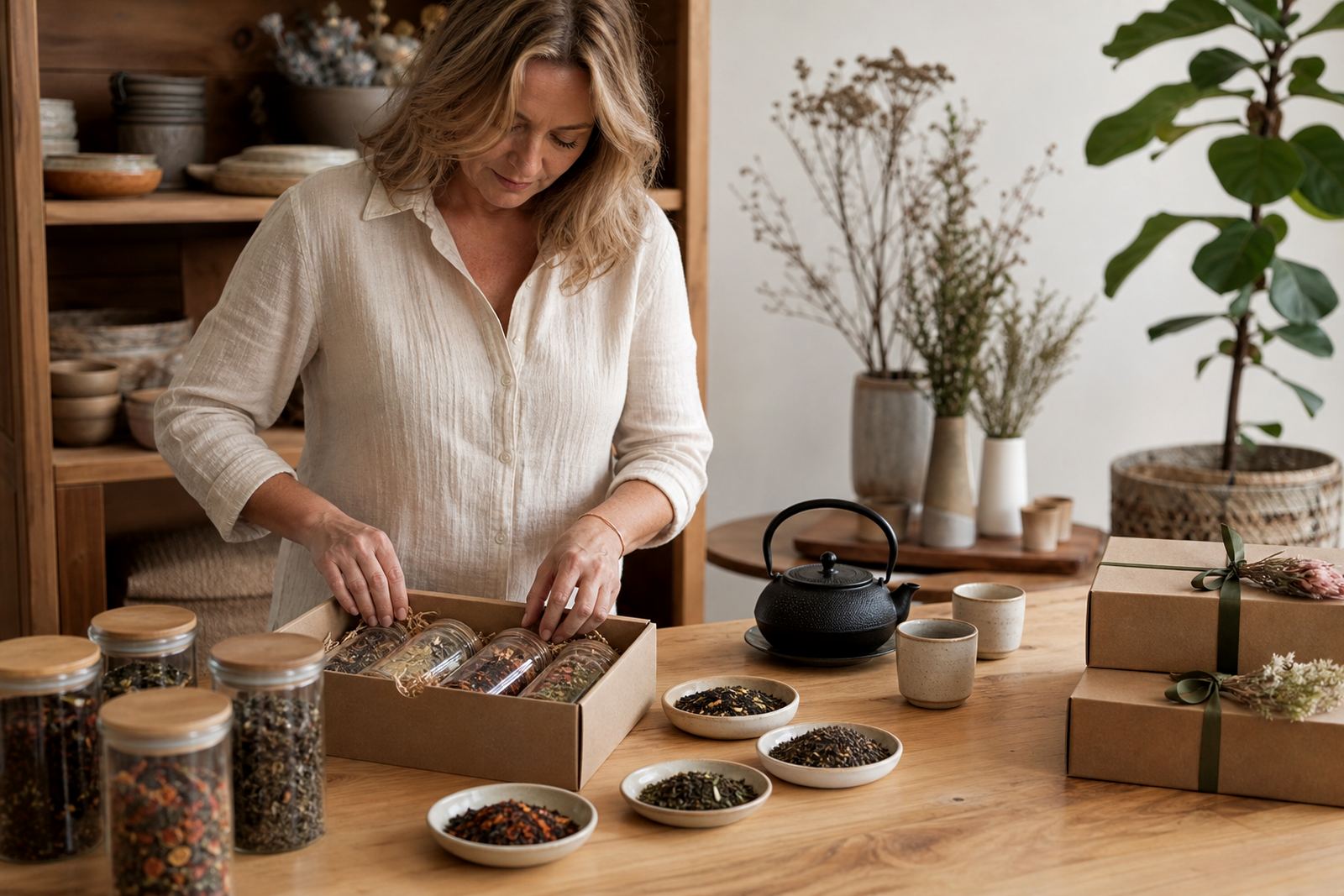
This same method works well if you send tea as gifts, serve it at meetings or keep it in a guest room. Tea should smell like tea when the lid opens, not like the cupboard it came from. Once you set up a storage routine, it becomes second nature, and the cup stays brighter for longer. A little care saves money too because less tea ends up fading before it is used.
If you are building a tea routine for home, work or gifting, the same rule applies every time: seal it well, keep it cool and use it while it is still lively.