
Start With The Right Rooibos
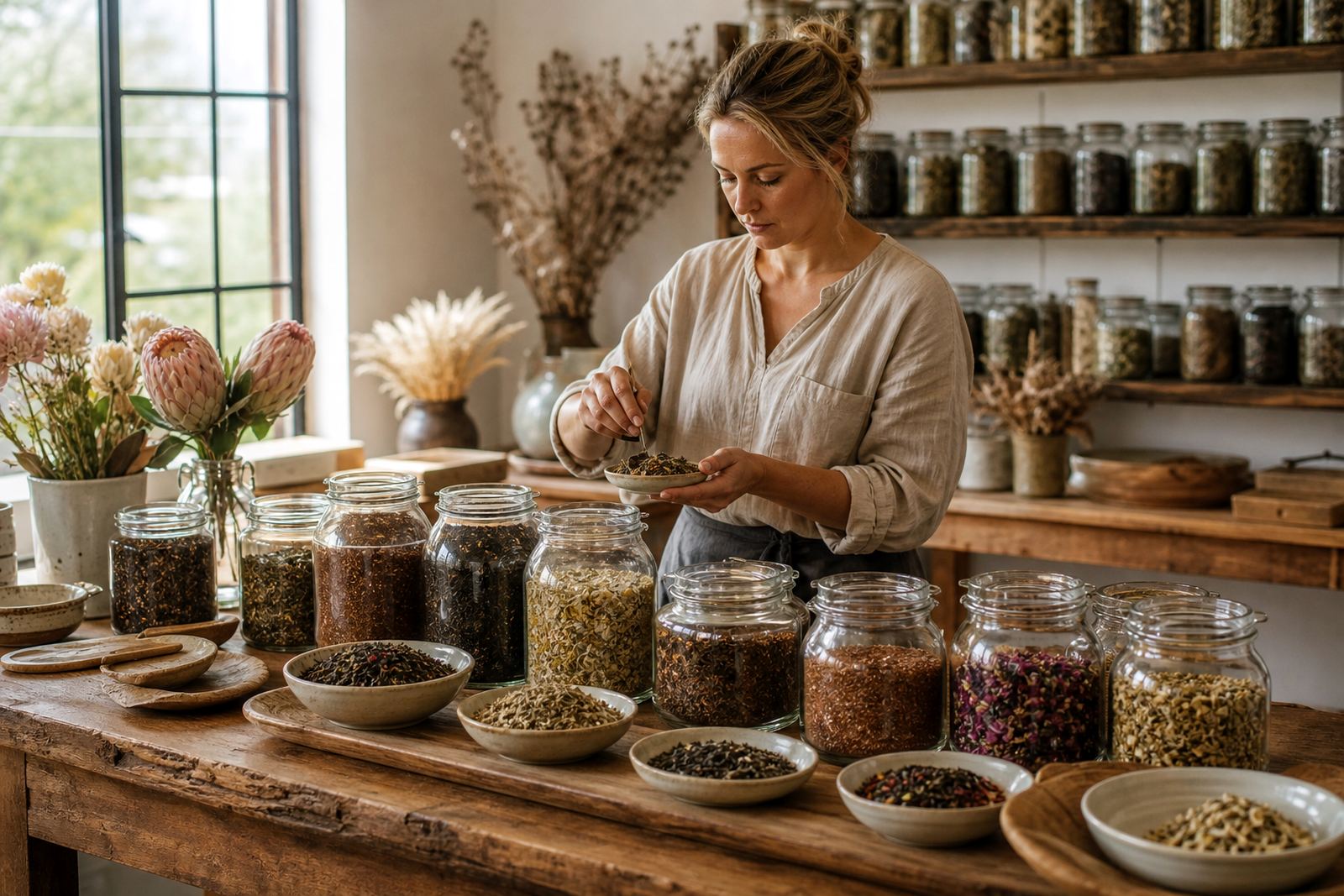
Good rooibos should look even in colour, with a clean reddish-brown tone and a fresh herbal aroma. If you are buying loose-leaf tea, check that the cut is fairly consistent, as very fine dust can make the cup muddy and too coarse a cut can leave the flavour a bit thin.
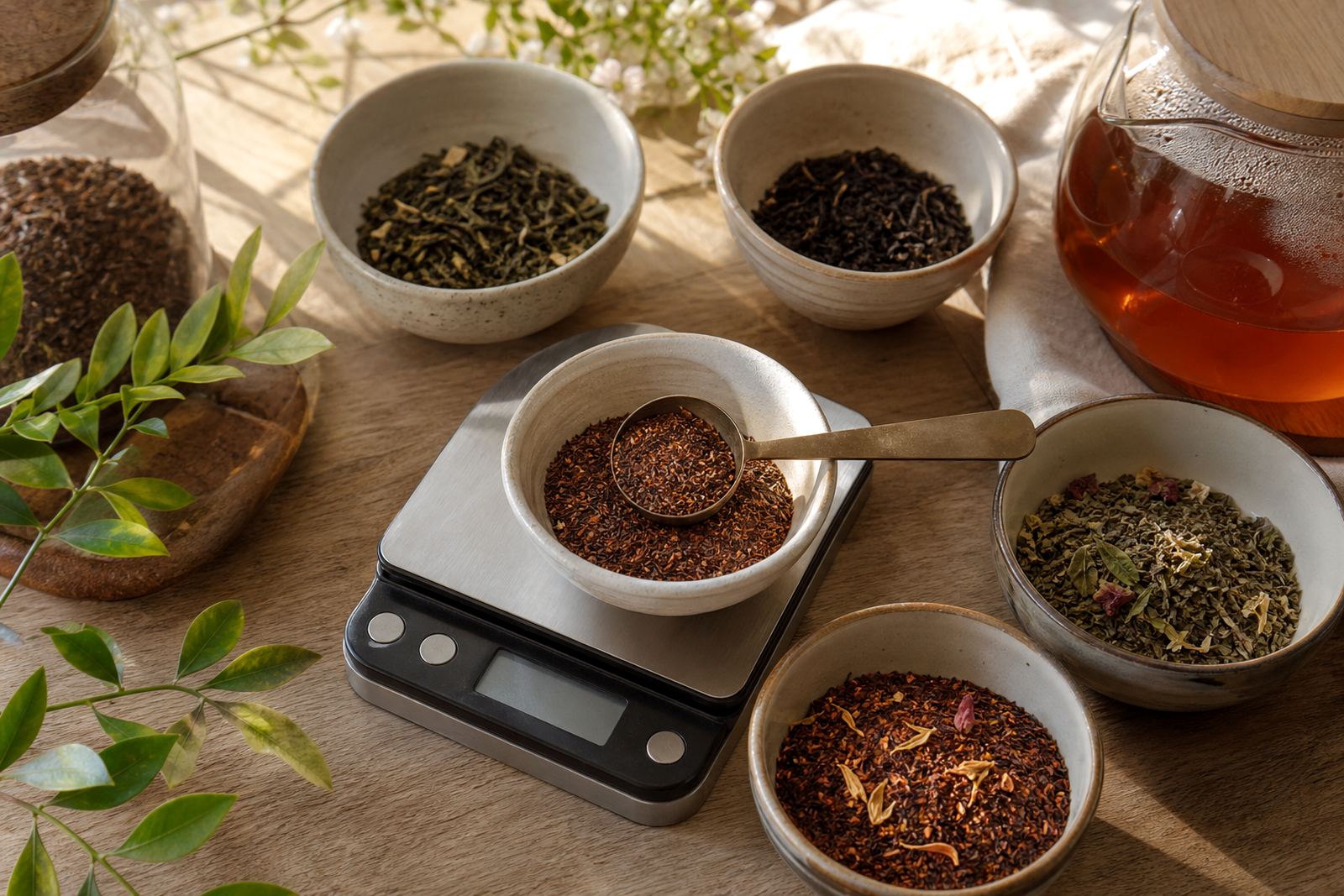
For a standard mug, use 1 teaspoon of rooibos per 250 ml of water. For a pot, allow 1 heaped tablespoon for about 500 ml. If you want a stronger cup for milk or a long sit at the table, increase the tea rather than steeping for much longer.
Heat The Water, Then Let It Rest
Rooibos handles boiling water well, which makes it useful during load shedding when kettles may be switched on and off or water is heated in batches. Freshly boiled water is ideal for extracting colour and body. For a lighter, softer cup, let the kettle rest for 30 to 60 seconds before pouring.
- Boil fresh water, not water that has been reheated several times.
- Use enough water to cover the leaves fully.
- In hard water areas, filtered water can give a cleaner taste.
If your tap water has a strong mineral taste, the brew can taste flat even when the rooibos itself is good. In coastal towns such as Stellenbosch, Somerset West and Cape Town, a clean water source makes a noticeable difference.
Steep For Colour, Sweetness And Body
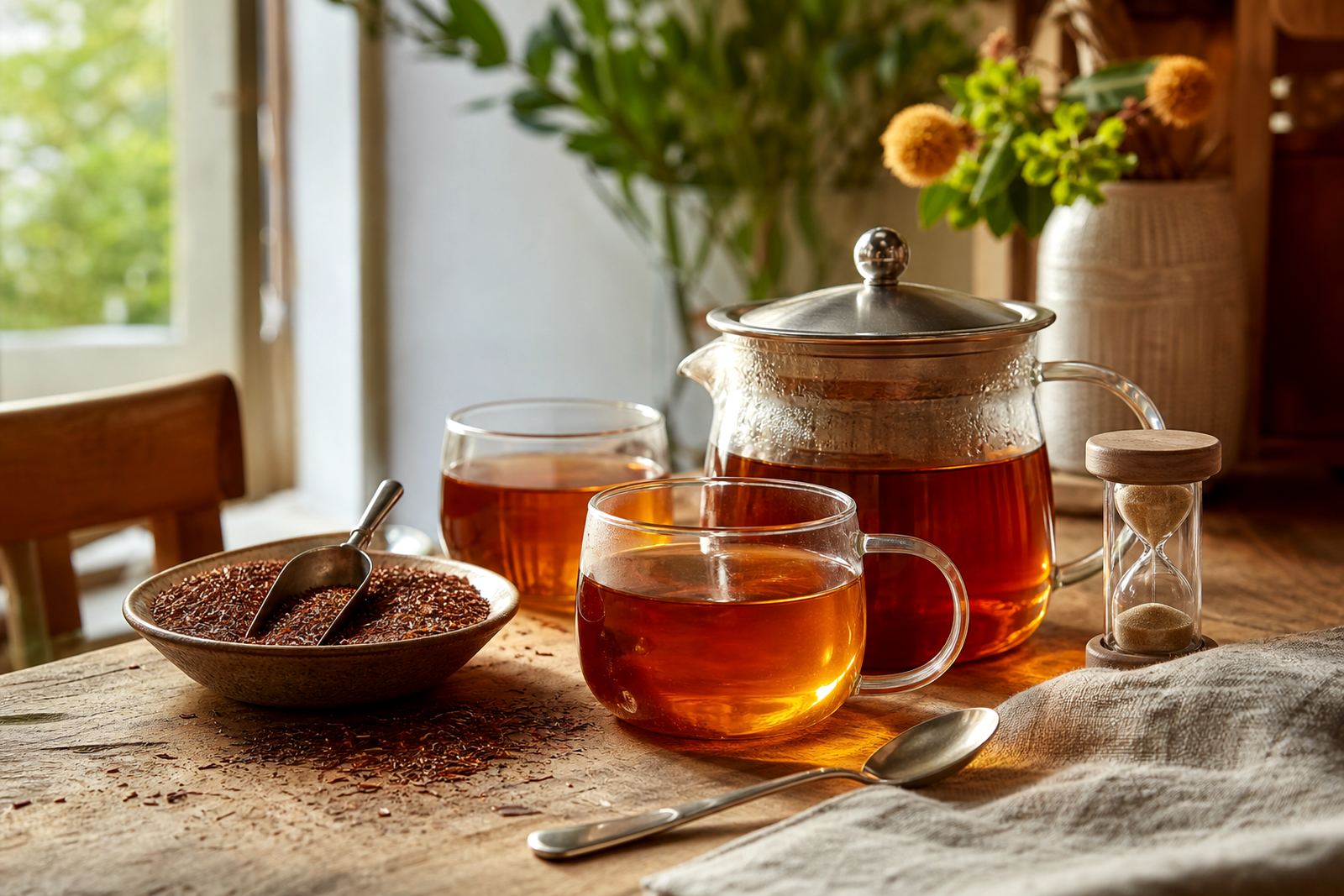
Steeping time controls what you get in the cup. At 5 minutes, rooibos gives a lighter colour and a gentler taste. At 7 to 10 minutes, the cup deepens in body and natural sweetness. Many people find the sweet spot around 8 minutes for a full, rounded brew.
Unlike black tea, rooibos does not turn harsh quickly, so you have room to experiment. If the cup tastes thin, steep longer next time. If it tastes too woody or overdone, reduce the time by 1 or 2 minutes.
A simple method is to pour the hot water over the leaves, cover the cup or pot and let it stand. Covering helps keep the heat in, which improves extraction and gives a better colour, especially in larger urns or catering jugs.
A Quick Checklist Before You Serve
Use this checklist when making rooibos for guests, staff or a tea table:
- Loose-leaf tea measured correctly for the size of the vessel.
- Freshly boiled water, or water just off the boil for a softer cup.
- A covered pot or cup to keep the heat in.
- Steeped for at least 5 minutes.
- Strained before serving so the cup stays clear.
If you are serving in an office kitchen or hospitality setting, keep the tea covered until needed. Open cups cool fast in air-conditioned rooms and that can flatten the flavour before it reaches the table.
Simple Ways To Lift The Flavour
Rooibos takes well to milk, honey, citrus peel and spice. A strip of orange peel gives a brighter finish, while a small piece of cinnamon adds warmth without hiding the tea. For a softer cup, add milk after steeping rather than during the brew. That keeps the colour clean and the body smoother.
Cold brew is also worth trying in summer. Use 2 tablespoons per litre of water, refrigerate for 6 to 8 hours, then strain. The result is lighter and sweeter, which works well for busy kitchens and functions in warmer coastal weather.
For food service, keep in mind that rooibos can sit in a thermos for a while without becoming bitter. It is a practical choice when service is staggered, though it still tastes best within a few hours of brewing.
Troubleshooting The Cup
If your rooibos comes out weak, the issue is usually too little tea or too short a steep time. If it tastes flat, check the water quality and make sure the vessel is covered. A dry, papery taste can point to tea that has been stored too long or kept near heat and light.
- Too pale: add more tea or steep longer.
- Too dull: use fresher water and a cleaner vessel.
- Too strong: reduce the amount of tea, not just the steeping time.
- Too cool: pre-warm the cup or teapot with hot water first.
In restaurants, guest houses and office tea stations, these small adjustments matter because the same rooibos may be brewed many times a day. Once the method is set, the cup stays consistent and easier to repeat.