

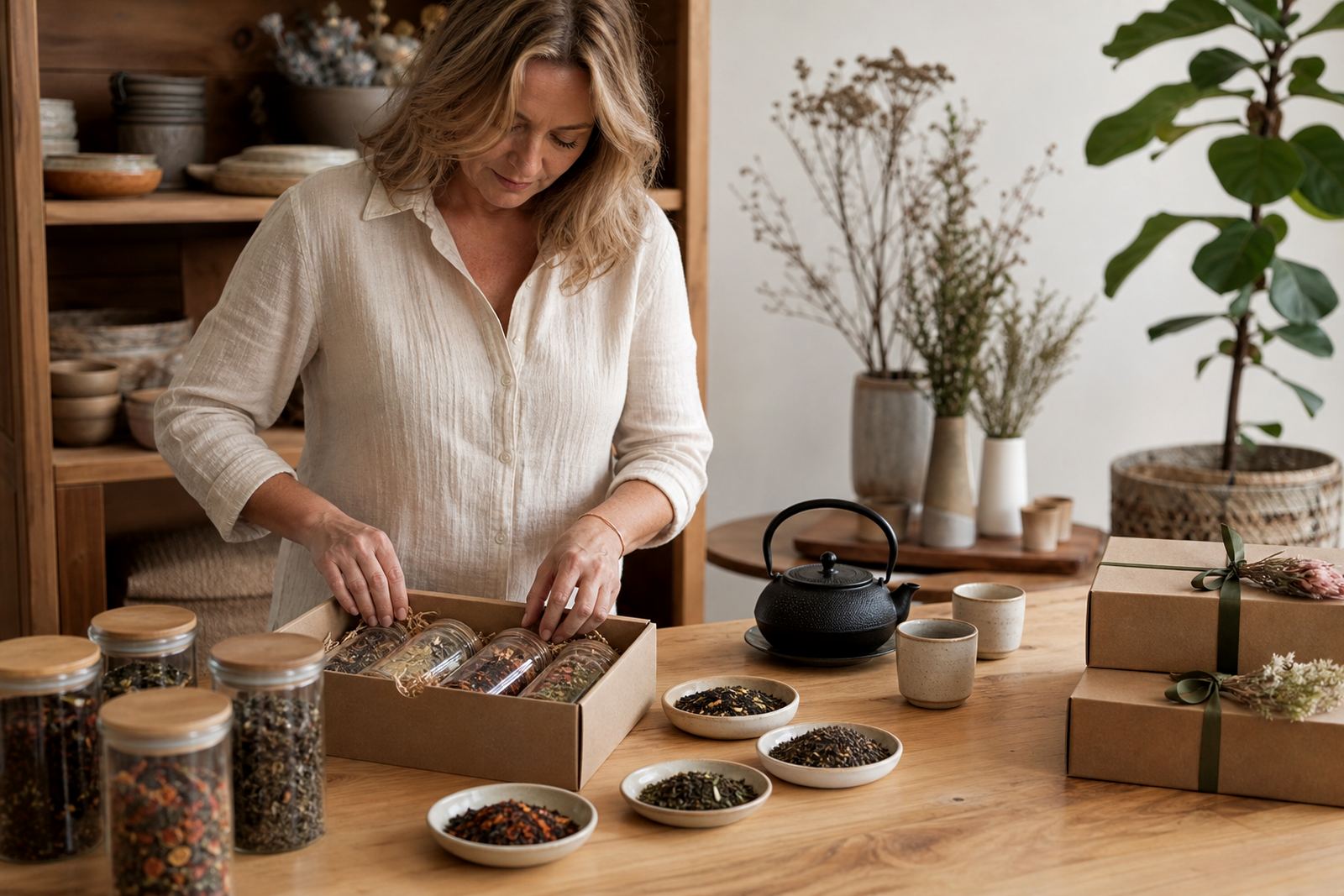
A till-side tea range for a fast-moving deli
The client was a neighbourhood deli in Sea Point, Cape Town, serving office staff, apartment residents and weekend foot traffic. They already sold bread, dairy, snacks and a few chilled items, but tea was missing from the impulse shelf. The brief was simple: add a tea range that would not take up much space, look tidy next to the till and make it easy for a customer to add one or two packs to the basket without thinking twice.
We kept the selection focused on everyday favourites rather than a large display. The store wanted products that would move quickly, stay neat under bright shop lighting and still feel considered. The idea was not a luxury tea counter, it was a practical retail shelf with enough character to stand out among the biscuits and sweets.
Brief, constraints and the shelf conditions
The main challenge was space. The till area only allowed for a narrow shelf run and the deli needed stock that could be rotated easily by staff with limited time on the floor. Sea Point also brings its own conditions: coastal humidity, frequent door opening and a steady mix of temperature changes from fridges, delivery traffic and passing customers. Packaging had to hold its shape and remain legible, not curl or stain after a few days on display.
- Available shelf depth: 220 mm
- Display height allowed: 450 mm across two tiers
- Pack sizes selected: 50 g and 20 pack formats
- Replenishment target: once or twice a week depending on sales
- Location: till-side impulse shelf in a deli counter zone
We also had to keep pricing simple. Customers needed to read the price at a glance, and staff needed a stock mix that could be counted quickly during busy periods. No one wanted half the shelf full of slow movers, because that leads to clutter pretty fast.
What we supplied and how it was set up
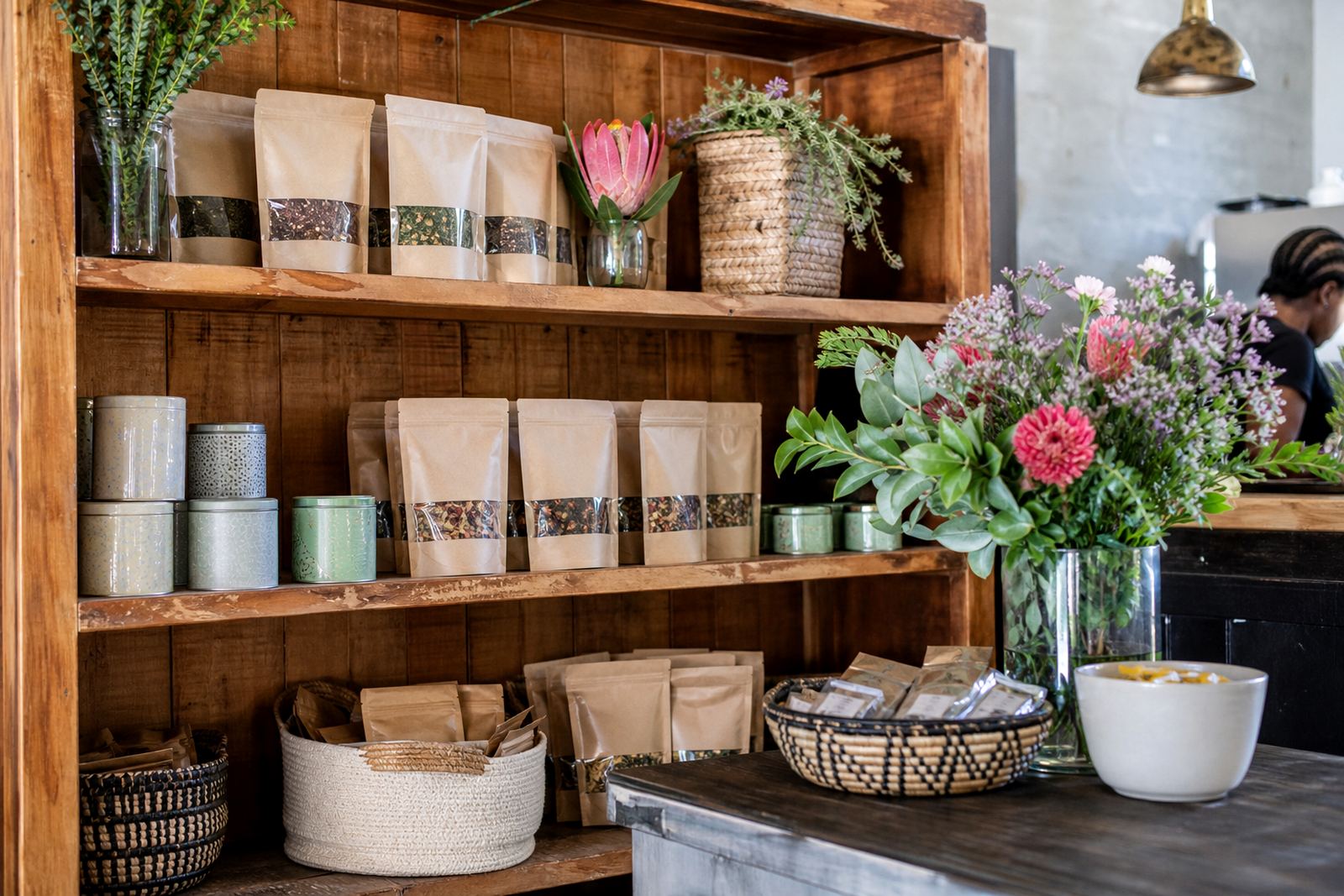
We prepared a compact retail range built around loose-leaf tea packs and easy-to-sell herbal infusions. The assortment included rooibos blends, everyday black tea options and a few lighter caffeine-free choices. Each pack was labelled clearly with flavour, ingredient notes and brew guidance so shoppers could make a decision in seconds. We also supplied shelf-ready presentation strips and pricing cards sized for a narrow deli shelf.
The packs were arranged to encourage simple selection. Stronger sellers sat at eye level, with rooibos and herbal options grouped together for faster scanning. We kept the colour palette practical and clean, because in a deli shelf too much visual noise just looks untidy. The aim was to make the tea feel part of the store rather than a separate section bolted on at the end.
- Loose-leaf retail packs for quick sale
- Rooibos and herbal infusion focus
- Clear front labels with brew instructions
- Till-side shelf cards for price visibility
- Simple stock rotation layout for staff
A short timeline from brief to shelf
The project ran over three weeks from first brief to shelf launch. Week one was about narrowing the range and checking the available shelf dimensions. Week two covered pack preparation, label placement and final pricing structure. By week three the deli had the stock in place and staff had a quick handover on how to top up the shelf, check dates and keep the display neat.
That short lead time suited the store. They did not need a drawn-out rollout, just a tested selection that could start moving straight away. We also made sure the supply quantities were sensible for a site of this size, because over-ordering in a small Sea Point shop can tie up cash and clutter the storeroom.
Results at the till and in the basket
Once the tea packs were on shelf, the deli had a category that sold without needing much explanation. Customers picked up a pack while waiting to pay or added one after buying breakfast items. The store reported that the product mix was easy to manage and that the display stayed tidy, even during busier weekends when the till area was under pressure.
For the deli, the biggest win was practical. Tea became a small but reliable add-on category, with minimal handling and no complicated merchandising. Staff could see at a glance what needed topping up and what had to be moved forward. It was a simple improvement, but in retail those small wins add up fast.
- Better use of a narrow till-side shelf
- More impulse purchases from passing customers
- Simple rotation for staff on busy shifts
- Cleaner presentation than loose tins or mixed jars
Why this format works for coastal retail
Sea Point retail moves at a different pace to a big suburban store. Customers are often buying one or two things, not doing a weekly shop, so the product has to be easy to notice and easy to trust. A tea shelf near the till works well because it fits the rhythm of grab-and-go buying. It also gives the store a local, thoughtful touch without taking floor space away from higher turnover items.
From a supply point of view, the format is low-fuss. The packs are light, easy to courier and simple to store in a dry back area. We also keep the range flexible enough to change with the season. In winter, the store can lean more on rooibos and spiced blends. In summer, lighter herbal options and iced brew friendly choices can come to the front. That keeps the shelf fresh, without turning it into a full replan every month.
What we would repeat on the next deli shelf
If we were setting up the same project again, we would keep the range tight, the shelf labels bold and the pack sizes small enough for impulse buying. The lesson from Sea Point is that a deli shelf does not need too many choices. It needs the right choices, priced clearly and easy to restock. That keeps the counter area orderly and makes it easier for the team to sell tea as a natural add-on, not a hard push.
We would also keep the supply plan linked to sales velocity. If rooibos outsells everything else, that should be reflected in the next top-up. If a herbal blend starts to move in the evening trade, it should be moved forward on the shelf. Small adjustments like that are what keep a shelf working properly week after week.
Key facts
| Client type | Independent deli, Sea Point, Cape Town |
|---|---|
| Project type | Till-side retail tea shelf |
| Timeline | 3 weeks from brief to launch |
| Shelf size | 220 mm depth, two tiers at 450 mm height |
| Product mix | Loose-leaf teas, rooibos blends and herbal infusions |
| Outcome | Tidy grab-and-go tea sales with simple staff replenishment |