
What the training centre needed in Bellville
The client was a privately run training venue in Bellville, serving day courses, short workshops and assessment sessions for groups of 20 to 80 people at a time. The main issue was that refreshment breaks were taking too long. Hot drinks were available, but the tea offer was limited, the brewing instructions varied from person to person, and waste was creeping up through over-steeped pots and half-used boxes of tea bags.
The brief was straightforward: improve the tea side of the break service without making it complicated for the venue team. They wanted easy-brewing options that could handle repeated use through the day, taste good black or with milk, and suit a mixed crowd of younger trainees, office staff and visiting facilitators. The venue also asked for options that would hold up well in a busy room where load-shedding, kettle cycling and uneven break times were part of normal operations.
- Location: Bellville, Northern Suburbs, Cape Town metro
- Client type: Training venue and skills development centre
- Footfall: 20 to 80 guests per session
- Priority: Fast prep, low waste, reliable flavour
Constraints that shaped the tea range
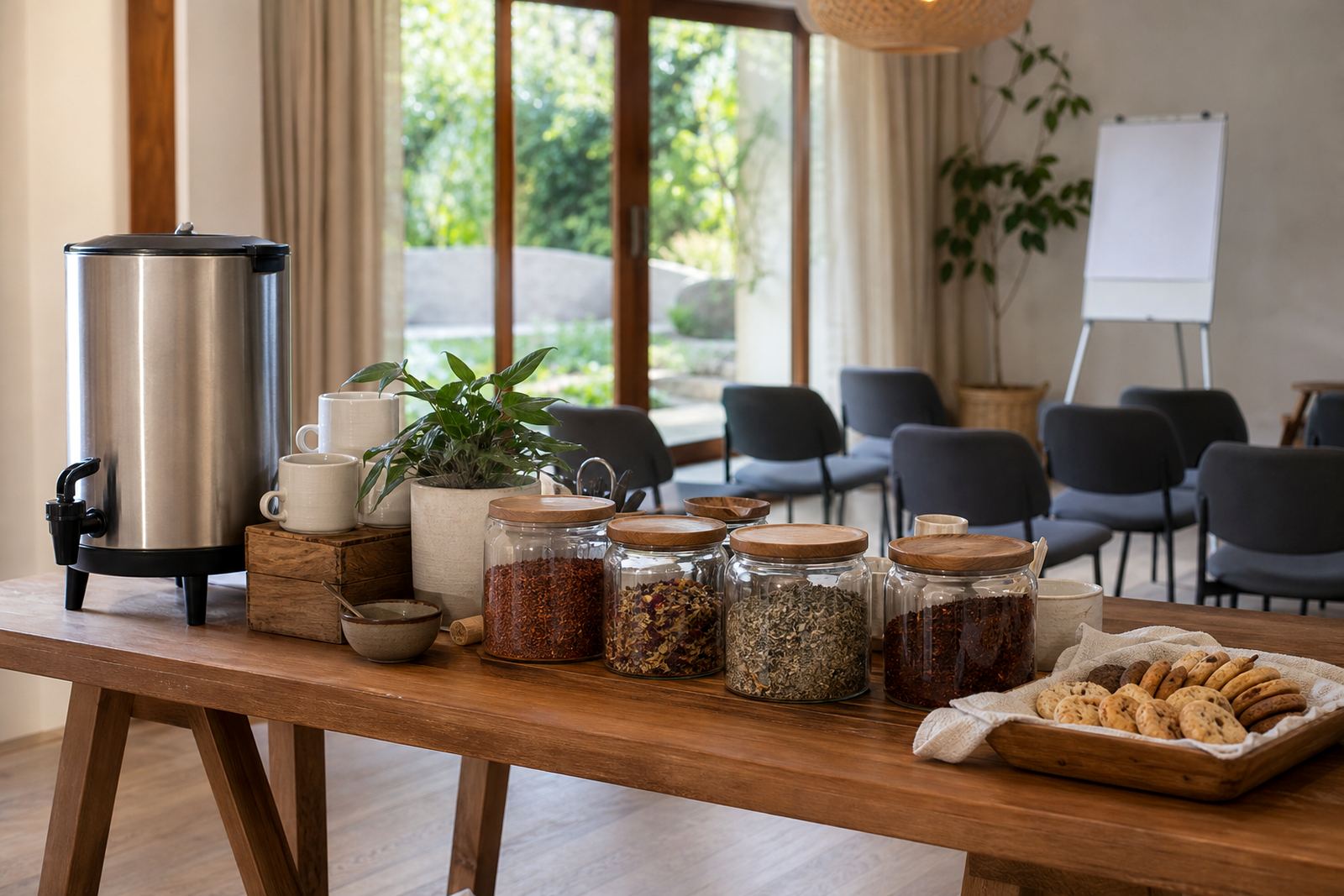
The building had a compact serving area with limited counter space and no room for a fussy tea station. Breaks were short, so the team needed products that could be brewed in a few minutes and still taste balanced if a pot sat for a little while. They also asked for a mix that would appeal to people who do not usually drink tea, because many attendees wanted something light and familiar rather than strongly flavoured blends.
There were a few practical constraints. The venue was running on a tight consumables budget, so every pouch needed to earn its place. The team also preferred ingredients that were suited to Western Cape humidity and storage in a room that is opened and closed all day. We kept the pack sizes sensible, simplified the range, and gave them clear brew notes for each tea. The aim was to make the workflow simple enough that any staff member could handle it without second guessing.
- Limited storage and serving counter space
- Short tea breaks between sessions
- Need for easy instructions and consistent flavour
- Budget control across regular weekly use
What we supplied and how it was set up
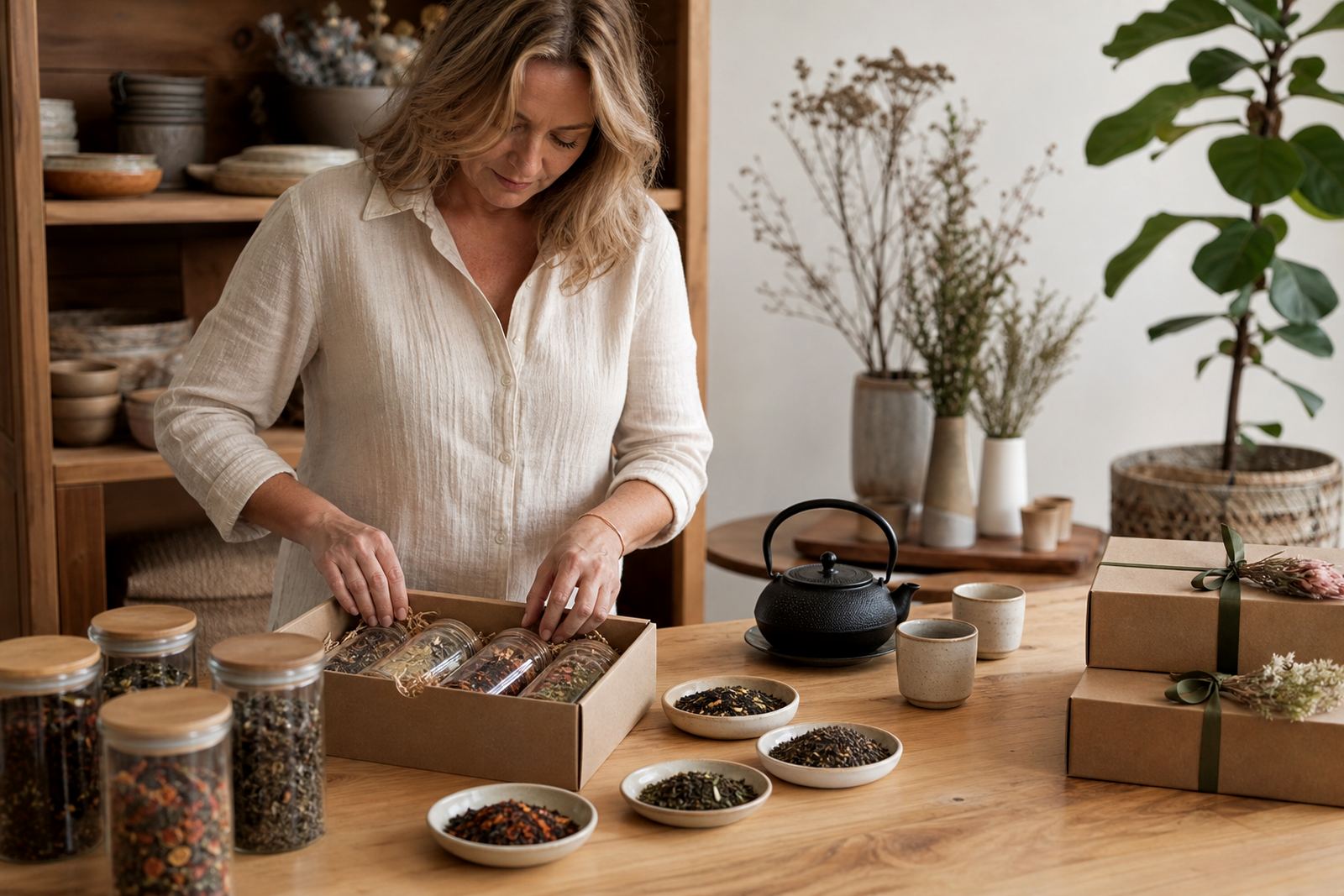
We put together a focused blend and supply plan built around loose-leaf tea, rooibos and herbal infusions. Rooibos was the anchor, because it is familiar, caffeine free and suits a broad range of guests. We paired it with a classic black tea option for stronger drinkers, a lighter herbal infusion for afternoon sessions, and a gentle loose-leaf blend that could be served with or without milk. The mix gave the venue enough variety without overloading the shelves.
We also supplied labelled pack sizes for easier rotation, and drafted a simple brewing guide for staff. That guide covered grams per pot, water temperature, steeping time, and how to keep a second pot moving when one urn was busy. For the training centre, this mattered just as much as the tea itself. A good cup is one thing, but in a venue like this the real win is when the team can make it the same way every time.
- Loose-leaf tea in resealable 250 g and 500 g packs
- Rooibos for all-day service and caffeine-free breaks
- Herbal infusion for lighter afternoon options
- Brew guide with time, temperature and portion notes
- Pack labelling for stock rotation and simple issue control
Timeline from brief to first delivery
The full setup took three weeks from first call to delivery. Week one was the brief and flavour alignment, where we discussed who was attending the courses, how the breaks worked, and which flavours would be used most often. Week two was selection, packing and confirming quantities. Week three covered courier dispatch to Bellville, final checks, and handover notes for the venue coordinator.
The timeline was important because the centre had training dates locked in and could not afford a long gap in supply. We kept the process tight, but not rushed. The tea needed to arrive in good condition, with the right quantities for the first cycle and enough flexibility for the next order. That meant practical planning rather than overbuying. It also meant the team could test the range during live sessions before deciding what should stay on the regular list.
Results during live training days
Once the new tea service was in place, break times became easier to manage. Staff were not trying to interpret multiple tea choices or deal with pots that tasted too weak. Guests could choose quickly, and the venue team had a clearer system for topping up and restocking. The rooibos proved especially popular because it suited long training days and did not leave people feeling over-caffeinated before the next session.
The client also noticed less waste. Better portion control meant fewer half-used boxes, and the clear brewing notes reduced the number of overly strong or overly stewed pots. The serving area looked tidier too, because each pack had a defined place and the range was trimmed to what the venue actually used. It sounds small, but in a training centre those small changes free up a surprising amount of time.
- Shorter break service times
- Less tea waste and fewer unused packs
- Better consistency across staff shifts
- Improved guest feedback on flavour and choice
What we would repeat for another Bellville venue
If we were doing the same project again for another training venue in Bellville or the wider Cape Town side, we would keep the range simple and build around usage, not assumptions. That means starting with rooibos, a dependable black tea, and one or two carefully chosen herbal options. It also means giving the staff a quick-reference brew card from day one, because that makes the biggest difference when a room full of people is waiting for tea during a ten-minute break.
We would also stick to a phased supply plan. First delivery should be enough to cover the first month of live use, with a review after the team has seen what runs fastest. In our experience, that approach works better than trying to stock every possible flavour at once. The venue gets a clean, manageable system, and the tea service stays practical even on busy days when the urn is running hot and the schedule is tight.
For training centres, the value is in consistency. A good tea break is not about spectacle, it is about keeping people comfortable and on time. That was the main lesson from this Bellville project, and it is a sensible one to carry into any similar venue.
Key facts
| Project | Bellville Training Centre tea refresh |
|---|---|
| Town | Bellville, Western Cape |
| Timeline | 3 weeks from brief to first delivery |
| Tea range | Loose-leaf tea, rooibos and herbal infusions |
| Pack sizes | 250 g and 500 g resealable packs |
| Use case | Fast break service for 20 to 80 people per session |