Loose-Leaf, Tea Bags and Why the Cut Matters
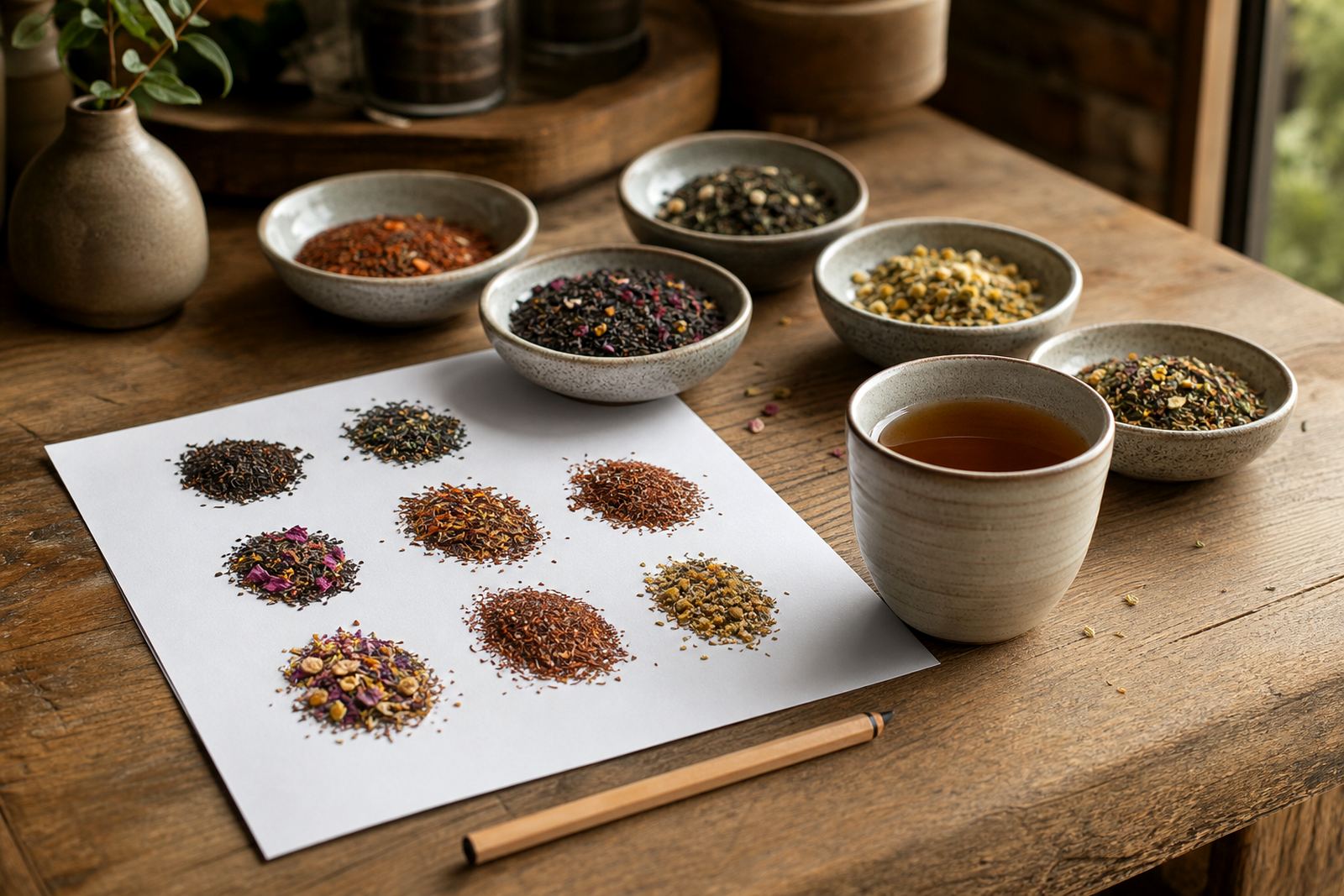
Loose-leaf tea simply means the leaves are sold as whole leaves, larger pieces or a blend that has not been packed into small bags. In practice, this often gives you more control over strength and flavour because water can move around the leaf better. Tea bags are quicker and neat for busy kitchens, but the cut is usually finer so the brew can be stronger and sometimes more brisk.
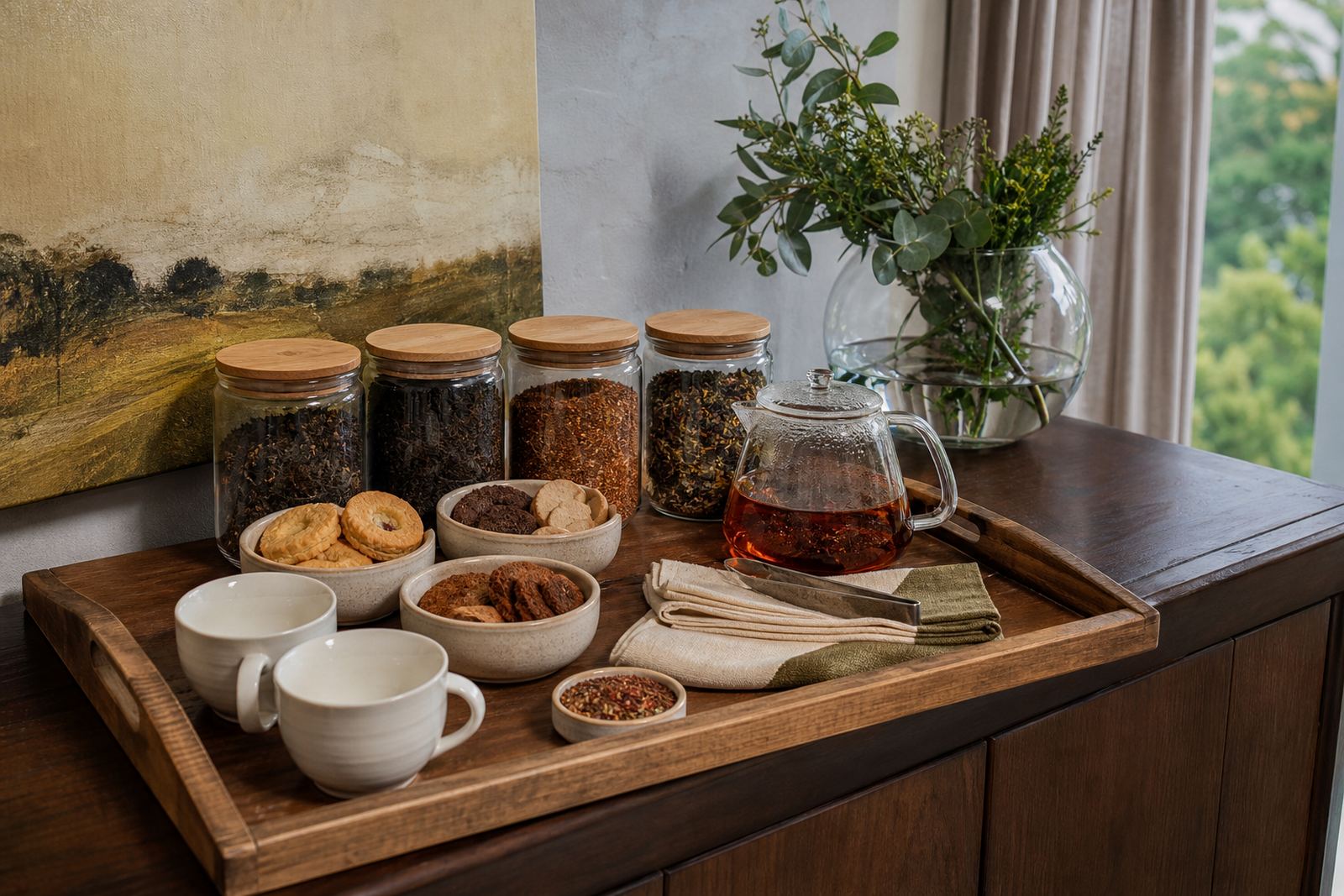
When you are choosing for home, office or a guest table in Stellenbosch or Cape Town, the right format depends on how it will be served. A teabag is handy for a quick cup between meetings, while loose leaf suits a pot on a slow morning or a tasting tray for guests. If the menu says broken leaf, it usually means a smaller cut that infuses faster, so the tea may need less time in the pot.
- Whole leaf: larger leaf pieces, often lighter and more layered in flavour.
- Broken leaf: smaller pieces that brew faster and can taste stronger.
- Tea dust or fannings: very fine particles, used for quick infusion and strong colour.
- Loose leaf: tea sold without a bag, often packed for pots and infusers.
Rooibos Words You Will See on South African Labels
Rooibos is part of everyday tea language in South Africa, but labels can still confuse shoppers. Some products say pure rooibos, which means the drink is made from rooibos only. Others are flavoured blends, where rooibos is mixed with fruit, herbs, spices or floral notes. If you see green rooibos, that means the leaves were processed differently and kept lighter in colour and taste.
These terms matter because rooibos is often chosen for its smooth taste and low bitterness. A plain rooibos works well for children’s tea, guest houses and late-evening serving because it is naturally gentle. Flavoured rooibos can bring in citrus, vanilla, cinnamon or berry notes for a more playful cup. In summer, many customers in coastal areas ask for something chilled, and rooibos takes well to cold brewing too.
- Pure rooibos: 100 percent rooibos, no added flavouring.
- Flavoured rooibos: rooibos combined with other ingredients for a distinct taste.
- Green rooibos: less oxidised, usually lighter and fresher in flavour.
- Herbal rooibos blend: rooibos mixed with herbs or botanicals for a specific profile.
Herbal Infusion, Caffeine and the Difference from Tea
The word herbal infusion is used for drinks made from herbs, fruit, flowers or roots rather than the camellia plant used in black, green and white teas. Many customers call everything tea, but in menu wording it helps to be precise. A chamomile blend, peppermint cup or fruit infusion is an herbal infusion, not a true tea. That difference matters for taste, caffeine levels and how you list it on a hospitality menu.
If you are ordering for a guest lodge, office pantry or wedding favour packing, knowing the label helps you match the drink to the moment. Some guests want a no-caffeine option in the afternoon, while others need a bright cup for early starts. A clear list also helps avoid confusion for people who are sensitive to caffeine or particular herbs.
- True tea: made from the tea plant, including black, green, white and oolong styles.
- Herbal infusion: made from herbs, flowers, fruit or roots.
- Caffeine-free: no tea leaf content, often used for evening service.
- Botanical blend: a mix of plant ingredients, often used for flavour and aroma.
Flavour Notes, Aroma and What 'Bright' or 'Mellow' Means
Tea tasting notes can sound poetic, but they are really just shorthand for what you can expect in the cup. Bright often means lively and fresh, sometimes with a light citrus edge or a clean finish. Mellow suggests a softer, rounder cup with less bite. Earthy points to deeper, grounding notes, which many people enjoy in rooibos. If a tea is described as floral, expect a gentle perfume rather than a heavy taste.
These words are useful when you are comparing products for corporate gifting, office tea supply or a tasting session. A company in Pretoria might need a tea that feels polished for reception serving, while a café in Somerset West may want something with a stronger aroma for iced service. Once you know the words, the choices become easier and you do not have to guess from the packet alone.
- Bright: fresh, lively and often a little zesty.
- Mellow: smooth, softer and less sharp.
- Earthy: warm, grounded notes, common in rooibos.
- Floral: light perfume, often from flowers or delicate leaves.
Brewing Time, Water Temperature and Getting the Cup Right
Brewing words are practical, not fancy. Infuse simply means to let the tea sit in hot water so the flavour moves into the cup. Steep means the same thing. Stronger tea usually needs more time or more leaf, but too much time can bring bitterness, especially with black tea. Rooibos is more forgiving, so it can stand a longer brew without becoming harsh.
For South African kitchens, it helps to keep brewing advice close to the kettle. Load-shedding can interrupt routine, and a simple guide on the tin or in the pantry saves time when the lights come back on. For example, a Stellenbosch guest house might keep one note for black tea at 3 to 5 minutes and rooibos at 5 to 7 minutes, with water just off the boil. That small detail can make service more consistent, even when a staff member is new.
- Infuse: let the tea sit in hot water.
- Steep: another word for infuse.
- Brew time: how long the tea stays in water.
- Water temperature: the heat of the water, which affects flavour and strength.
Reading Menu Language in Cafés, Guest Houses and Gift Boxes
Menu wording can change how people choose. A tea described as a classic rooibos blend tells the customer to expect a familiar cup. A seasonal gift curation may list citrus rooibos, spiced chai-style tea or a calming herbal blend. For hospitality buyers, clear wording saves questions at the counter and helps staff serve the right drink first time.
In practice, the best menu language is direct. Say what the tea is, what it tastes like and when it suits the customer. A guest house in Paarl may need a few well chosen teas for breakfast trays, a lunchtime herbal option and one stronger black tea for early risers. Clear terms also make bulk ordering easier because the buyer knows exactly what they are getting, without needing to decode the label.
- Classic blend: a familiar flavour profile that suits most drinkers.
- Seasonal blend: a tea offered for a limited time or for a specific season.
- Signature blend: a house-style blend with a distinct flavour identity.
- Single-ingredient tea: one tea or herb only, with no added flavouring.