Why citrus works so well in South African tea
Citrus is one of the easiest ways to brighten tea because it adds aroma first and sweetness second. That matters in South Africa, where many people want a cup that feels refreshing in summer but still comforting when the wind picks up in Stellenbosch or the Cape Flats.
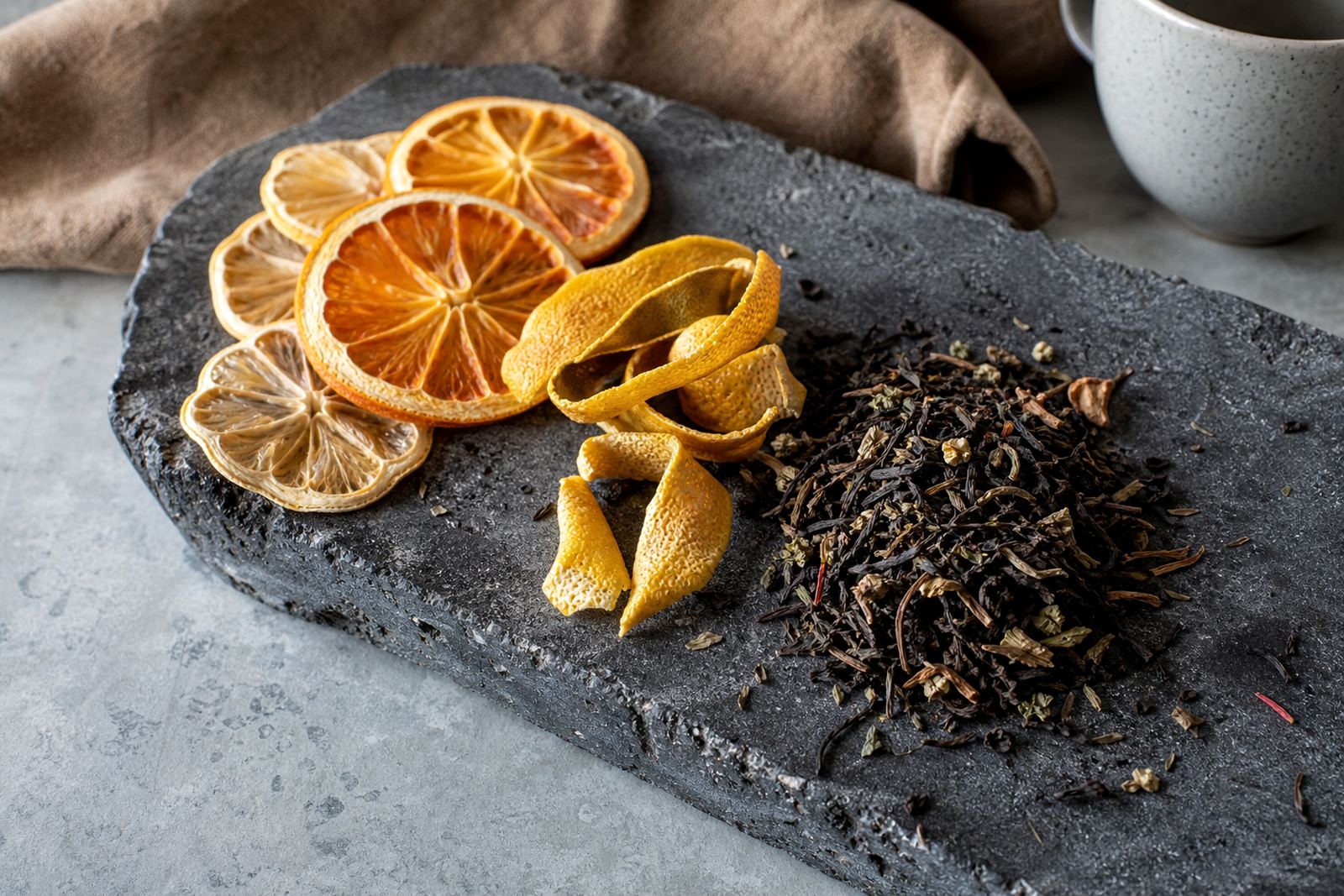
In practical blending, citrus oils and dried peel do more than add a nice smell. They help round off earthier notes in rooibos, lift a brisk black tea, and give herbal infusions a cleaner finish. A good citrus blend should taste fresh from the first sip, then settle into a balanced aftertaste rather than leaving a sharp sour edge.
Our team looks at how the tea will be used. A blend for morning service in a guesthouse near Somerset West needs a different profile from a tea box for home use in Pretoria. One calls for a stronger citrus top note, the other may need a softer, gentler finish that holds up over a longer steep.
Rooibos and citrus: a natural pairing
Rooibos has a naturally warm, honey-like base, so citrus gives it contrast without fighting the leaf. Orange peel is usually the easiest fit because it sits comfortably against rooibos and brings a round sweetness. Lemon peel can work too, but it should be used carefully so it does not make the cup taste thin.
For a practical everyday cup, a rooibos citrus blend should taste full bodied and easy to drink, even when brewed for a few minutes longer than planned. That makes it useful for homes, guesthouses and office kitchens where the kettle may sit on for a bit while people finish a meeting or sort out loadshedding backup. If the citrus note is too strong, the tea can taste hollow. If it is too weak, the blend loses its point.
- Use orange peel for a softer, sweeter finish.
- Use lemon peel for a brighter, more lively cup.
- Add a touch of lemongrass if you want extra freshness without too much acidity.
- Keep the rooibos base strong enough so the flavour still feels like tea, not flavoured water.
Black tea with citrus for a sharper morning cup
Black tea gives citrus a firmer stage. The tannins in black tea can handle stronger lemon, orange and bergamot style notes, which is why this pairing often shows up in breakfast blends and hospitality service. The result should feel alert and clean, not perfumed or harsh.
When working with black tea and citrus, balance is everything. Too much peel can make the cup bitter. Too little and the citrus disappears behind the tea. A good blend should still taste like tea first, with citrus lifting the aroma and giving the palate a bit of brightness. In colder parts of the Western Cape, that kind of cup is often preferred in the morning because it feels brisk and clear.
For catering teams and tea menus, citrus black tea is also easy to portion. It steeps well in larger pots and holds its character over a short service window which makes it practical for guest areas, conference breaks and breakfast tables.
- Brew black tea with boiling water and a short steep if you want more brightness.
- Use a slightly longer steep for stronger body, but do not overdo it.
- Serve with a slice of fresh citrus only if the blend already has enough acidity in it.
Herbal infusions that benefit from a citrus lift
Herbal infusions often need a little help to feel complete, especially when the base ingredients are mild. Citrus gives structure to chamomile, peppermint, fennel, hibiscus and ginger based blends. It can add movement to the cup and make the aftertaste feel fresher.
This is especially useful in warm weather. In Durban, for example, a citrus herbal infusion can feel lighter than a richer spice blend, and it is often easier to enjoy in the afternoon. For families, guest lodges and wellness focused menus, citrus helps these teas feel approachable without losing their character. It also gives tea a more polished aroma when served in glass pots or clear cups.
There is a practical side too. Herbal teas with citrus notes often pair well with honey, plain biscuits or light savoury snacks. That makes them useful for tea stations at functions where people want variety but do not want a heavy drink.
How to choose the right citrus note for each cup
Not every citrus note does the same job. Orange peel is warm and rounded. Lemon is sharper and cleaner. Grapefruit style notes can feel more bitter and are better used carefully. Naartjie style flavours sit somewhere between sweet and bright, which can work very well in rooibos and gentle herbal blends.
Choosing the right note depends on how the tea will be served, who is drinking it, and whether the blend must hold flavour in a tea bag, loose leaf or gift pack. A corporate tea range for offices in Johannesburg may need a cleaner citrus profile because the cup will often be brewed quickly. A seasonal gift blend for Bloemfontein could carry a fuller orange note because it is meant to be savoured at home.
- For rooibos, start with orange or naartjie.
- For black tea, use lemon or orange for a sharper lift.
- For herbal blends, match citrus to the main herb so the flavours do not clash.
- Keep sweetness in check, because citrus should brighten the cup not make it taste like cordial.
A local blending example from Stellenbosch to the rest of South Africa
One of the most useful ways to think about citrus tea is as a seasonal fit. In Stellenbosch, where mornings can start cool and end warm, a citrus rooibos works well because it tastes fresh at breakfast and still feels comfortable after lunch. The same blend also travels well by courier to Cape Town, Pretoria, Durban and Bloemfontein, which matters when a business or household wants the same flavour every time.
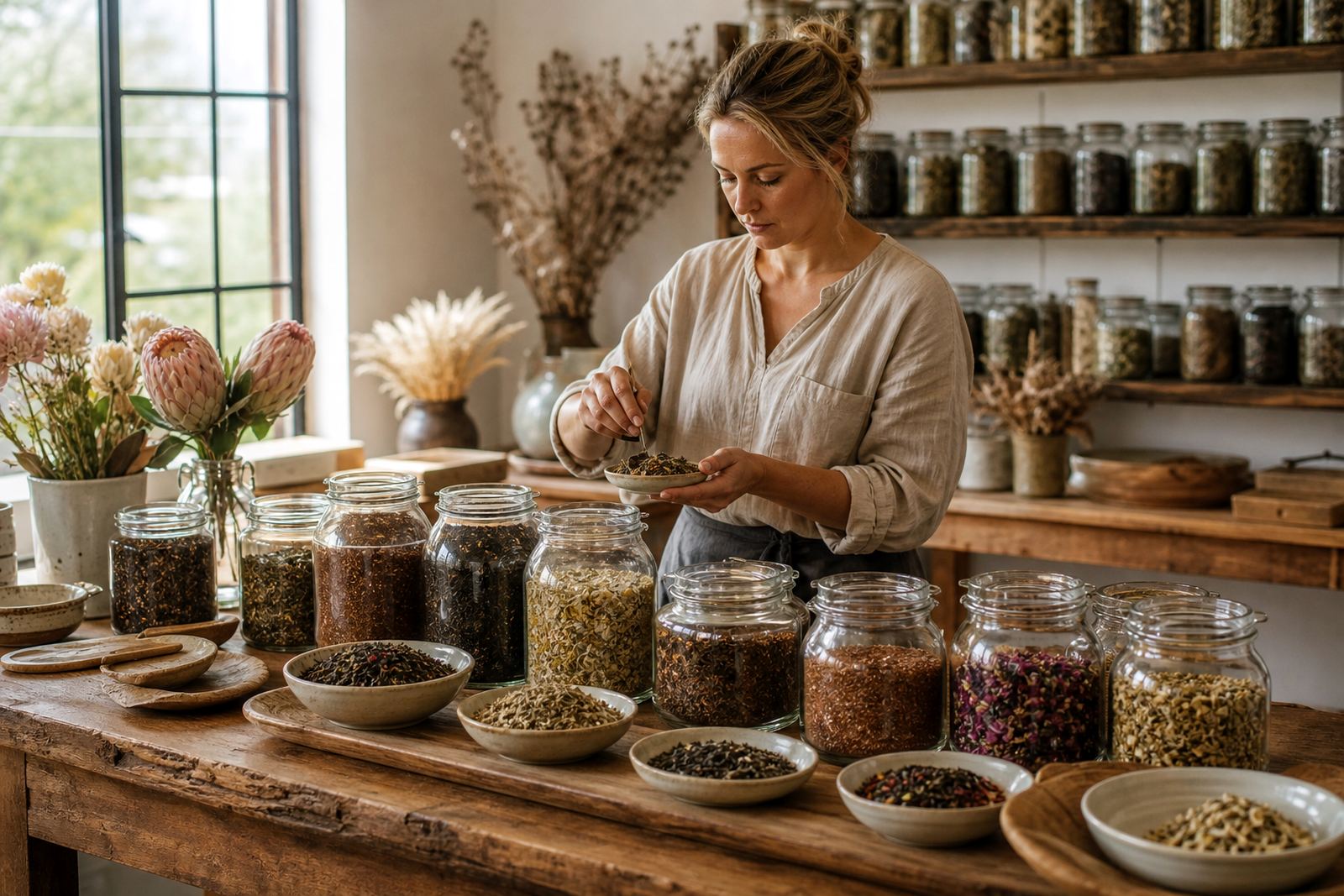
For example, a guesthouse might ask for a rooibos blend with orange peel and a touch of lemongrass for morning service. The goal is a cup that wakes up the palate but still feels familiar to local and overseas guests. A small change in citrus level can make a real difference: just enough peel brings lift, while too much can crowd out the rooibos. That is why tasting in small batches matters before any larger order goes out.
Citrus blends also suit gifting because they are easy to understand. Most people know what an orange or lemon note means before they even open the tin. That makes the tea feel practical and friendly, whether it is packed for a wedding favour, a seasonal hamper or a hospitality shelf. When the blend is right, the cup speaks for itself.