
What Makes Red And Green Rooibos Different
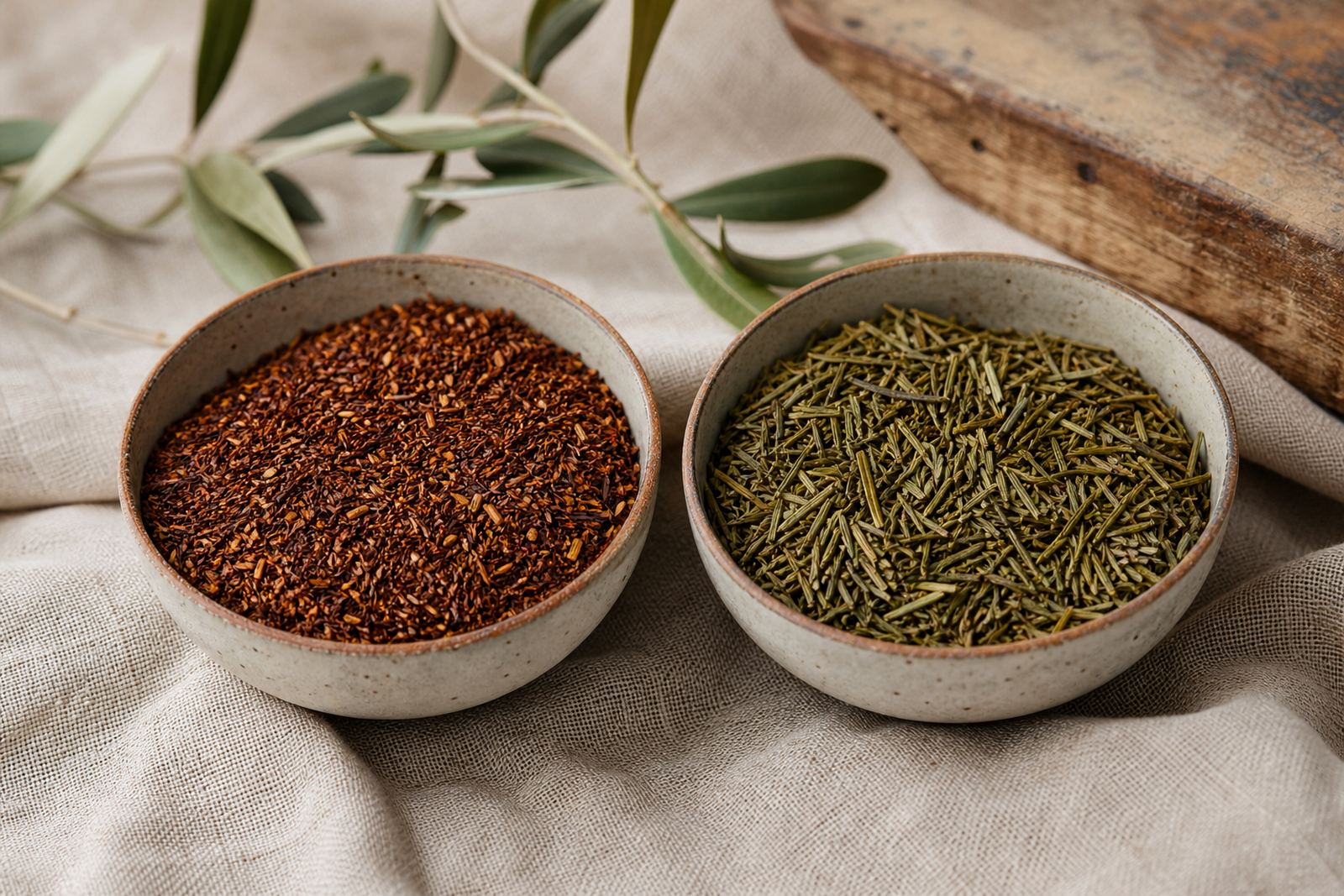
Red rooibos and green rooibos both come from the Aspalathus linearis plant, grown mainly in the Western Cape. The difference starts after harvest. Red rooibos is bruised and allowed to oxidise, which gives it the familiar copper-red colour and a deeper, softer flavour. Green rooibos is handled more quickly and kept from oxidising, so it stays pale green and tastes fresher and more grassy.
That difference is important when you are choosing tea for your home, your guest house, or a corporate hamper. Red rooibos is the cup most South Africans know from childhood, while green rooibos usually appeals to people who want a lighter brew. In both cases you are getting a naturally caffeine-free infusion that suits late evenings, load-shedding dinners, and office kitchens where people want something gentle after lunch.
How The Flavour Changes In The Cup
Red rooibos is rounder, warmer and sweeter on the palate. It often carries notes of honey, dried fruit and a mild nuttiness. Because it has a fuller body, it works well with milk, lemon, or spice blends, and it holds its flavour if it stands for a few minutes in a teapot or urn.
Green rooibos is more delicate. It can taste fresh, slightly herbal and a little hay-like, with less sweetness and less colour in the cup. Some people prefer it plain because they want a lighter finish, while others use it in blends with mint, citrus peel or rose petals. If you are serving tea in Stellenbosch during summer, green rooibos can feel especially clean and refreshing, while red rooibos suits cooler evenings and winter breakfasts.
- Choose red rooibos for a fuller, sweeter cup.
- Choose green rooibos if you want a lighter, fresher profile.
- Use red for richer blends and green for subtle herbal mixes.
Why The Colour Matters Beyond Looks
The colour is not just for show. It tells you something about processing, flavour intensity and where the tea may fit in service. Red rooibos gives a deep amber to rust coloured liquor, which many customers expect when they order rooibos at a café or guesthouse. Green rooibos stays much lighter in the cup, often pale yellow-green, so it can surprise someone who is used to the traditional version.
For hospitality teams, that means setting the right expectation. A guest who asks for rooibos may want the classic red version, while a tea menu can explain that green rooibos is a different style with a milder taste. In a practical sense, colour also matters for blends. A darker base can make a spiced mix look fuller, while green rooibos keeps a floral blend looking bright and clean. That can be useful for wedding favour packing and seasonal gifting, especially when presentation needs to stay neat in warm weather.
- Red rooibos produces a darker cup and a more familiar look.
- Green rooibos stays light in both colour and flavour.
- Clear menu wording helps prevent confusion for guests and staff.
Which Rooibos Works Best For Daily Drinking
If you drink rooibos every day, the choice often comes down to mood and routine. Red rooibos is the safer all-round option because it suits most drinkers, whether they take it black, with milk, or with a slice of lemon. It also stands up well in big batches, which matters for office tea supply, breakfast service and meeting rooms where a pot may sit for a while.
Green rooibos is worth keeping on hand if you want variety. It works well as a morning cup when you want something lighter than black tea, and it can be a good choice after a heavy lunch. For people in coastal areas like Somerset West or Cape Town, where humidity can affect how tea is stored, the lighter leaf should still be kept in an airtight container away from heat and moisture. That helps preserve the fresher aroma and keeps clumping to a minimum.
- Red rooibos suits larger batches and more general use.
- Green rooibos is a good option for lighter daily drinking.
- Store both in sealed containers away from sunlight and steam.
How To Brew Each One Properly
Both types are forgiving, but the best brew depends on how strong you want the cup. For red rooibos, use boiling water and steep for 5 to 7 minutes. It handles a longer brew well, so it is easy to make in a pot for a family table or a tea station. Green rooibos is usually happier with a slightly shorter steep, around 3 to 5 minutes, if you want to keep its fresh notes intact.
If you are serving guests in a winery tasting room or at a conference in Pretoria, it helps to use a clear brewing guide on the tray or jug. A few seconds too long will not ruin either tea, but it can make green rooibos taste sharper than intended. For flavoured blends, check the fruit, herbs or spice content as well. Those additions can change the ideal steeping time, and it is worth testing the blend in advance rather than guessing on the day.
Choosing Rooibos For Gifting, Menus And Events
When you are buying rooibos for gifting or service, the question is not only which one tastes better but which one suits the setting. Red rooibos is usually the better everyday gift because most people recognise it immediately. It also fits well into corporate gifting, hotel turndown service and wedding favours where you want broad appeal. Green rooibos is more of a conversation piece. It works nicely in curated tea boxes, tasting sessions and boutique menus where the aim is to introduce something a little different.
In the Western Cape, especially around Stellenbosch and Paarl, we often see customers choose red rooibos for classic hospitality use and green rooibos for tasting flights or seasonal blends. That practical split makes sense. One tea gives comfort and familiarity, the other gives freshness and a lighter profile. If you are planning bulk tea orders or subscription boxes, a mix of both can give customers a useful contrast without making the range too complicated.
- Use red rooibos for broad appeal and classic service.
- Use green rooibos for curated or speciality ranges.
- Offer both if you want a menu or gift range with more choice.
A Simple Local Way To Taste The Difference
The easiest way to understand red versus green rooibos is to taste them side by side. Brew two small cups with the same water temperature and compare the colour first, then the aroma and finally the finish. In a Stellenbosch tasting session, this often changes minds quickly because the contrast is so clear once the cups are side by side. One cup feels soft and rounded, the other feels brighter and more herbal.
If you are serving tea to visitors, staff or family, that kind of tasting can help people find the style they enjoy most. It also makes buying easier. Instead of asking only whether someone likes rooibos, you can ask whether they want something traditional and mellow or light and fresh. That small step saves money and gives a better match for the cupboard, the tea trolley, or the gift pack. And it usually means fewer left-over sachets at the bottom of the tin, which is never a bad thing.