When the rain settles in, what people reach for
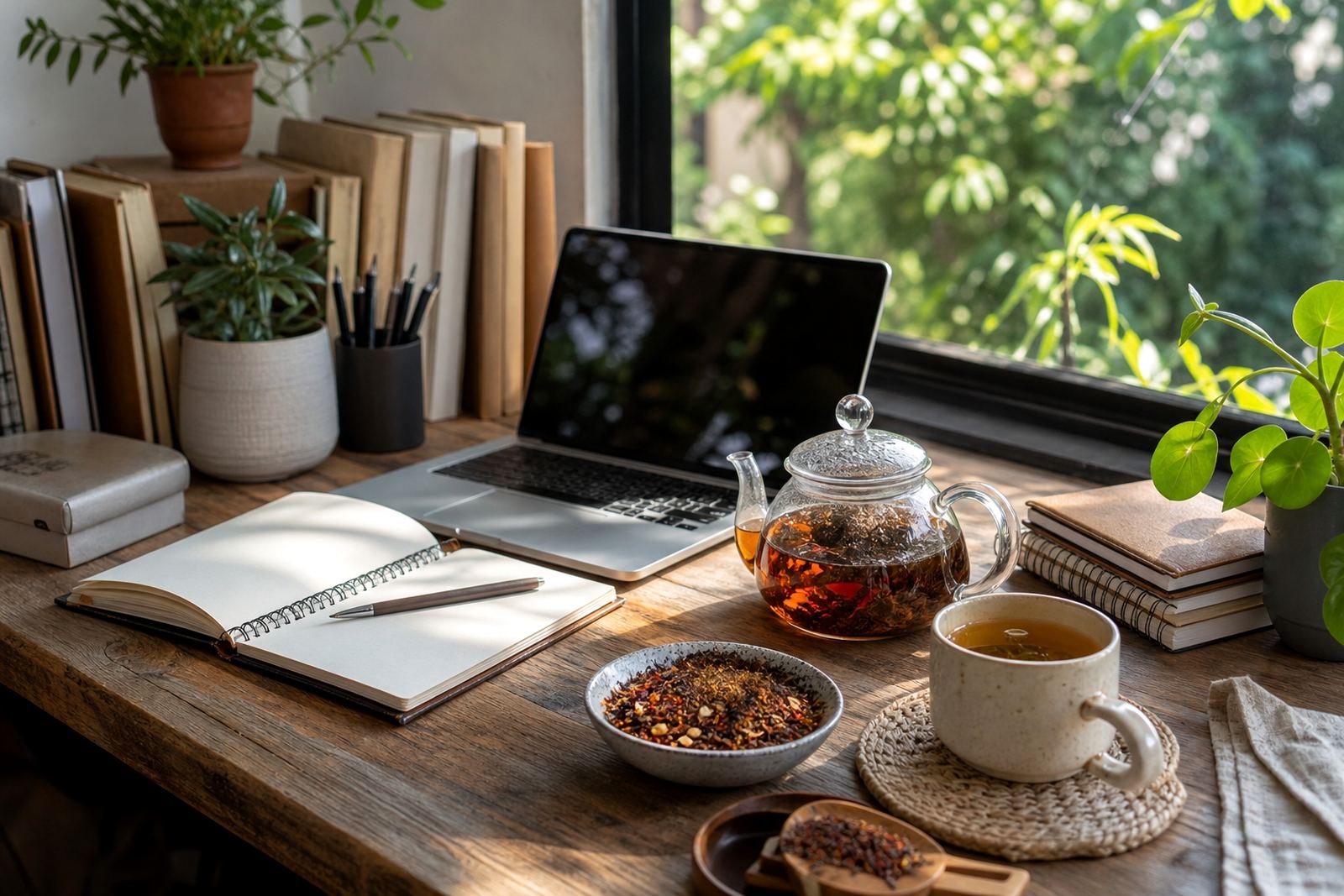
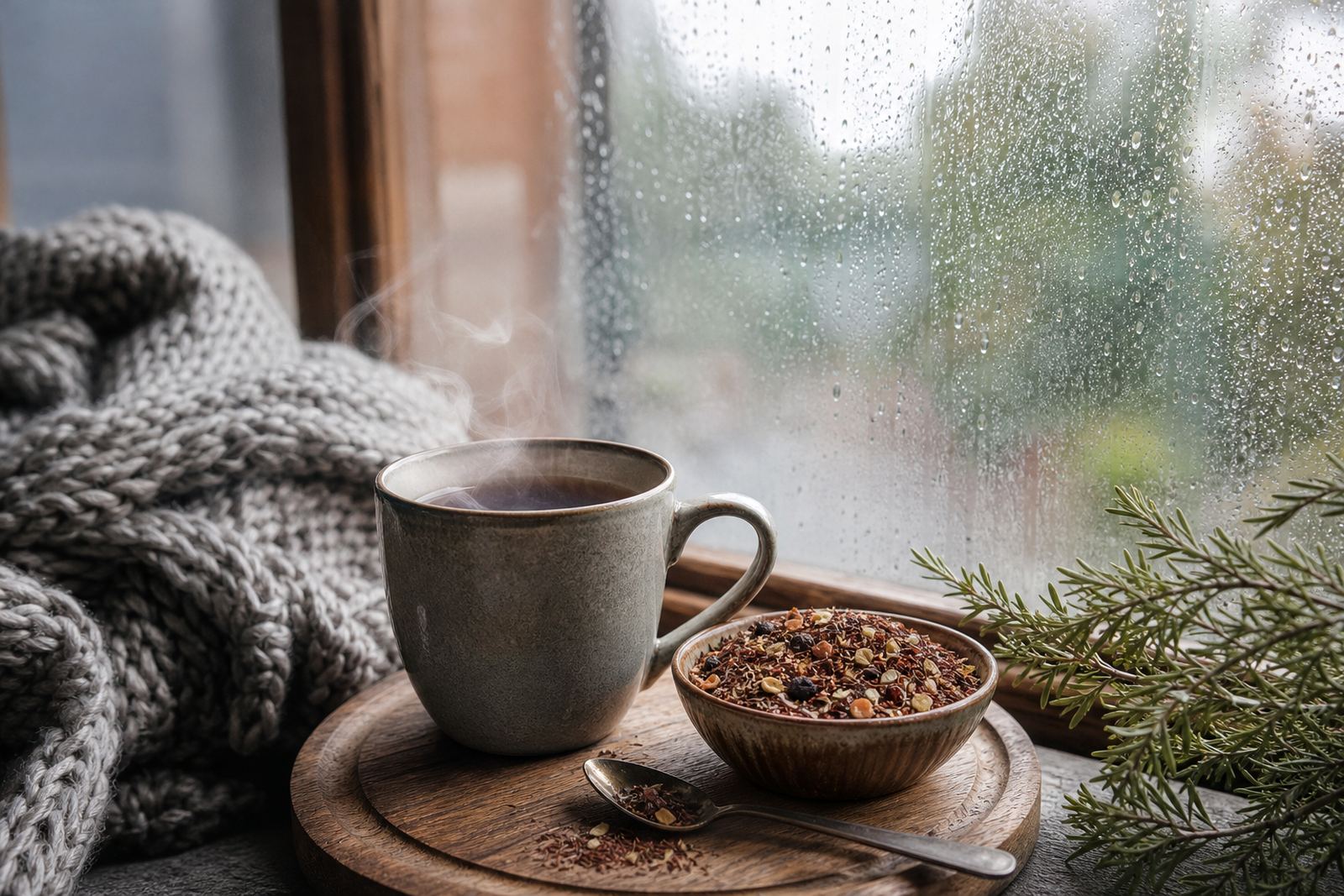
Rainy day tea service is usually less about ceremony and more about comfort, consistency and quick preparation. In Stellenbosch, Cape Town and the coastal towns, the damp air can make the room feel colder than the temperature says, so people often want blends that brew quickly, smell inviting and hold up well for a second cup. Rooibos is a reliable starting point because it suits long infusions, takes milk well if needed, and stays pleasant even after a busy morning.
For this use case, the usual client is a household, guesthouse, small office, tasting room or hospitality venue that needs teas ready for a slower, quieter day. Some want a simple self-service set for staff or visitors, while others need a more considered menu for rainy afternoons, winter weekends or school holiday periods. The aim is to keep the offering useful and easy to manage, with stock that moves steadily rather than sitting on a shelf for months.
Typical blend choices include plain rooibos, vanilla rooibos, spiced rooibos, chai-style black tea, peppermint, lemon and ginger, chamomile and fruit-forward herbal infusions. These work well because they are forgiving on steeping time and suit a range of palates. If the rain brings in more foot traffic or people are waiting around after a tasting or event, it helps to have at least three options on hand, not ten.
The practical tea set that works in cool weather
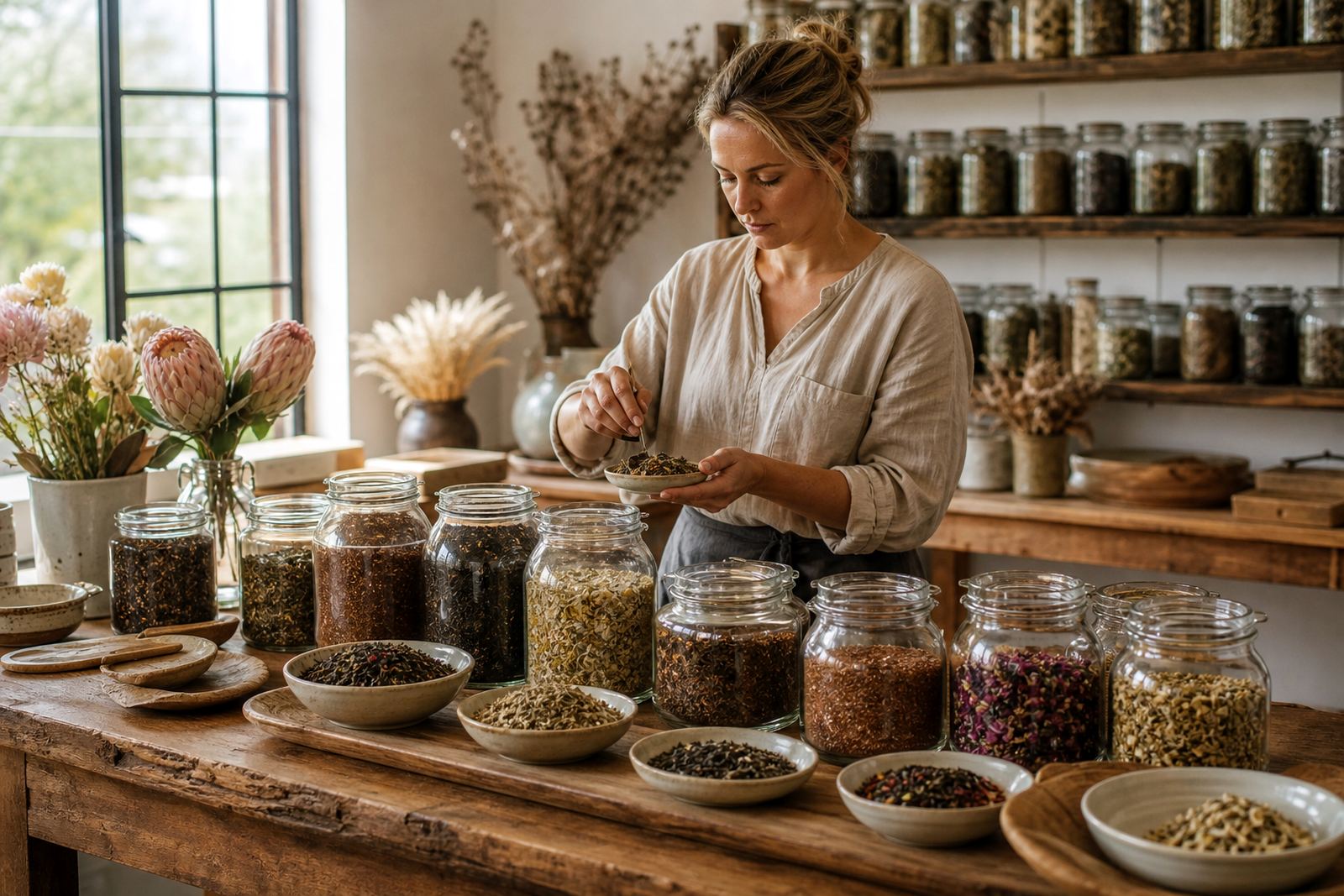
A rainy day setup does not need to be complicated, but it does need to be dependable. The basic equipment set usually includes airtight storage jars or tins, a kettle or urn, a teaspoon measure, a strainer or tea bags for service, milk or plant milk if the range calls for it, and enough cups or mugs for the day. In higher-use spaces, a hot water urn can be useful during load-shedding planning if it is paired with gas, battery support or a generator.
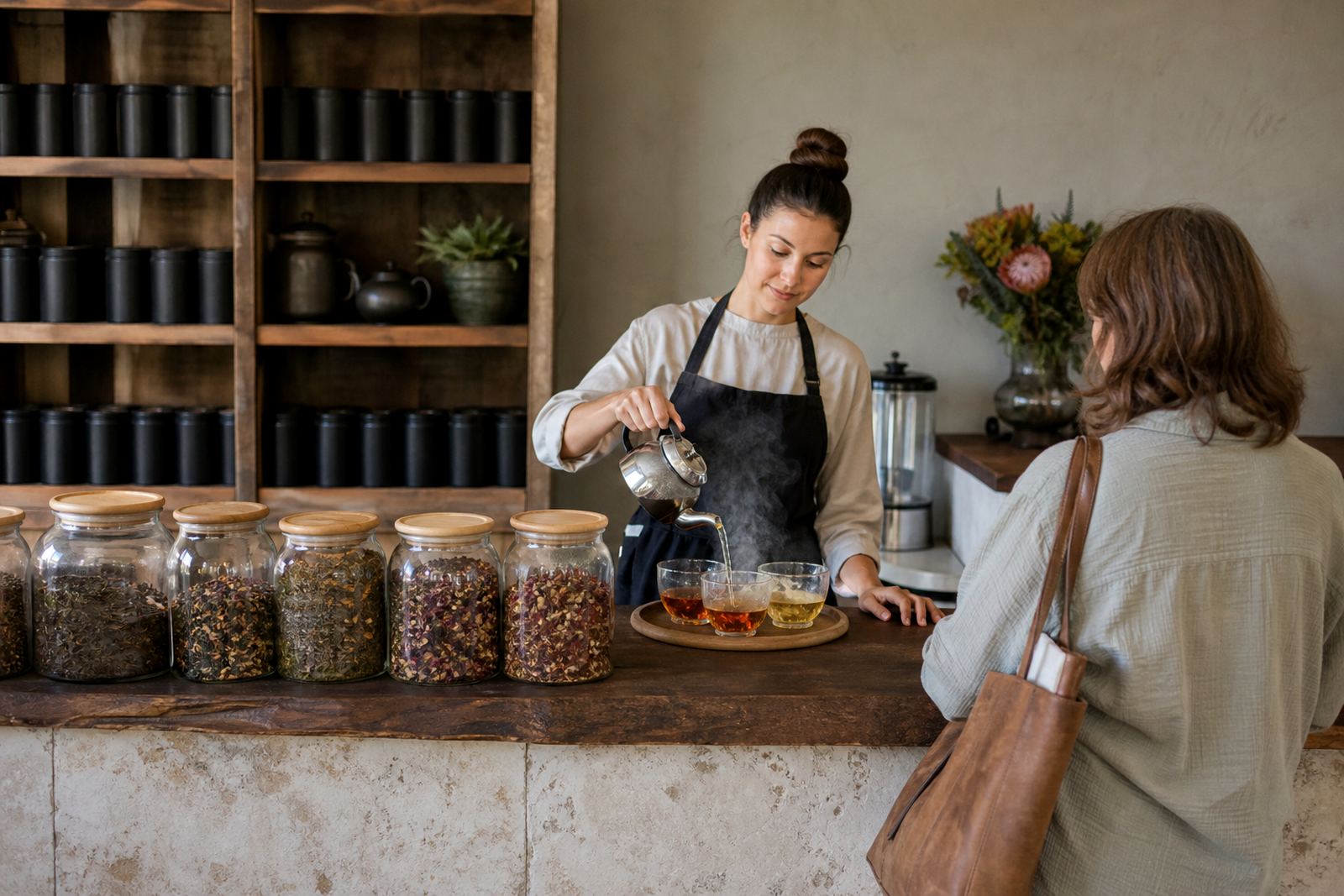
In a guesthouse or office, a compact station near the kitchen or reception area works better than a spread-out arrangement. Keep the tea point close to water, cups and waste bins, and away from windows that sweat with condensation. If the space is small, wall shelves or a narrow counter can free up room for labels and sugar bowls without cluttering the area.
- Use sealed containers to protect aroma in humid coastal conditions.
- Keep one jar per tea type so blends do not absorb each others scent.
- Store extras in a cool cupboard, not beside the stove.
- Label blends clearly for staff and guests, especially if caffeine-free options are included.
- Check stock weekly so the favourites do not run out over a wet weekend.
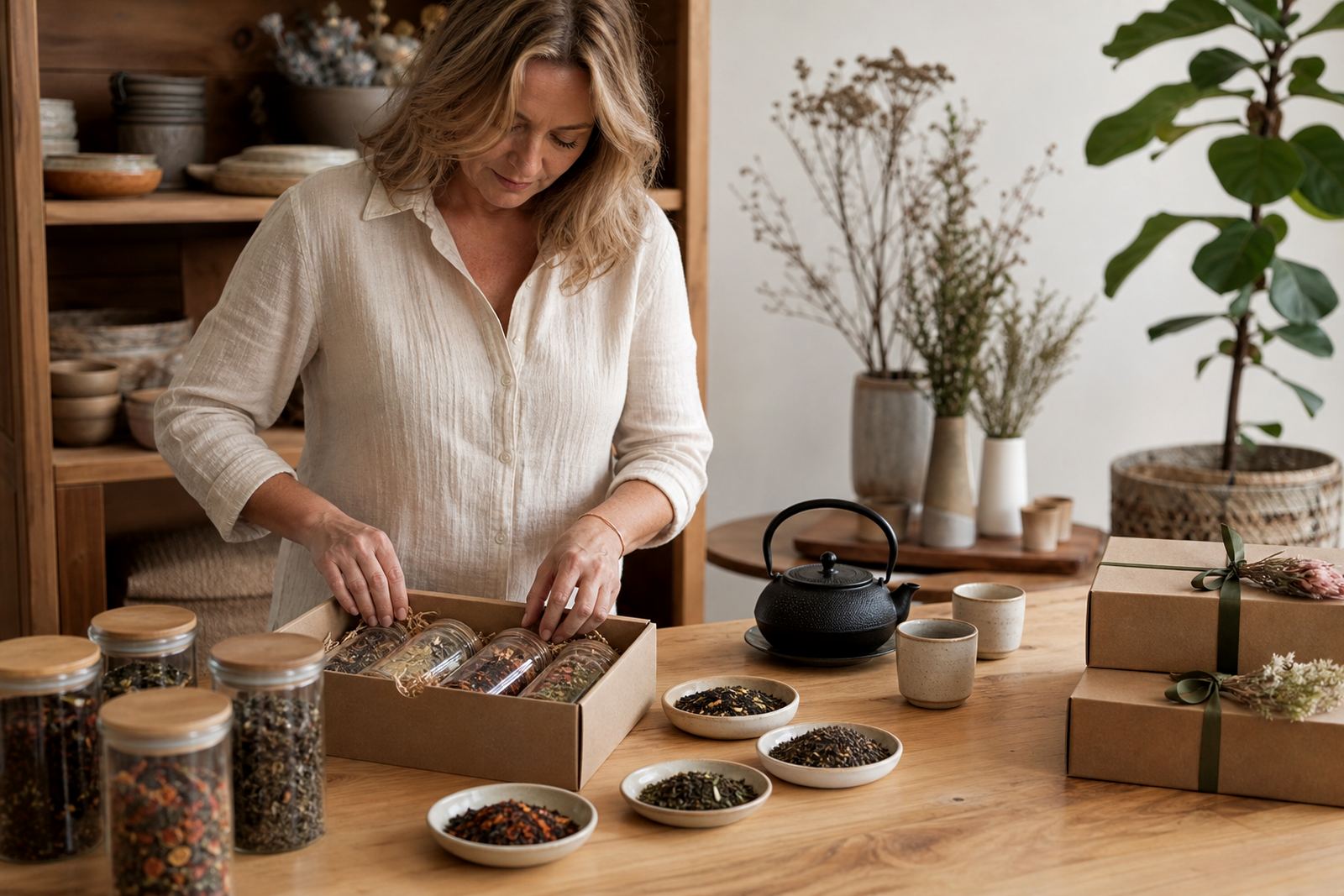
For private label or gifting clients, the same logic applies. Small formats, neat labels and clear brewing notes make the product easier to use and easier to gift. A rainy day pack can include 20 to 50 sachets, or loose-leaf packs in 50 g to 100 g sizes, depending on the venue and expected turnover.
Layout and planning for hospitality, gifting and offices
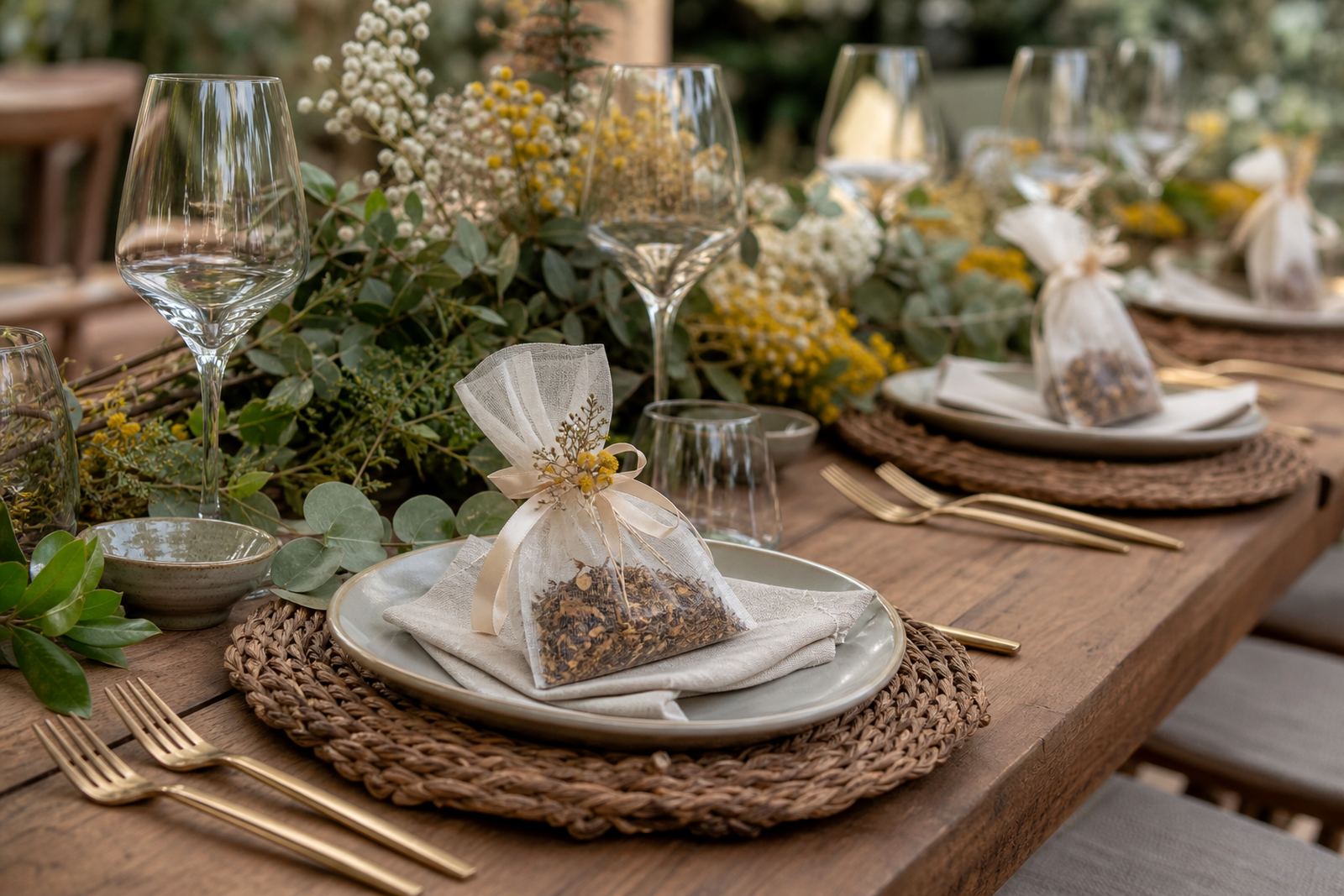
Rainy day comfort works best when the tea offering is planned around the actual flow of people. A tasting room in Somerset West may need a quick pour-and-go setup for visitors arriving out of the rain. A corporate office in Pretoria may prefer a shared tea point with a few familiar blends that suit staff breaks. A wedding venue or event space might need favour packing or a small tea bar with warming options for guests waiting between sessions.
For hospitality supply, the layout should support speed. Put the most popular blends at eye level, keep a water source within easy reach, and use scoop sizes that make portioning simple for more than one person. In customer-facing spaces, a small printed tea menu helps people make a choice without asking too many questions. This is especially useful where staff change shifts or the venue is busy on Fridays and weekends.
For gifting and seasonal packs, the planning starts with the occasion. Winter gift boxes, rainy day welcome packs and corporate thank-you sets all need different mix of flavours and pack sizes. A practical range usually includes a caffeine-free option, a familiar classic and one more distinctive blend. That gives the box balance without overcomplicating the order.
- Choose blends that suit both morning and late afternoon use.
- Keep one or two caffeine-free options for children, late guests or evening service.
- Match pack size to the audience so stock does not sit too long after the season passes.
- If the site has limited counter space, use smaller containers and refill from bulk stock in the back area.
Common mistakes that make rainy day tea harder to serve
The most common mistake is buying too many flavours and not enough of the ones people actually drink. Rainy weather tends to increase repeat orders of a few dependable blends, so it makes more sense to keep stock of those and test new items in smaller amounts. Another mistake is storing loose-leaf tea in open bags or clear jars near windows, where moisture and light can dull the flavour quicker than expected.
Some buyers also underestimate how much tea they need when people are indoors longer than usual. Offices, guesthouses and event spaces can use more tea on grey days, especially if there is a morning chill and another cup after lunch. If you are supplying a team, add a buffer of at least 20 percent to the expected weekly need during colder months. That small extra amount prevents last-minute shortages.
Packaging can also cause problems if it is not practical for the setting. Large decorative containers may look nice but can be awkward in a busy kitchen or service area. Very small bags can create too much handling. The best choice is usually a format that is neat, resealable and simple to refill. For wet weather periods, that matters more than presentation alone.
Budget ranges that make sense in Rand
Budget depends on whether the tea is for home use, hospitality, gifting or a service point. For a small household or trial order, a sensible starting range is about R250 to R600, which can cover a few 50 g or 100 g packs and let you choose which blends work best in the colder months. For a guesthouse or office tea supply, monthly spend often sits between R800 and R3 500 depending on headcount, turnover and whether individual sachets or loose-leaf packs are needed.
Corporate gifting and event work sits higher because packaging, labour and presentation are part of the order. A simple seasonal tea gift can start around R85 to R180 per unit, while more curated packs with custom labels or mixed blends may run from R200 to R450 each. Tea bar service, tasting sessions and event favour packing are quoted separately based on quantities, delivery area and prep time.
For bulk orders, it helps to think in tiers. A once-off private label run or hospitality restock may need a modest test quantity first, then a larger repeat order once the blend is approved. If the weather is expected to stay wet for weeks, reorder before stock runs low rather than waiting for a rush. That keeps service steady and avoids paying urgent courier fees.
How Cup Of Tea Co supports rainy season orders
Based in Stellenbosch Central and delivering by courier across South Africa, Cup Of Tea Co supplies loose-leaf teas, rooibos and herbal infusions for homes, guest spaces, offices and events. The team can assist with custom tea blending, private label packing, corporate gifting, hospitality tea supply, subscription boxes, tea menu curation and seasonal gift curation. If you need a blend suited to a cooler month or a wet weekend crowd, the range can be shaped around the way you actually serve it.
Clients in Stellenbosch, Cape Town, Somerset West and Paarl often want quick local turnaround, while orders for Johannesburg, Pretoria, Durban and Bloemfontein usually need a bit more forward planning so stock arrives in good time. That is especially useful for winter launches, staff packs and wedding season favours. A rainy day order works best when the flavours are practical, the pack size is right and the delivery timing is sorted before the weather turns.
For enquiries, use the form on the contact page and include your setting, headcount and preferred blend style. That helps the team recommend the right mix without over-ordering. A good rainy day range should feel easy to use, not fussy, and it should make a cold afternoon a little easier to get through.