What a morning tea ritual needs in practice
Morning tea works best when the range is simple, dependable and easy to serve. In Stellenbosch, Cape Town, Johannesburg or Durban, the aim is the same: a hot drink that tastes clean, holds its flavour and fits into the first 30 minutes of the day without fuss.
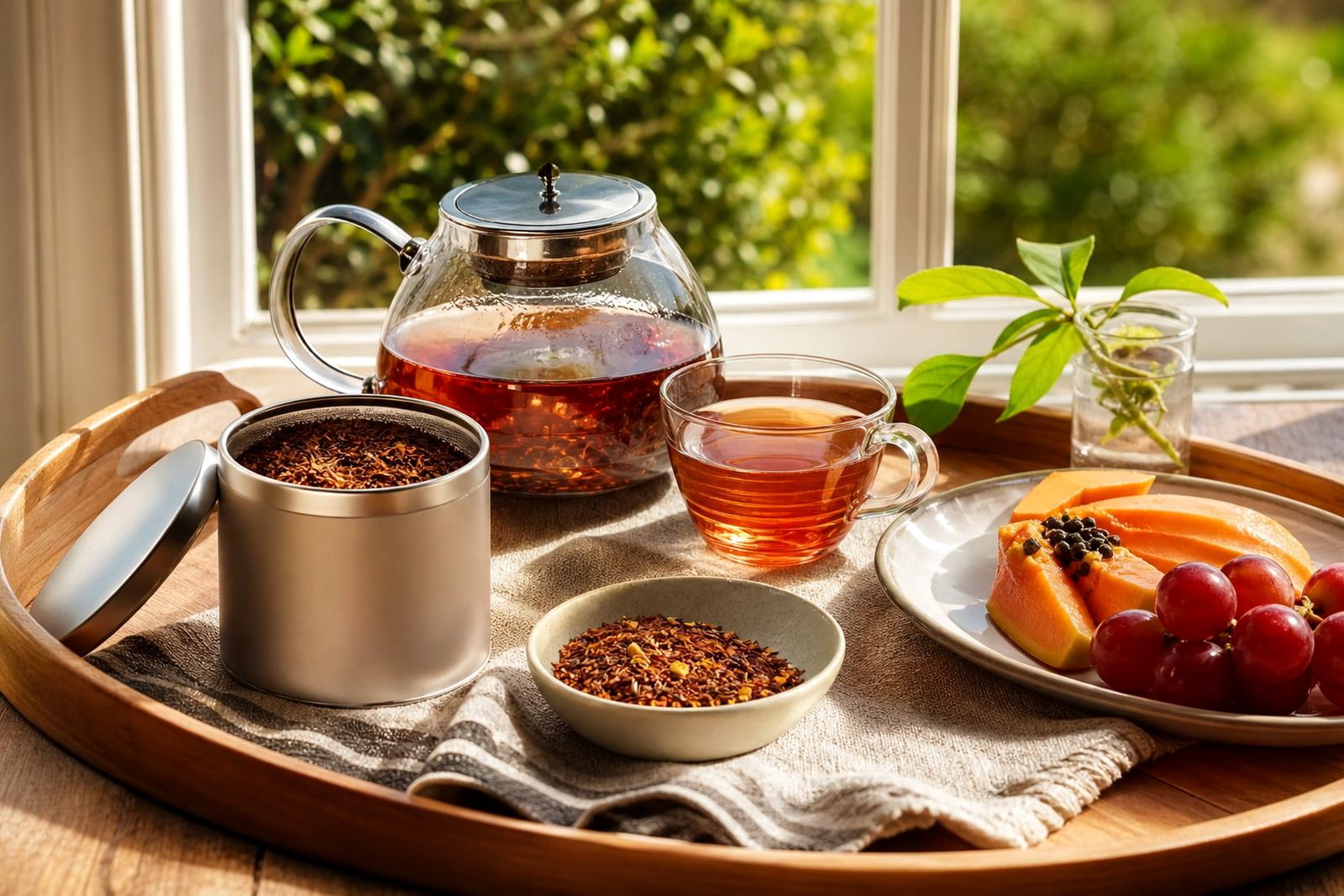
For most homes and workplaces, the core set is one black tea, one rooibos, one caffeine-free herbal option and one gentler blend for guests who prefer a lighter cup. Loose-leaf tea gives better control over strength, especially when people like different brewing times. Rooibos is a strong choice for South African mornings because it is naturally caffeine-free and suits early starts, load-shedding schedules and long commutes alike.
Typical equipment for home, office or guest service
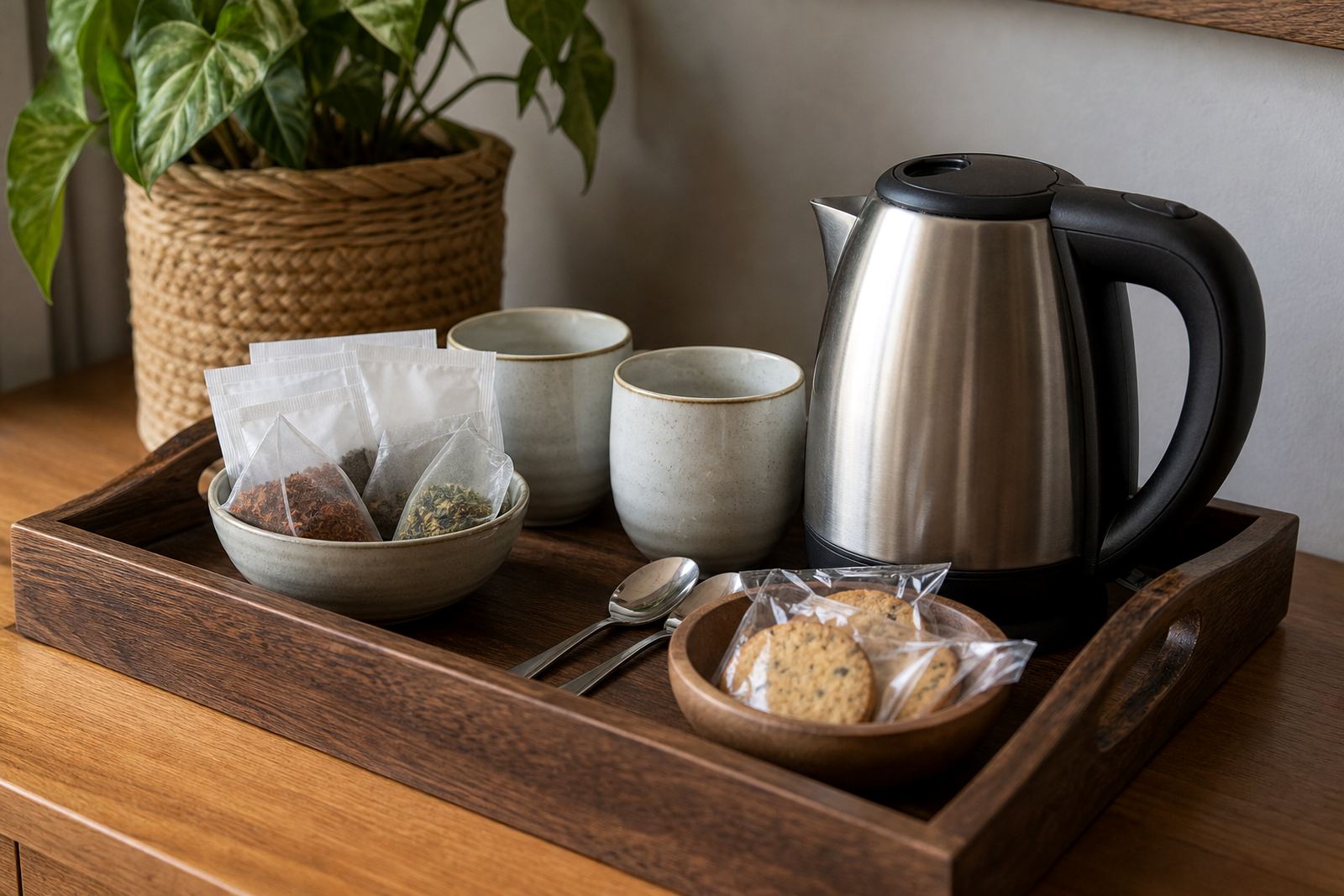
The equipment set does not need to be complicated. What matters is heat control, clean storage and a way to brew enough cups without rushing. In a small office or guesthouse, a basic setup can work very well with a kettle, measured spoons, strainers and a few sealed containers.
- Kettle or water urn with reliable temperature control
- Tea tins or airtight jars for loose-leaf storage
- Measuring spoon for consistent portions
- Tea strainers, infusers or paper filters
- Cups, mugs or small teapots for service
- Labels for blends, brew time and serving notes
If you are serving guests in a hospitality setting, add milk jugs, sugar bowls, lemon slices, honey and a tray that keeps the service tidy. Coastal humidity can affect aroma and freshness, so sealed storage matters more in Somerset West, Durban and other warmer areas. Keep stock away from the stove and away from direct sunlight too.
Layout and planning for a calmer first cup
A morning tea station should save steps, not create them. Place the kettle or urn close to water, cups and storage so one person can serve without crossing the room more than once. In offices, a side counter near the boardroom or reception area often works better than a far kitchen corner.
Plan the flow from left to right if that is how your team serves: kettle, tea, cups, milk, sweetener, waste bin. If the space is small, use vertical shelving and stackable containers. This keeps the counter clear and helps during busy periods when several people want tea at the same time. It also reduces spills, which is handy when you are dealing with early morning rush and a slightly cluctery team member who is still waking up.
- Keep the most used blends at eye level
- Mark brew times clearly for each tea type
- Use smaller containers for blends used less often
- Rotate stock so older tea is used first
Blends that suit early starts and steady energy
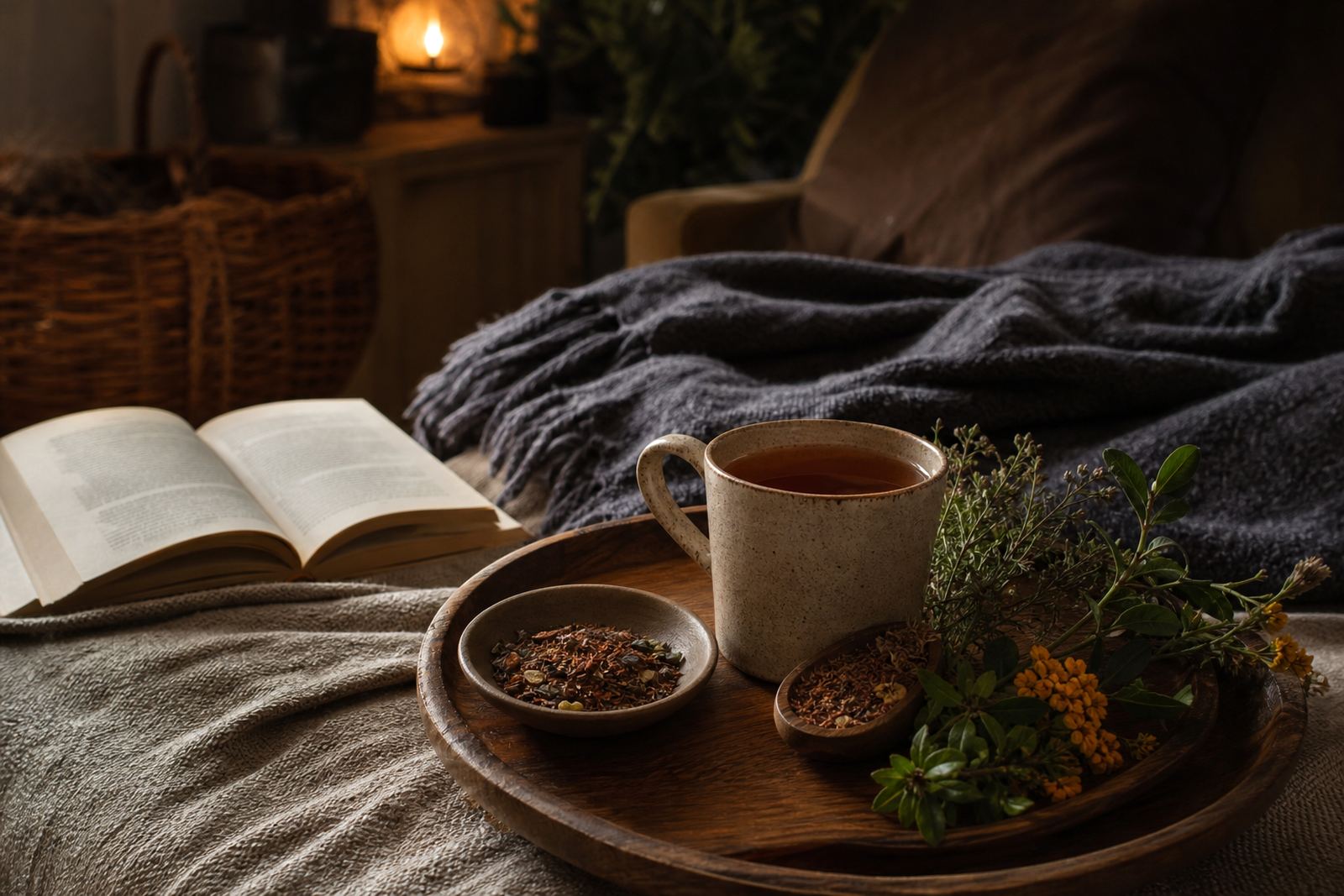
Morning tea should feel calm, not heavy. Some clients want a stronger cup to replace coffee, while others want a gentle start that does not overpower breakfast or a meeting. A good range for morning service usually includes a full-bodied tea, a lighter breakfast-style blend, rooibos and one herbal infusion with a soft finish.
For South African households and businesses, rooibos is often the anchor blend because it suits a wide range of people and can be served with or without milk. Herbal infusions are useful for guests who prefer a caffeine-free option before 9 am. If you are ordering for an office in Pretoria or Bloemfontein, think about mixed preferences, some people want a strong cup, others want something mellow and the tea point needs to handle both.
Common mistakes that waste stock or spoil flavour
The most common issue is overbrewing. Tea that sits too long can turn bitter, and that is hard to fix once milk or sweetener is added. Another mistake is using open containers near heat or moisture, which flattens aroma quickly. Loose-leaf tea needs a dry, cool place and a lid that closes properly.
People also tend to buy too much variety at once. It looks good on the shelf, but morning service works better with a focused range that people recognise. If the team has to choose from ten options before the first meeting, service slows down and the catering area gets messy. For corporate clients, it is better to test a few blends first and expand later based on actual use, not guesses.
- Do not use boiling water on every blend
- Do not leave tea exposed on open trays
- Do not mix old stock with fresh stock
- Do not overcomplicate the menu for a small team
Budget ranges in Rand for different morning tea setups
Budgets depend on whether you are setting up a home ritual, a small office station or a hospitality tea point. A basic home starter with a few loose-leaf blends, storage jars and simple brewing tools can start from about R350 to R900. That usually covers a practical range for daily use rather than a decorative display.
For a small office or guesthouse morning tea station, expect around R1 200 to R3 500 for initial stock and equipment, depending on the number of staff or rooms. Corporate gifting packs, private label packing and event tea bars cost more because of presentation and volume handling. Bulk tea orders bring the unit cost down, especially when the same blends are repeated every week or month.
If you are planning for a larger workplace or hospitality group, it helps to separate once-off setup costs from ongoing replenishment. That makes it easier to budget around seasonal demand, staff changes and public holidays.
How Cup Of Tea Co supports morning tea service
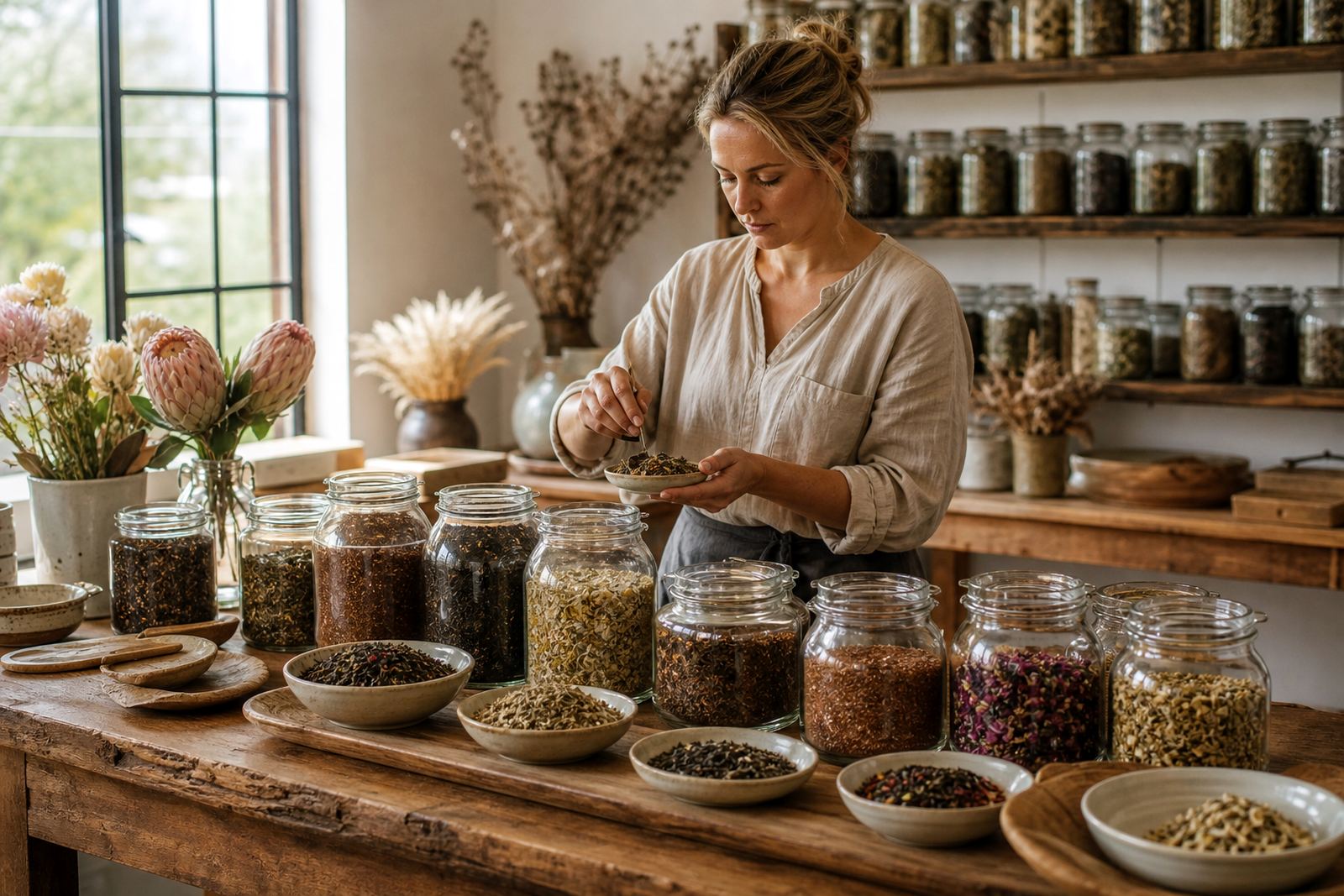
Cup Of Tea Co blends loose-leaf teas, rooibos and herbal infusions in Stellenbosch for clients across South Africa, including Cape Town, Johannesburg, Pretoria, Durban and Bloemfontein. The range suits homes, offices, guesthouses, events and hospitality teams that need dependable morning service with steady flavour and a clean finish.
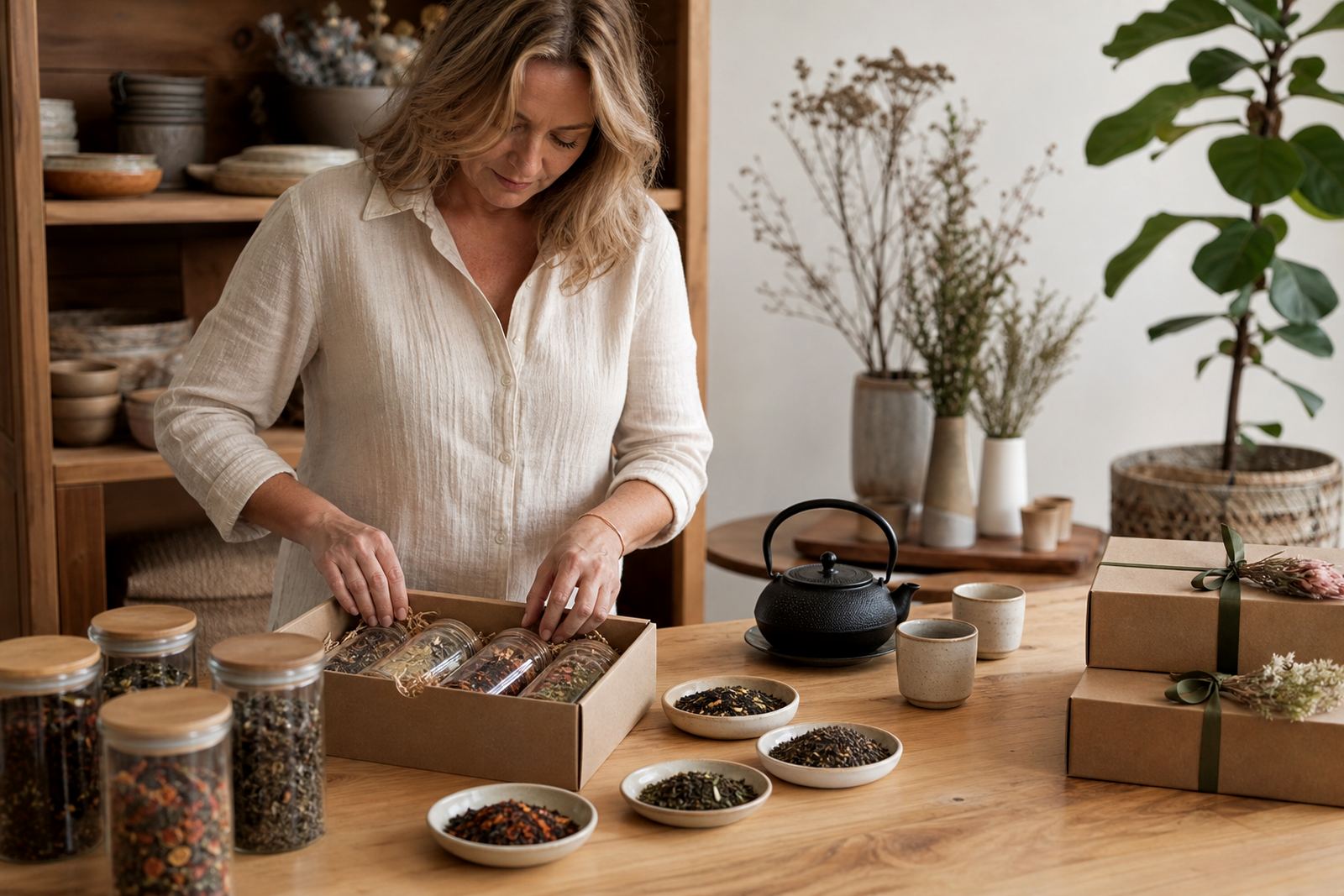
Clients use the enquiry form on the contact page when they want custom blending, tea supply for offices or hospitality, subscription tea boxes, tea menu curation or gifting packs. For morning rituals, that means you can build a tight range around the way people actually drink tea instead of filling shelves with blends that never get used.