Start With the Tea Body Before You Choose the Cake
When people ask what tea goes with cake, the first question should be what kind of tea you are pouring. Black tea has grip and structure, rooibos is softer and naturally sweet, while herbal infusions can lean citrusy, floral or minty. That body matters more than the cake icing. A rich chocolate cake needs something with enough weight to stand up to it, while a light sponge asks for a gentler cup.
In practice, think of tea as the counterweight. If the cake is very sweet, pick a tea with a clean finish. If the cake is buttery and plain, a more aromatic blend can carry the pairing. This is why afternoon tea at home in Stellenbosch, or at a small function in Somerset West, works best when someone has planned the drinks as carefully as the cake table.
- Black tea suits richer cakes and bakes with spice, cocoa or caramel.
- Rooibos works well with nutty, vanilla and fruit based cakes.
- Herbal infusions are good for lighter cakes, citrus slices and fresh cream sponges.
Black Tea for Chocolate, Spice and Strong Flavour
Black tea is the most practical partner for dense cake. It has a firmer tannin structure, so it cuts through cream, ganache and syrup without disappearing. A slice of chocolate cake, coffee cake or sticky date loaf usually needs that lift. If the tea is too delicate, the cake will flatten it out and you lose the point of the pairing.
For a good result, avoid making the tea overly strong. You want clarity, not bitterness. A full bodied cup with milk can sit nicely beside a chocolate layer cake, while a plain brewed cup works well with spice cake or something with orange peel. In Cape Town, where many cake counters lean toward rich bakes and layered slices, this is one of the easiest pairings to get right.
- Chocolate cake and plain black tea is a safe, dependable match.
- Spiced carrot cake suits black tea with malty notes.
- Caramel or toffee cake pairs well with a brisk cup that is not too thin.
Rooibos Brings Out Vanilla, Nuts and Fruit
Rooibos is one of the easiest teas to match with cake because it has natural sweetness and low bitterness. That makes it a good companion for vanilla sponge, almond cake, banana loaf and most fruit cakes. It does not fight the cake. Instead, it adds warmth and a slightly honeyed note that feels familiar to local palates.
For South African tables, rooibos also makes sense because it suits both everyday teatime and more formal occasions. A citrus rooibos with lemon cake can feel fresh without being sharp. A plain rooibos with milk works well beside a vanilla birthday cake for children and adults alike. If you are serving a platter at a wedding in Paarl or a family gathering in Pretoria, rooibos is often the most forgiving option because it appeals to many guests.
- Vanilla cake and rooibos is a gentle, balanced pairing.
- Fruit loaf or fruit cake suits rooibos with warm spice.
- Nut cakes work well with rooibos that has a roasted or earthy note.
Herbal Infusions Work Best With Lighter Cakes
Herbal infusions need a bit more thought because they can be bright, floral, minty or tart. That is not a problem, but the cake must match the profile. Chamomile or vanilla based herbal blends sit nicely with plain sponge, shortcrust tartlets and lightly iced cupcakes. Mint infusions are better with chocolate or cocoa cake, especially if the chocolate is dark.
Citrus herbal infusions are useful when the cake is also fresh and not too heavy. Lemon drizzle, orange loaf and cream cake are all sensible choices. If the cake is already highly flavoured, such as berry compote with buttercream, keep the infusion simple. Too many competing notes make the palate tired. That is especially true at larger functions where guests are moving from coffee to tea and back again.
- Mint infusion with dark chocolate cake gives a clean aftertaste.
- Chamomile works with plain sponge and mild icing.
- Lemon or orange herbal blends suit citrus cakes and tea loaves.
Match Sweetness, Texture and Serving Temperature
Good pairing is not just about flavour, it is also about texture and serving temperature. A hot cup with a cold cake can be refreshing, but if the cake is very rich the contrast may feel heavy. A softer cake often tastes better with tea that is poured fresh and served without delay. If the tea stands too long, the flavour goes flat and the pairing loses its shape.
For home hosts and caterers alike, one practical rule is to match the intensity of the cake with the intensity of the tea. Heavy frosting, ganache and syrup need more grip. Plain sponge, scones and light loaf cakes need less. It is a simple guideline, but it saves a lot of guesswork when you are setting up for a birthday, a bridal shower or a small corporate tea break in Johannesburg.
- Richer cake needs stronger tea.
- Lighter cake needs gentler tea.
- Very sweet icing usually needs tea with a clean finish.
A Stellenbosch Tea Table Example That Works
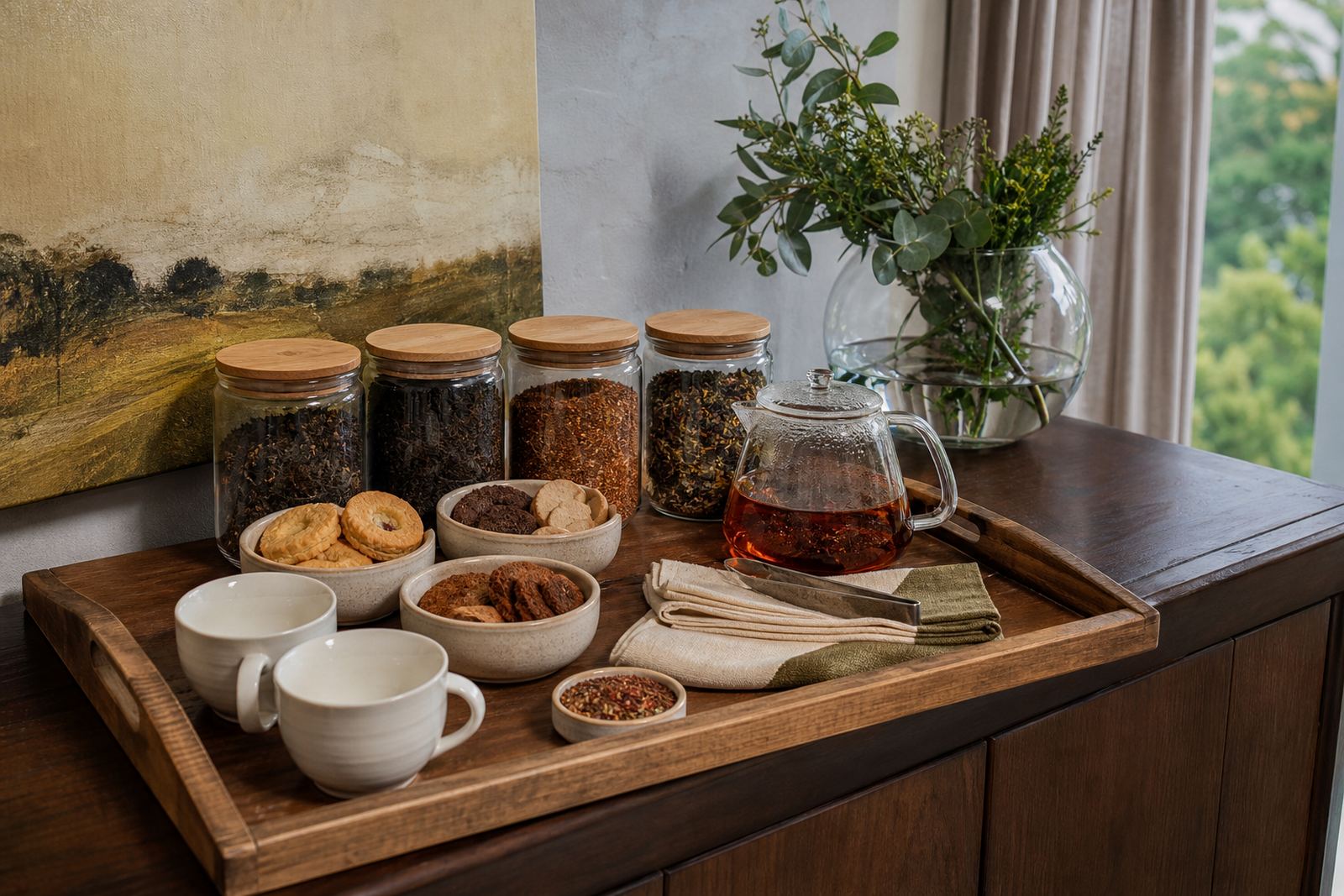
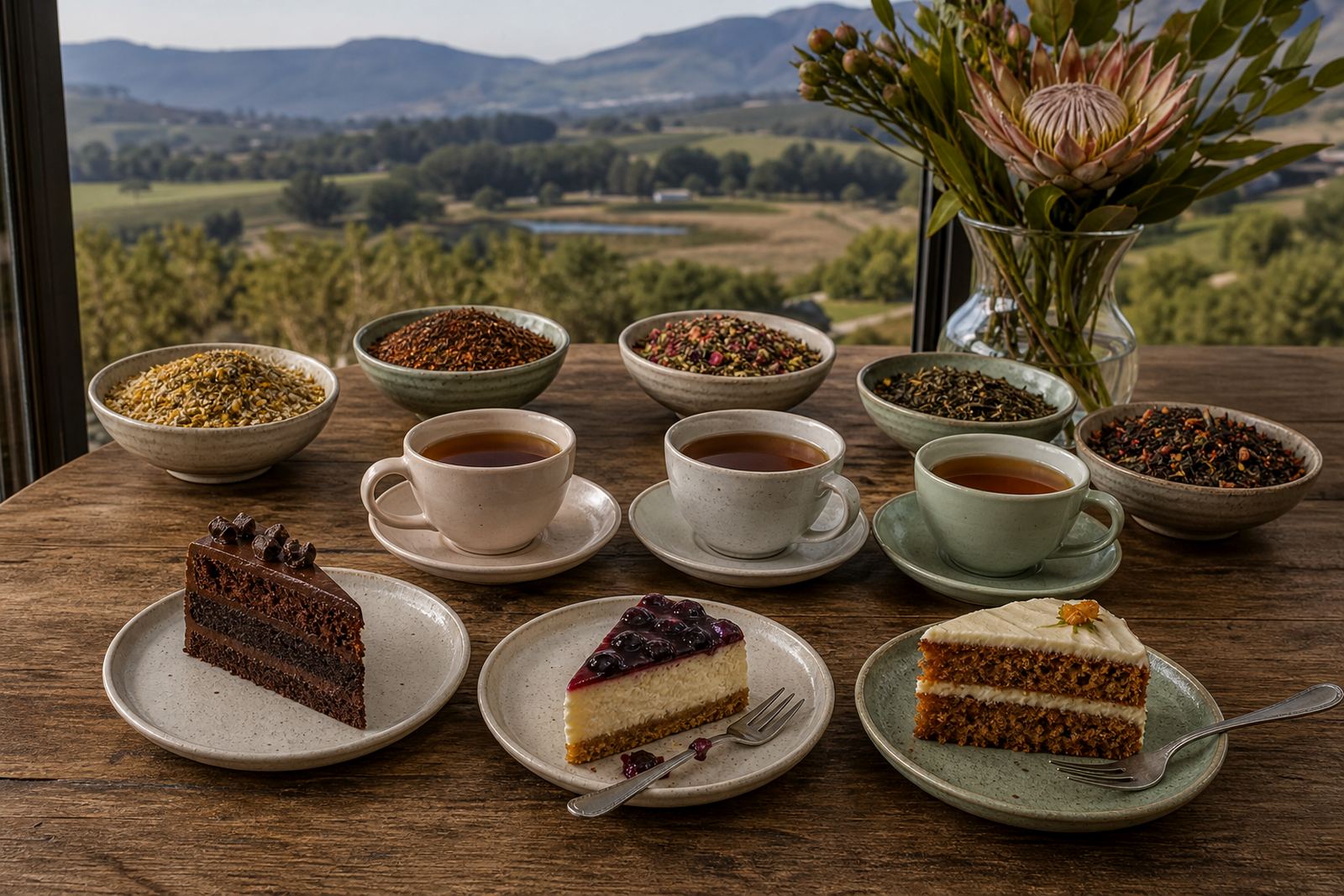
Picture a Saturday tea table in Stellenbosch Central after a market morning. There is chocolate slab cake, lemon loaf, and a fruit and nut cake. One tea alone will not suit every slice, so a small selection is the better choice. A plain black tea covers the chocolate cake, a rooibos works with the fruit and nut slice, and a citrus herbal infusion handles the lemon loaf. That simple spread gives guests choice without making the table complicated.
For homes, guest houses and small hospitality settings across the Western Cape, this approach is practical because it reduces waste and helps people find a pairing they actually enjoy. If you are planning a menu for a guesthouse breakfast room, office tea station or a wedding dessert table, keep the tea list short and the cake flavours clear. It is easier for guests to choose and the service runs smoother, even during load-shedding when the timing of hot water matters more than usual.
- Offer three tea styles for three different cake types.
- Keep sugar and milk separate so guests can adjust the cup.
- Label each tea clearly if the table is serving many people.